Comparison
Faux wood vs real wood blinds
One is heavier and cheaper and does not care about steam. The other is lighter and warmer and warps. The window decides.
By Janet H. · Last updated October 17, 2026 · How we choose
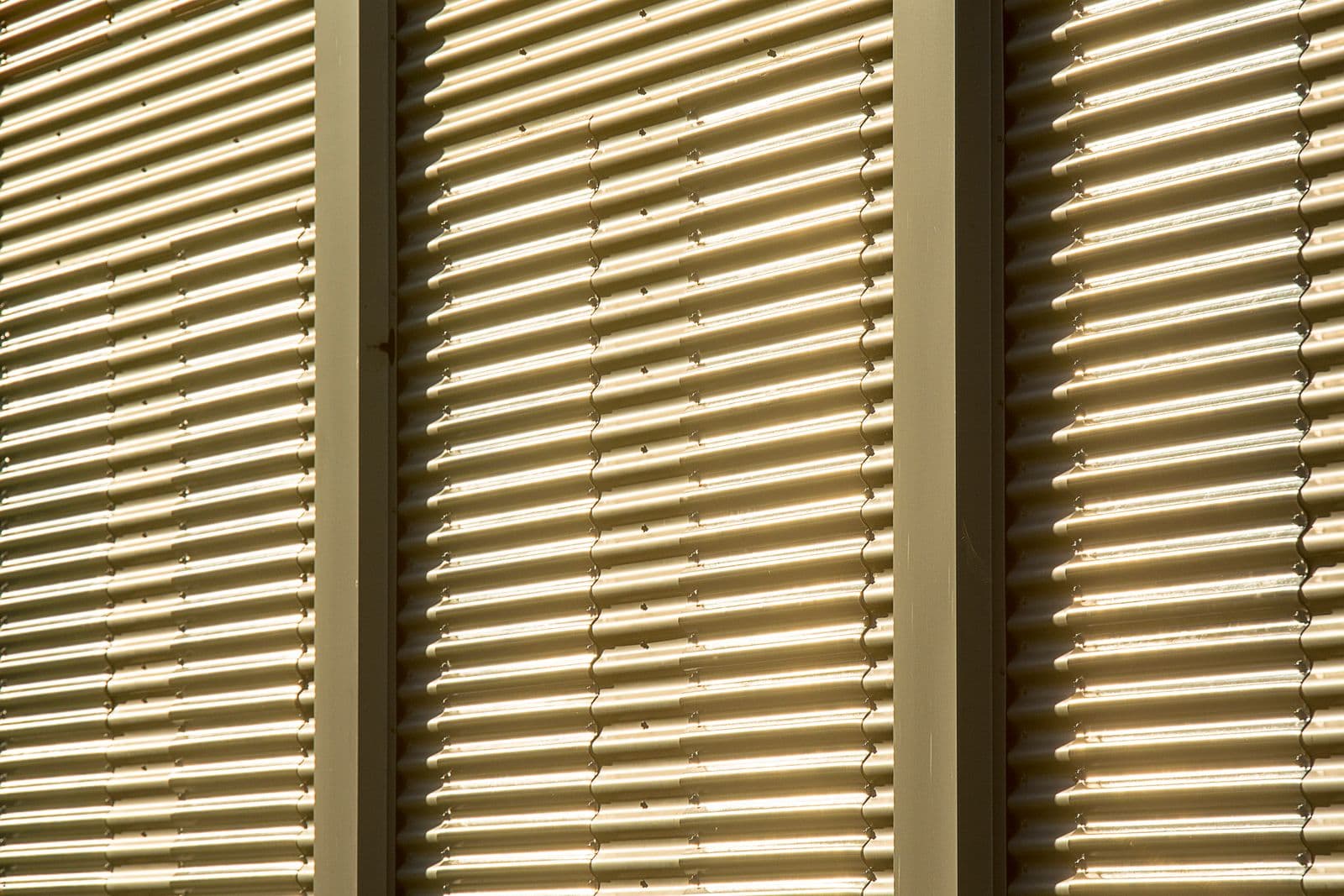
Buy faux wood for any window that gets steam or strong direct sun, and real timber only for a dry, shaded window under about five feet wide where the grain is the point. That single rule settles most of these decisions, because the materials fail in opposite conditions: PVC and composite shrug off moisture and heat but are heavy, and timber is light and handsome but moves when the air around it changes.
The two look close enough on a shelf that people choose on price and regret it in a bathroom. The useful comparison is not appearance - it is weight per square foot, behavior in humidity, and what happens to a 70-inch blind when one material is 60 per cent heavier than the other.
Drape & Dawn earns a commission from qualifying purchases made through links on this page, at no extra cost to you. It does not change what we recommend. Full disclosure.
Materials
The difference that matters
Real wood blinds are usually basswood: light, stable for timber, and finished with stain or paint. Faux wood is either solid PVC or a composite of PVC and wood flour. Both are extruded or moulded rather than sawn, which is why faux slats are dimensionally consistent and real ones vary slightly from slat to slat - part of what people read as quality.
| Faux wood | Real wood | |
|---|---|---|
| Humidity | Unaffected; wipes clean | Warps, swells and can delaminate a finish |
| Strong sun | Holds shape; cheap PVC can yellow over years | Can bow and the finish fades unevenly |
| Weight | Heavy - the main constraint on width | Light; the reason wide real-wood blinds exist |
| Maximum sensible width | About 60 in per blind before lifting is a chore | Wider spans are practical |
| Look | Convincing at a distance, flat grain up close | Real grain, warmer in a wood-floored room |
| Cost | Lower | Higher, typically a large step |
Choose faux if
When faux wood is the right answer
- The window is in a bathroom, kitchen, laundry or basement - anywhere with steam or condensation. This is not a close call.
- The window takes hours of direct sun. Timber in a west-facing window is in the worst conditions it can be in.
- The blind is under about 60 inches wide, so the weight is still comfortable to lift.
- You want the lift cords routed out of the slat face, which removes the column of light pinholes down the middle of a closed blind. The routeless spec is the one worth paying for in a bedroom.
Faux wood is also the material that makes sense in a rental, because it survives being taken down and refitted and costs little enough that leaving it behind is not painful. The full list of faux picks is in best faux wood blinds.
Choose wood if
When real timber is the right answer
A dry, shaded window in a living or dining room, wider than about five feet, in a house where the window is meant to be noticed. Real wood is lighter per square foot, which is the technical reason wide timber blinds are practical where wide faux ones are awkward, and the grain reads as furniture rather than as hardware.
We do not currently pick a specific real-wood venetian blind: the stock listings we can verify as currently sold are faux wood and composite, and we will not recommend a timber blind we cannot point you at. Where a reader wants genuine timber at the window today, the honest answer from our own registry is a woven bamboo shade - real wood, different mechanism, no tilt - which is the third pick below.
Width and weight
The constraint almost everyone forgets
Weight scales with area, and a cordless lift has to hold that weight at any height. Past roughly 60 inches wide a faux wood blind becomes a two-handed job and starts to load its brackets visibly; past about 72 inches most manufacturers recommend splitting the opening into two blinds on one headrail. If your window is wider than that and you have your heart set on slats, measure first: how to measure for blinds sets out the three-width method.
The other direction
If neither material suits the window
Slatted blinds of any material share the same weaknesses: they do not darken a room, they do not insulate, and the slats collect dust. If the real problem is light at 5am or a cold pane, a slat is the wrong tool and the comparison you want is blinds vs cellular shades or curtains vs blinds.
Methodology
How we chose
We select on published construction and materials, on fitness for the conditions at the window, and on failure patterns that recur across owner feedback rather than headline scores. We do not lab-test blinds and we publish no warp or fade figures of our own. Full criteria on the methodology page.
Go deeper
A third timber option neither column covers
If what you actually want from wood is the texture rather than the slats, a woven bamboo shade gets there for less than real timber blinds and survives sunlight better. Best bamboo shades is the roundup, with the privacy caveat that applies to every open weave.
What we’d buy
The products behind this advice
Picked against the criteria above, not the other way round. Prices are read from Amazon and refreshed daily; each link goes to the current listing.
| # | Best for | Product | Type | Material | Price |
|---|---|---|---|---|---|
| 1 | If you chose faux wood | 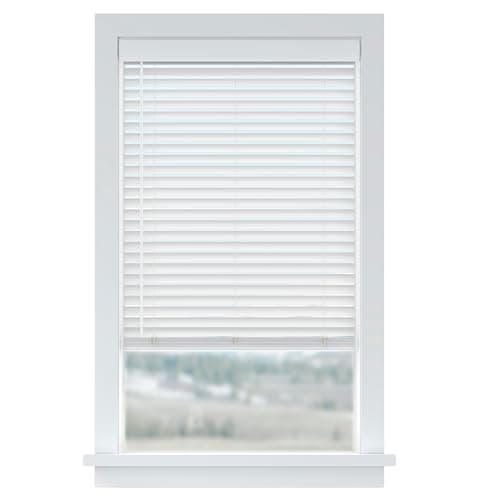 Bathrooms, kitchens, and any window in strong sun — the conditions that warp real timber. | Slatted blind | Faux wood | $59.99 · View on Amazon #ad Price as of November 3, 2026, and it can change. How we’re funded |
| 2 | If you want real timber grain | 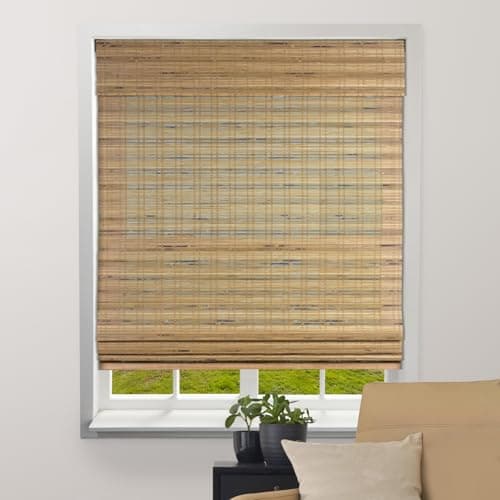 A living or dining room with no overlooking, where the covering is meant to be noticed. | Woven wood shade | — | $50.99 · View on Amazon #ad Price as of November 3, 2026, and it can change. How we’re funded |
| 3 | If the budget decides it | 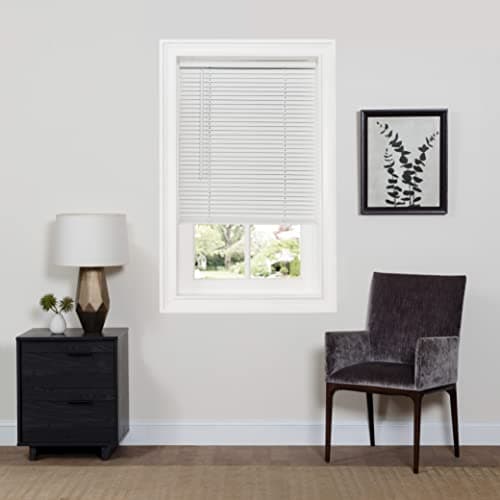 Rentals and interim coverings, where the question is only how cheaply the window gets covered. | Slatted blind | Vinyl | $17.28 · View on Amazon #ad Price as of November 3, 2026, and it can change. How we’re funded |
01 — If you chose faux wood
Basics Cordless Faux Wood Blinds, 2" routeless slats
LEVOLOR
Two-inch faux wood with the lift cords routed out of the slat face, so the blind closes without a column of light pinholes down the middle — the spec that matters if privacy or darkness is the point.
Who it’s for: Bathrooms, kitchens, and any window in strong sun — the conditions that warp real timber.
The catch: Faux wood is heavy. Over about 60 inches a single blind gets awkward to raise and loads the brackets; two side by side work better.
At a glance
- Type
- Slatted blind
- Material
- Faux wood
- Slat
- 2 in, routeless
- Operation
- Cordless
#ad Price as of November 3, 2026, and it can change. How we’re funded
02 — If you want real timber grain
Bamboo and woven wood Roman shades
Arlo Blinds
Natural woven bamboo that filters daylight into a warm, textured glow, on a cordless lift. It is the best-looking covering in this category and it turns a plain window into a feature.
Who it’s for: A living or dining room with no overlooking, where the covering is meant to be noticed.
The catch: The weave is open, so it is not private after dark and it does not darken a room. An overlooked window needs the optional privacy liner, which changes both the look and the price.
At a glance
- Type
- Woven wood shade
- Fabric
- Bamboo weave
- Operation
- Cordless
- Fit
- Stock and made to size
#ad Price as of November 3, 2026, and it can change. How we’re funded
03 — If the budget decides it
Cordless room darkening vinyl blinds
Achim
Plain cordless vinyl mini blinds — the cheapest way to get a corded blind out of a room, light enough to lift with two fingers, and non-porous so a damp room does not bother them.
Who it’s for: Rentals and interim coverings, where the question is only how cheaply the window gets covered.
The catch: Thin slats bend, and once bent they leave a permanent gap. Treat them as a covering with a limited life rather than a fitting.
At a glance
- Type
- Slatted blind
- Material
- Vinyl
- Slat
- 1 in
- Operation
- Cordless
#ad Price as of November 3, 2026, and it can change. How we’re funded
FAQ
Questions people actually ask
Is faux wood better than real wood?
For bathrooms, kitchens and any window in strong sun, yes - it does not warp, swell or delaminate, and it wipes clean. For a wide window in a dry, shaded room, real timber is better because it is lighter per square foot and the grain looks like furniture rather than hardware.
Do faux wood blinds look cheap?
At a distance, no - the convincing ones have embossed grain and matching valances. Up close the grain is uniform in a way real timber never is, and that uniformity is what reads as synthetic. In a room where the blind is three feet from where people sit, it is noticeable.
Can real wood blinds go in a bathroom?
We would not fit them. Repeated condensation swells the slat ends and lifts the finish, and a blind that has warped cannot be straightened. If the bathroom window must have the timber look, a woven wood shade with a washable liner survives better - and faux wood survives best of all.
How wide can a faux wood blind be?
Up to about 60 inches it lifts comfortably. Between 60 and 72 inches it is heavy enough to be a two-handed job and to load the brackets. Beyond that, most manufacturers recommend two blinds on one headrail rather than a single wide one, because the weight is carried by the same lift mechanism either way.
What does routeless mean on a faux wood blind?
The lift cords run behind the slats instead of through holes punched in the slat face. A conventional blind closed in a dark room shows a vertical column of light pinholes where those holes line up; a routeless one does not. If the blind is going in a bedroom, that is the spec worth paying for.
Keep going
Read next
Compare
Best faux wood blinds
Looks like timber, survives a bathroom, costs a third as much — and gets heavy wide.
Compare
Best window blinds
The only covering you can aim — which material suits which room.
Compare
Blinds vs shutters
Same tilt control, very different commitment — when shutters actually earn the cost.
Rooms
Best blinds for kitchen windows
Blinds that survive steam, splashes and grease over a sink or hob.
Privacy
Best blinds for bathroom windows
Moisture-proof bathroom blinds that give privacy at eye level and keep the daylight above it.
Rods & Mounting
How to measure for blinds
Six measurements in order, plus the rounding rules that differ for inside and outside mount.
Glare
Best bamboo shades
Woven wood warms the light instead of just cutting it - and when it needs a liner.
About the author
Janet H.
Janet H. is the owner of Janet Media Group and the person behind Drape & Dawn. She researches every pick against the site's published methodology.
Published by Janet Media Group · Last updated October 17, 2026