Roundup
Best thermal curtains
The fabric matters less than the seal. Hang a thermal curtain loose and you've bought a heavy curtain.
By Janet H. · Last updated September 23, 2026 · How we choose
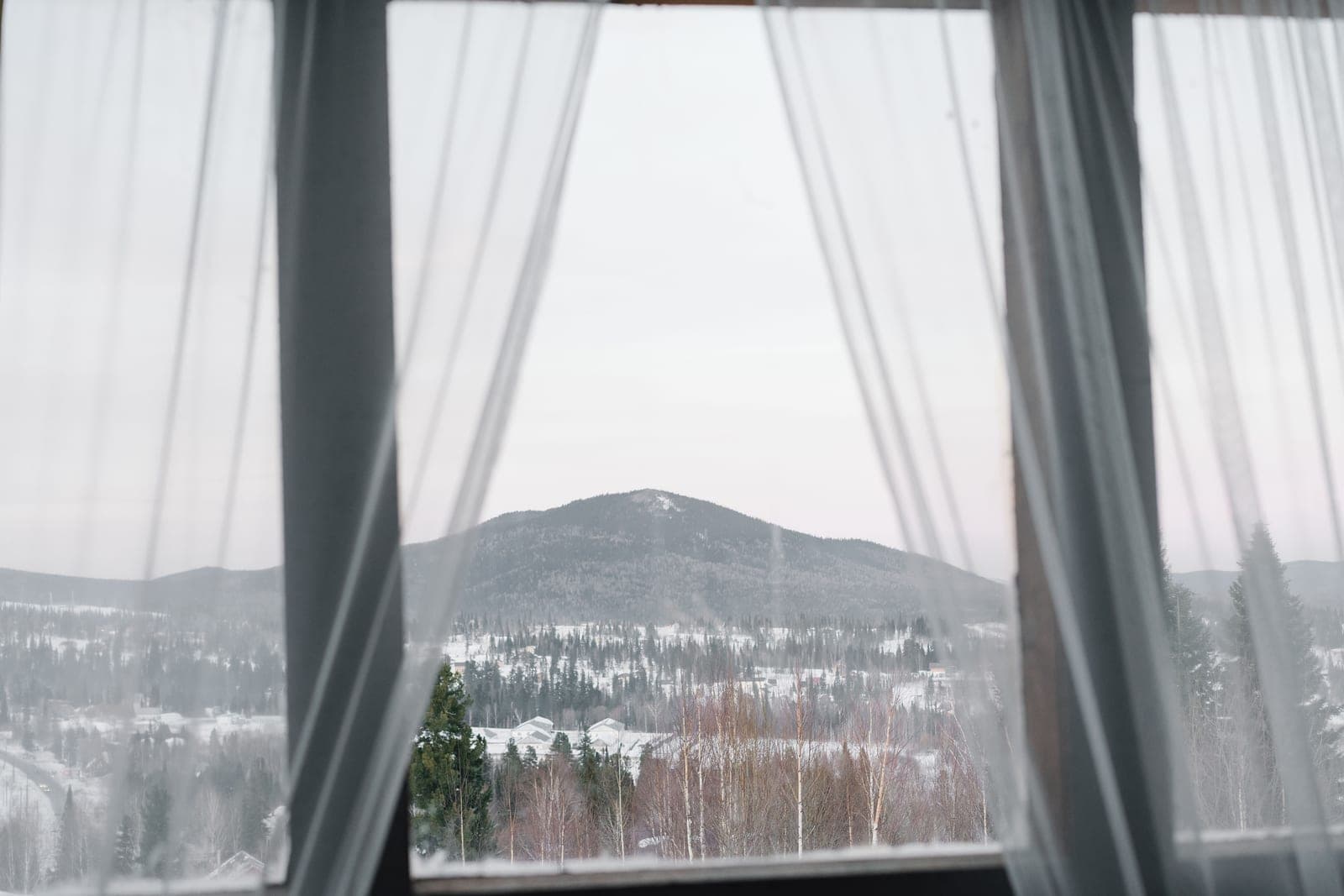
Thermal curtains work by adding a still-air layer against cold glass and slowing the convection current that spills cold air onto your floor. They genuinely help. They help far more when they are sealed at the top and reach the floor, because a curtain hanging loose lets warm room air flow over the top, down the glass, and out at the bottom — carrying the heat away and largely defeating the fabric.
So the honest framing for this page: the panel matters, and the way you hang it matters more. A mid-priced thermal curtain with a pelmet above it and a hem on the floor will outperform an expensive one hung loose on a narrow rod, every time.
Drape & Dawn earns a commission from qualifying purchases made through links on this page, at no extra cost to you. It does not change what we recommend. Full disclosure.
Before the list
What makes a curtain thermal
Two mechanisms, often combined. Mass and layers — a heavy multi-layer weave slows conduction and adds still air. A coated backing — usually a silver or foil-toned thermal layer that reflects radiant heat, in whichever direction it faces.
Coated backings are genuinely useful in summer, where reflecting solar radiation before the fabric absorbs it is the whole game. In winter their contribution is smaller, because most heat loss through a window is conduction and convection rather than radiation. Coatings are also the layer that eventually cracks and they restrict washing, so it is a real trade rather than a free upgrade.
| # | Best for | Product | Construction | Backing | Care | Price |
|---|---|---|---|---|---|---|
| 1 | Best overall | Thermal Insulated Blackout Curtains Rooms that are both cold in winter and hot in summer — which describes most rooms with a large window on a sun-facing wall. | Woven, coated | Silver thermal | Gentle cold, no heat | Check price on Amazon #ad We don’t show prices — check the current one on Amazon. How we’re funded |
| 2 | Best multi-layer weave | Blackout Thermal Insulated Curtains Cold rooms where longevity and washability matter more than maximum radiant reflection. | Triple-layer woven | None | Machine wash cold | Check price on Amazon #ad We don’t show prices — check the current one on Amazon. How we’re funded |
| 3 | Best value | Thermal Insulated Blackout Curtains Most cold rooms, most budgets — and anyone who needs a long drop for a tall window or a high-mounted rod. | Triple-weave | None | Machine wash cold | Check price on Amazon #ad We don’t show prices — check the current one on Amazon. How we’re funded |
| 4 | Best looking | Thermal insulated energy-efficient panels Rooms where the curtain is visible and part of the decor, and where you would rather not hang something that looks purely functional. | Woven, varies by line | Varies | Machine wash cold | Check price on Amazon #ad We don’t show prices — check the current one on Amazon. How we’re funded |
| 5 | Best upgrade to curtains you own | Thermal Insulated Blackout Liner Anyone with curtains they like in a room that is cold — and renters, who can take it with them. | Thermal woven liner | None | Machine wash cold | Check price on Amazon #ad We don’t show prices — check the current one on Amazon. How we’re funded |
01 — Best overall
Thermal Insulated Blackout Curtains
Deconovo
A coated panel with a silver-tone thermal backing. The coating reflects radiant heat in whichever direction it faces, so the same curtain helps keep solar heat out in July and slows radiant loss in January. Available in the long drops a floor-length thermal panel needs.
Who it’s for: Rooms that are both cold in winter and hot in summer — which describes most rooms with a large window on a sun-facing wall.
The catch: The coating stiffens with age and cracks along fold lines. Wash cold and gentle at most, and expect a shorter life than an uncoated weave.
At a glance
- Construction
- Woven, coated
- Backing
- Silver thermal
- Care
- Gentle cold, no heat
- Drops
- 63 / 84 / 96 in
- Best mount
- Outside, floor length
#ad We don’t show prices — check the current one on Amazon. How we’re funded
02 — Best multi-layer weave
Blackout Thermal Insulated Curtains
H.VERSAILTEX
Three interior woven layers rather than a coating — the mass-and-still-air approach. It slows convection without a backing that can crack, and it takes a machine wash, which a coated panel does not.
Who it’s for: Cold rooms where longevity and washability matter more than maximum radiant reflection.
The catch: No reflective backing, so it does less against direct summer sun than a silver-coated panel on a west-facing window.
At a glance
- Construction
- Triple-layer woven
- Backing
- None
- Care
- Machine wash cold
- Drops
- 63 / 84 / 96 in
- Best mount
- Outside, floor length
#ad We don’t show prices — check the current one on Amazon. How we’re funded
03 — Best value
Thermal Insulated Blackout Curtains
NICETOWN
The triple-weave workhorse, sold in the widest range of drops and colors in this category including 108-inch lengths. Uncoated, so it washes, and heavy enough to do real thermal work when hung properly.
Who it’s for: Most cold rooms, most budgets — and anyone who needs a long drop for a tall window or a high-mounted rod.
The catch: The grommet header leaves a gap at the top, which is precisely where the convection loop starts. Pair it with a pelmet or a board, or choose the back-tab version.
At a glance
- Construction
- Triple-weave
- Backing
- None
- Care
- Machine wash cold
- Drops
- 63 / 84 / 96 / 108 in
- Best mount
- Outside, sealed top
#ad We don’t show prices — check the current one on Amazon. How we’re funded
04 — Best looking
Thermal insulated energy-efficient panels
Sun Zero
Thermal panels with more textile character than the flat polyester most of this category uses — they read as furnishing fabric rather than as an energy product, which matters in a living room.
Who it’s for: Rooms where the curtain is visible and part of the decor, and where you would rather not hang something that looks purely functional.
The catch: Thermal performance varies across the range, and some lines are room-darkening rather than genuinely insulated. Read the individual product rather than trusting the brand.
At a glance
- Construction
- Woven, varies by line
- Backing
- Varies
- Care
- Machine wash cold
- Drops
- 63 / 84 / 95 in
- Best mount
- Outside, floor length
#ad We don’t show prices — check the current one on Amazon. How we’re funded
05 — Best upgrade to curtains you own
Thermal Insulated Blackout Liner
NICETOWN
A thermal liner that hangs behind existing curtains on hooks or rings. Two layers with an air gap between them is a better thermal arrangement than one thick layer, so this is a genuine upgrade rather than a compromise.
Who it’s for: Anyone with curtains they like in a room that is cold — and renters, who can take it with them.
The catch: Roughly doubles the weight on the rod. Check for a center support bracket before adding a pair to a wide window.
At a glance
- Construction
- Thermal woven liner
- Backing
- None
- Care
- Machine wash cold
- Drops
- Sized to existing panels
- Best mount
- Behind existing curtains
#ad We don’t show prices — check the current one on Amazon. How we’re funded
Buying guide
The hanging is half the product
Seal the top — the single biggest improvement
An open gap above a curtain creates a convection loop: warm room air rises, passes over the curtain, cools against the glass, drops, and exits at the hem into the room as a cold draft. Closing the top breaks the loop. A pelmet, a painted board fixed above the rod, or a ceiling-mounted track all do it, and any of them improves a curtain you already own more than swapping the fabric would.
Take it to the floor
A thermal curtain stopping at the sill leaves the cold air an exit. Floor length, or an inch past it so the hem touches, closes the bottom of the loop. Measure the drop from the rod rather than the frame — see the curtain length guide.
Go wider than the window
The same wide-rod rule that governs blackout applies here for the same reason: air, like light, goes around the edges. A rod 8 to 12 inches wider with returns to the wall at each end closes the sides.
Check the rod can carry it
Thermal panels are among the heaviest curtains sold. A pair at 96 inches on a thin rod with end brackets only will bow within weeks, and drywall anchors can pull. Over about 60 inches of span, add a center support — best curtain rods for heavy curtains.
Methodology
How we chose
Selection is on construction — layer count and whether there is a coated backing — on available drops, particularly the floor lengths thermal performance depends on, and on care requirements. We do not measure thermal performance and we do not quote a saving figure; see do thermal curtains save energy for why nobody credibly can. Methodology.
FAQ
Questions people actually ask
Do thermal curtains really work?
For how the room feels next to the window, noticeably. For your heating bill, less than the marketing suggests. A loose-hanging curtain lets air circulate around it and carry heat away — sealing the top and reaching the floor roughly doubles what the same panel achieves.
What makes a curtain thermal?
Either mass and layers, which slow conduction and trap still air, or a coated backing that reflects radiant heat. Many panels combine both. Coated backings help most against direct summer sun.
Should thermal curtains touch the floor?
Yes. A curtain stopping at the sill leaves cold air an exit route at the bottom, which keeps the convection loop running. Floor length, or an inch past so the hem touches, closes it.
Do I need a pelmet?
You do not need one, and it is the single most effective thing you can add. The gap above a curtain is where the convection loop starts, and a board or pelmet across the top closes it for very little money.
Thermal curtains or cellular shades?
Cellular shades insulate better; curtains cost less, cover awkward openings and handle a wide window without a made-to-measure order. Many cold rooms end up with both. See thermal curtains vs cellular shades.
Keep going
Read next

Drafts
Thermal curtains vs cellular shades
Sealed air beats fabric mass — but curtains cost less and fit awkward windows.

Drafts
Do thermal curtains save energy?
Real effect, unquantifiable savings — and the four things that decide how much you get.

Drafts
How to stop window drafts
Test with a flame, seal the leak, then cover the glass. In that order.

Rods & Mounting
Best curtain rods for heavy curtains
What carries lined blackout panels without bowing — rod, bracket and anchor.
Rods & Mounting
Curtain length guide
Standard drops, six hem finishes, and the measurement everyone gets wrong.
About the author
Janet H.
Janet H. is the owner of Janet Media Group and the person behind Drape & Dawn. She researches every pick against the site's published methodology.
Published by Janet Media Group · Last updated September 23, 2026