Problem 05
Renting: everything that hangs without a drill
Tension rods, tap-in brackets, adhesive mounts and cut-to-size shades — what holds, what falls down at 3am, and how to leave no trace.

Start here
Renting turns a simple job into a constrained one. You cannot drill, the walls may be plaster or may be something that crumbles, the trim may be wood or may be vinyl-wrapped MDF, and whatever you put up has to come down cleanly on the day you leave. Almost every renter solves this the same way — a tension rod — and a good share of them are woken a few weeks later by the whole assembly hitting the floor.
That failure is not bad luck. It is physics that nobody explains at the point of sale. A tension rod holds by friction alone, and the load it can carry depends on three things: the span, the surface it presses against, and how much the curtain gets tugged. The same rod that holds a light sheer across a 28-inch recess indefinitely will slip within a week under lined panels across 60 inches, especially on glossy paint.
So this hub is organized by what holds what. Pick the mount that matches the weight and the surface first, and the curtain second. The reverse order is how the rod ends up on the floor.
Drape & Dawn earns a commission from qualifying purchases made through links on this page, at no extra cost to you. It does not change what we recommend. Full disclosure.
Start with this one
Single Curtain Rod Brackets, tap-in
Kwik-Hang · Best overall
Brackets with built-in pins that tap into the top of a wooden window casing with a hammer — no measuring, no drilling, no anchors. The manufacturer rates each bracket at up to 20 lb, which is enough for lined or blackout panels, and installation takes under a minute per bracket.
#ad We don’t show prices — check the current one on Amazon. How we’re funded
Everything in this section
The pages that solve it

Picks
Best no-drill curtain rods
Match the mount to the weight and surface — what each no-drill option really holds.
#ad We don’t show prices — check the current one on Amazon. How we’re funded
Picks
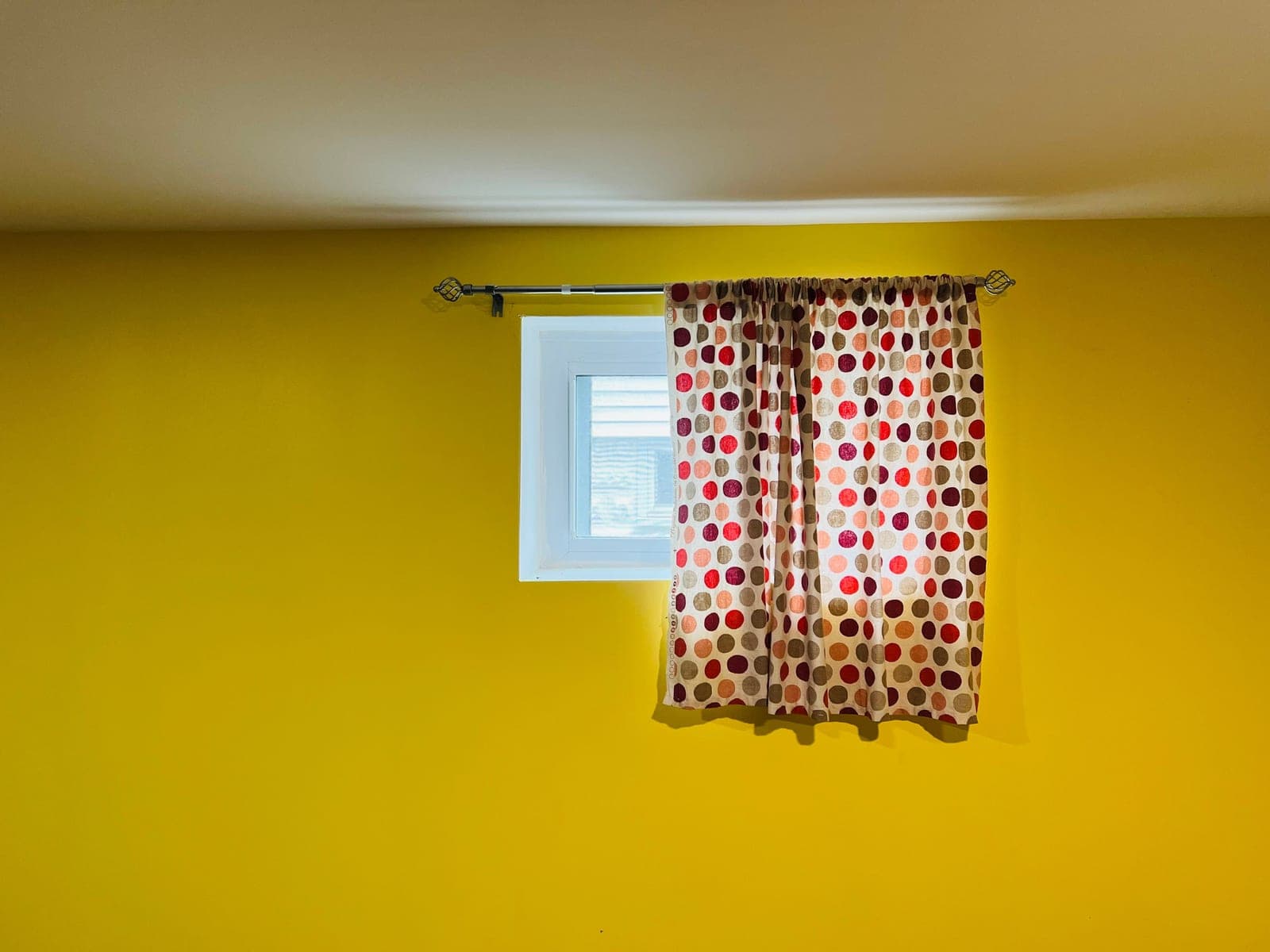
Best tension rods for curtains
Span, surface, weight — the three variables that decide whether a tension rod holds.
#ad We don’t show prices — check the current one on Amazon. How we’re funded

Picks
Best no-drill blinds and shades
Cut-to-size shades that clip in with no tools — plus how long each one really lasts.
#ad We don’t show prices — check the current one on Amazon. How we’re funded

Comparison
Tension rod vs adhesive brackets
Both are light-duty — the question is which one your surfaces will accept.
#ad We don’t show prices — check the current one on Amazon. How we’re funded

Comparison
Tap-in brackets vs adhesive brackets
Weight versus zero trace — and the trim question that decides it for you.
#ad We don’t show prices — check the current one on Amazon. How we’re funded

Guide
How to hang curtains without drilling
Four methods ranked by what they hold — match the mount to weight and surface.
#ad We don’t show prices — check the current one on Amazon. How we’re funded

Guide
How to hang curtains over vertical blinds
Cover the landlord's verticals without touching them — three routes that clear the track.
#ad We don’t show prices — check the current one on Amazon. How we’re funded
Guide
Window treatments for renters
Everything that works without a drill, organized by the problem you're solving.
#ad We don’t show prices — check the current one on Amazon. How we’re funded
Mechanisms
The four no-drill mounts
Tension rods press outward against two opposing surfaces inside a window recess. Best for short spans and light fabric. They need a recess with parallel sides; they slip on gloss and semi-gloss paint, which is exactly what most rental window recesses are painted with. The twist-and-lock camlock designs generally hold better than the older spring-only ones because the locking mechanism does not relax as the spring does.
Tap-in brackets pin into the top of wooden window trim with small built-in spikes, driven in with a couple of hammer taps. They leave two pinholes, which is about as close to no damage as a load-bearing mount gets, and they carry far more weight than a tension rod — manufacturers commonly rate them around 20 lb per bracket. The hard requirement is real wood trim, at least half an inch wide. On vinyl-wrapped MDF, metal, or windows with no casing at all they are not an option, and that rules out a lot of newer apartments.
Adhesive brackets stick to the wall or frame with heavy-duty mounting strips. They work on smooth, clean, fully-cured paint and they fail on textured walls, on anything dusty, and in bathrooms where steam gets behind the adhesive. Give them the full cure time the instructions ask for before hanging anything — most adhesive failures are people loading them after an hour.
Floor-to-ceiling tension rods are the heavy-duty end of the category: a vertical pole jammed between floor and ceiling, holding a horizontal rod. They handle serious weight, work where there is no usable trim at all, and are the standard solution for dividing a studio or covering an awkward opening. They take up floor space and they are visible, which is the trade.
Matching mount to load
Weight is the whole decision
| Mount | Realistic load | Needs | Fails when |
|---|---|---|---|
| Spring tension rod | Light sheers, short spans | Parallel recess sides | Span too wide, gloss paint, heavy panels |
| Camlock tension rod | Light to medium, to ~48 in | Parallel recess sides | Very wide spans, repeated hard tugging |
| Tap-in bracket | Medium to heavy panels | Real wood trim, ≥ ½ in wide | Vinyl or MDF trim, no casing |
| Adhesive bracket | Light only | Smooth, cured, clean paint | Texture, humidity, early loading |
| Floor-to-ceiling tension | Heavy, wide | Floor-to-ceiling clearance | Very high ceilings, soft flooring |
| Magnetic rod | Light | A steel door or frame | Aluminum or fiberglass doors |
Move-out
Leaving no trace
- Adhesive strips: pull the tab slowly, straight down and parallel to the wall. Pulling outward is what takes the paint with it.
- Tap-in brackets: ease them out of the trim with gentle upward taps. Two pinholes remain; a dab of filler closes them.
- Tension rods: check the recess for the shiny compressed marks the ends leave on paint. A magic-eraser pad usually takes them off.
- Cut-to-size shades: keep the offcut and the original packaging. Some landlords will let you leave shades in place — they are an upgrade — but only if they look deliberately fitted.
How we choose
Every pick on this site is selected on published specifications and materials, on fitness for the specific problem the page is about, and on the failure patterns that keep coming up in owner feedback. We do not lab-test these products, we do not own a light meter, and we say so rather than implying otherwise. Where a measurement appears it is a manufacturer’s published figure or a named third-party source. Read the full methodology →
FAQ
Questions people actually ask
How do I hang curtains without drilling?
Four ways, in rough order of how much weight they hold: tension rods inside the recess, tap-in brackets on wooden trim, adhesive brackets on smooth paint, and floor-to-ceiling tension poles. Pick by the weight of your panels and the surface you have. Full walkthrough in how to hang curtains without drilling.
Why does my tension rod keep falling down?
Almost always one of three reasons: the span is too wide for the rod's rating, the curtains are too heavy, or the recess is painted in gloss and the rubber ends cannot grip. Shorten the span, lighten the load, or switch to a camlock rod. A little painter's tape on the contact points adds grip on glossy paint.
Will adhesive brackets damage the paint?
Not if the paint is properly cured and you remove the strips correctly — slowly, straight down, parallel to the wall. They do come off badly on fresh paint (allow a few weeks) and on anything textured, where they never bonded properly in the first place.
Can I put blinds up in a rental?
Yes — cut-to-size cordless shades need no tools at all, and several types are designed to be trimmed at home and mounted with clips inside the frame. They are inexpensive enough to treat as consumable. See no-drill blinds and shades.
What about the vertical blinds that came with the apartment?
You can usually hang curtains in front of them without touching them at all, using a tension rod or a floor-to-ceiling pole set just inside the blind track. It covers the blinds completely and needs no change to the landlord's fitting. See how to hang curtains over vertical blinds.
Also dealing with
Another problem at the same window?
About the author
Janet H.
Janet H. is the owner of Janet Media Group and the person behind Drape & Dawn. She researches every pick against the site's published methodology.
Published by Janet Media Group · Last updated September 23, 2026