Guide
How to hang curtains without drilling
Four methods, in order of what they carry. Pick by weight and surface, not by what's in the aisle.
By Janet H. · Last updated September 23, 2026 · How we choose
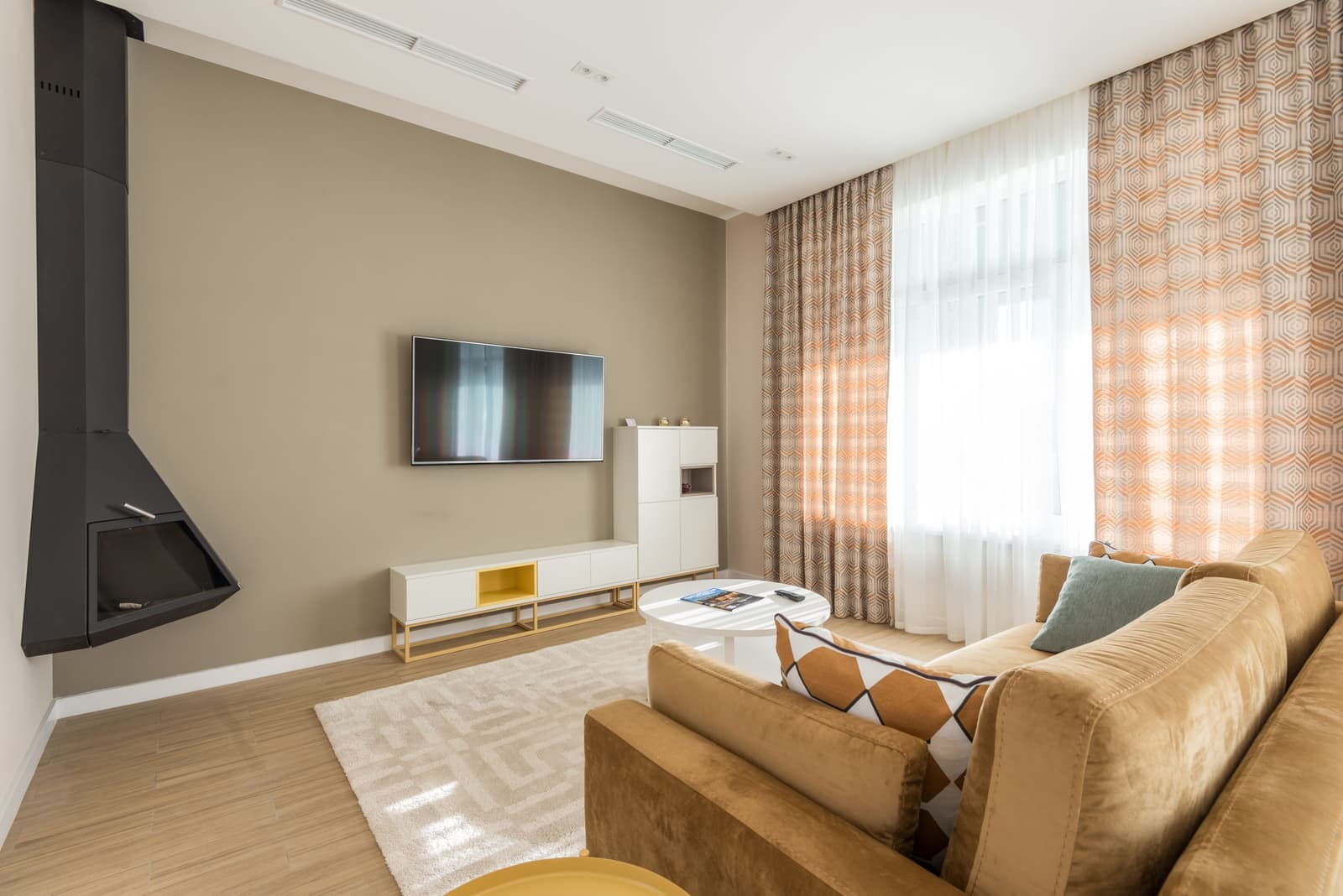
Four methods, in order of how much weight they carry: tap-in brackets on wooden trim, a floor-to-ceiling tension pole, a tension rod inside the recess, and adhesive brackets on smooth paint. Pick by the weight of your curtains and the surface you have available — not by what is easiest to find in a shop.
Almost every failure in this category is a mismatch: the right method used on the wrong surface, or a light-duty mount asked to carry lined panels.
Drape & Dawn earns a commission from qualifying purchases made through links on this page, at no extra cost to you. It does not change what we recommend. Full disclosure.
Strongest, needs wood trim
Method 1 — tap-in brackets
Brackets with built-in pins that tap into the top of a wooden window casing with a hammer. The manufacturer rates them around 20 lb each, so they carry blackout and thermal panels that nothing else on this list will.
Needs: real wood trim, at least half an inch wide. Not PVC, not MDF, not metal, not crown molding, and the manufacturer also advises against hardwoods like oak where the pins struggle to drive.
How: hold the bracket against the top face of the casing, tap the pins in with a hammer or rubber mallet, repeat at the other side. No measuring — the casing keeps them level with each other.
Heavy, needs floor space
Method 2 — floor-to-ceiling tension pole
Vertical poles jammed between floor and ceiling carry a horizontal rod. The load goes down to the floor rather than into a wall, so it handles serious weight and works where there is no trim and no usable recess.
Needs: floor-to-ceiling clearance in the product's height range, and floor space beside the window.
How: set the height slightly short, position, then extend until firm. Check it again after a day — floors and ceilings settle, and a second tightening is normal.
Light, needs parallel sides
Method 3 — tension rod in the recess
The default rental solution, and the one that most often ends on the floor. It holds by friction, so it needs a short span, a grippy surface and light curtains.
Needs: a recess with roughly parallel sides. Add painter's tape or rubber pads at the contact points if the paint is glossy, which in a rental it usually is.
How: extend to just over the recess width, compress and position, then let it out. Camlock rods hold better than spring-only ones because the lock does not relax over months.
Lightest, needs smooth paint
Method 4 — adhesive brackets
Bonded pads on the wall or frame. The only method that can place a rod wider and higher than the window without drilling, which matters if you are chasing edge light.
Needs: smooth, clean, fully cured paint. Not texture, not fresh paint, not a humid bathroom.
How: clean the surface with isopropyl alcohol, mark the position, press firmly for the full time stated, and then wait before hanging anything. Most failures are impatience.
Move-out
Taking it all down again
- Adhesive strips: pull the tab slowly, straight down and parallel to the wall. Pulling outward is what takes the paint.
- Tap-in brackets: ease them out with gentle upward taps; fill the two pinholes.
- Tension rods: check for compressed shiny marks in the recess — a magic-eraser pad usually removes them.
- Floor-to-ceiling poles: release the tension gradually and check the ceiling for a compression mark where the pad sat.
The hardware for each method is in best no-drill curtain rods, and the two closest calls are settled in tension rod vs adhesive brackets.
What we’d buy
The products behind this advice
Picked against the criteria above, not the other way round. We don’t show prices because we don’t have a live price feed — each link goes to the current listing.
| # | Best for | Product | Type | Load | Price |
|---|---|---|---|---|---|
| 1 | Method 1 — strongest | Single Curtain Rod Brackets, tap-in Wooden trim at least half an inch wide. | Tap-in bracket | Manufacturer states 20 lb each | Check price on Amazon #ad We don’t show prices — check the current one on Amazon. How we’re funded |
| 2 | Method 2 — heaviest loads | Anywhere Expandable Curtain Rod and Room Divider No usable trim, wide openings, room dividers. | Floor-to-ceiling tension | Heavy | Check price on Amazon #ad We don’t show prices — check the current one on Amazon. How we’re funded |
| 3 | Method 3 — simplest | Rogers Twist & Fit No Tools Camlock Tension Rod A recess with parallel sides and light curtains. | Tension rod | Light to medium | Check price on Amazon #ad We don’t show prices — check the current one on Amazon. How we’re funded |
01 — Method 1 — strongest
Single Curtain Rod Brackets, tap-in
Kwik-Hang
Brackets with built-in pins that tap into the top of a wooden window casing with a hammer. The manufacturer rates each at up to 20 lb, so they carry lined and blackout panels that no other no-drill mount will.
Who it’s for: Wooden trim at least half an inch wide.
The catch: Needs real wood trim at least half an inch wide. The manufacturer advises against hardwoods, PVC, MDF, metal trim and crown molding — which rules out many newer apartments.
At a glance
- Type
- Tap-in bracket
- Load
- Manufacturer states 20 lb each
- Needs
- Wood trim ≥ ½ in
- Leaves
- Two pinholes
#ad We don’t show prices — check the current one on Amazon. How we’re funded
02 — Method 2 — heaviest loads
Anywhere Expandable Curtain Rod and Room Divider
Umbra
Vertical poles jammed between floor and ceiling carry a horizontal rod, so the load runs to the floor rather than into a wall. It handles weight no bracket-free wall mount will, and works where there is no usable trim at all.
Who it’s for: No usable trim, wide openings, room dividers.
The catch: The poles take floor space and are plainly visible. This is furniture rather than hidden hardware, and the height range is fixed.
At a glance
- Type
- Floor-to-ceiling tension
- Load
- Heavy
- Needs
- Floor and ceiling clearance
- Leaves
- Nothing
#ad We don’t show prices — check the current one on Amazon. How we’re funded
03 — Method 3 — simplest
Rogers Twist & Fit No Tools Camlock Tension Rod
Kenney
A tension rod with a camlock that holds the extension mechanically rather than relying on a spring, so it keeps the pressure it was set at instead of relaxing over months.
Who it’s for: A recess with parallel sides and light curtains.
The catch: Still friction-mounted. On a glossy recess with heavy panels it will eventually slip — better odds, same physics.
At a glance
- Type
- Tension rod
- Load
- Light to medium
- Needs
- Parallel recess sides
- Leaves
- Nothing
#ad We don’t show prices — check the current one on Amazon. How we’re funded
FAQ
Questions people actually ask
What's the easiest way to hang curtains without drilling?
A tension rod inside the window recess, if your curtains are light. If they are lined or heavy, tap-in brackets on wooden trim are almost as fast and carry several times the weight.
Can I hang heavy curtains without drilling?
Yes — tap-in brackets on wooden trim are rated around 20 lb each by their manufacturer, and a floor-to-ceiling tension pole routes the load to the floor. Tension rods and adhesive brackets are not options for heavy panels.
How do I hang curtains without a rod?
Adhesive hooks along the top of the window and clip rings on the curtain will carry a light panel. It is a legitimate fix for a sheer in a small window and will not hold anything heavier.
Will any of these damage the walls?
Tap-in brackets leave two pinholes in the casing. Adhesive leaves nothing if removed correctly and can lift fresh paint if rushed. Tension rods leave compression marks that usually wipe off.
Can I get blackout in a rental without drilling?
Close to it, with two layers: a cut-to-size cordless shade inside the recess plus a curtain on a tension rod or tap-in brackets in front of it. No single no-drill product darkens a room on its own.
Sources
What we referenced
Keep going
Read next

Renter-Friendly
Best no-drill curtain rods
Match the mount to the weight and surface — what each no-drill option really holds.

Renter-Friendly
Tension rod vs adhesive brackets
Both are light-duty — the question is which one your surfaces will accept.

Renter-Friendly
Tap-in brackets vs adhesive brackets
Weight versus zero trace — and the trim question that decides it for you.
Renter-Friendly
Window treatments for renters
Everything that works without a drill, organized by the problem you're solving.

Blackout
How to block light from windows
Every method for blocking window light, ranked by darkness achieved and effort required.
About the author
Janet H.
Janet H. is the owner of Janet Media Group and the person behind Drape & Dawn. She researches every pick against the site's published methodology.
Published by Janet Media Group · Last updated September 23, 2026