Comparison
Inside mount vs outside mount
Tidy and leaky, or bigger and light-tight. The decision changes how you measure, so make it first.
By Janet H. · Last updated September 23, 2026 · How we choose
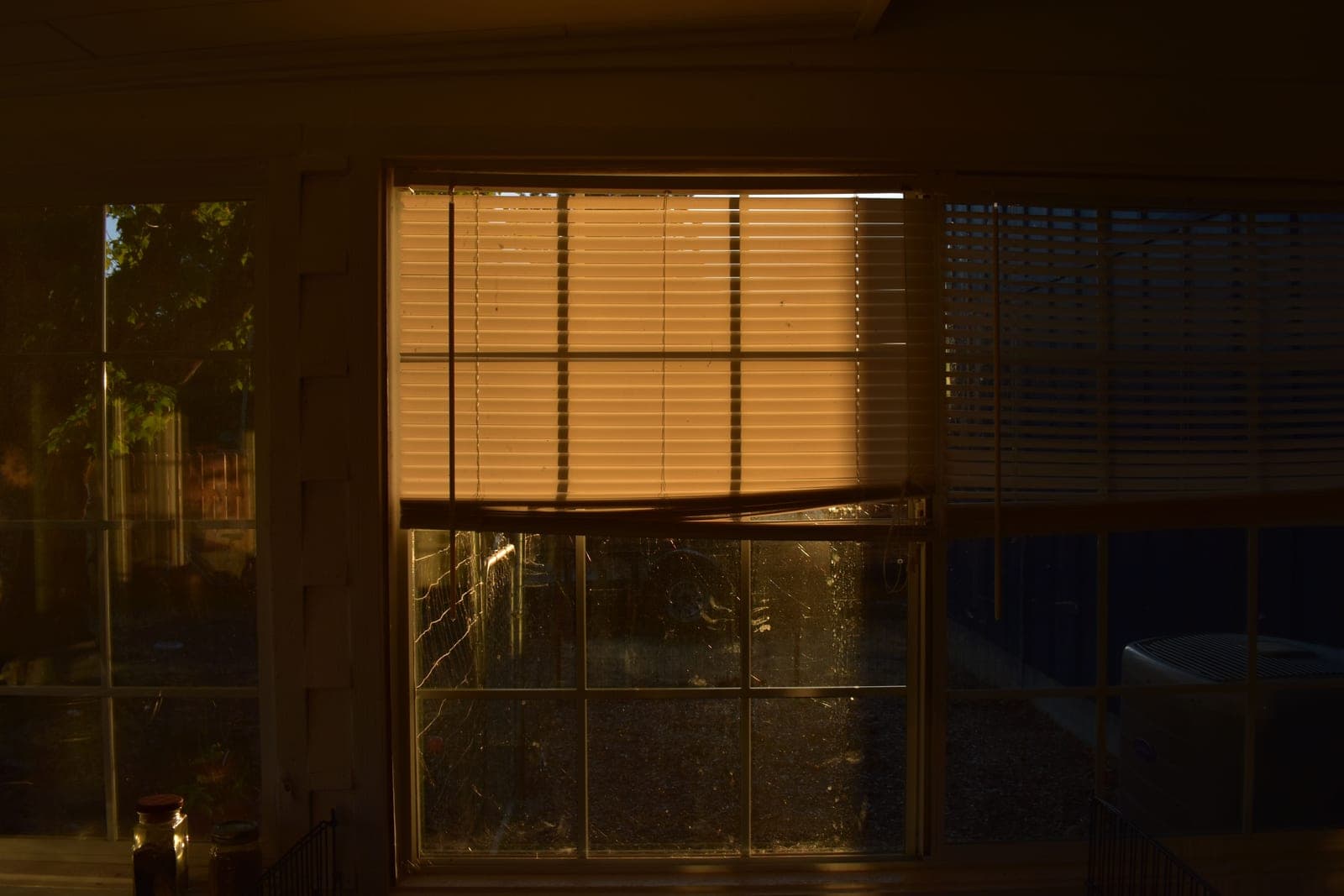
An inside mount sits within the window recess, showing the trim and giving a clean built-in look. An outside mount sits on the wall around the opening, covering the frame and overlapping it. The first is tidier and always leaks light at the edges. The second blocks light properly and makes the window look larger.
Decide this before you measure anything, because the two use completely different measurements and an inside-mount measurement ordered as an outside mount produces a covering that is far too small.
Drape & Dawn earns a commission from qualifying purchases made through links on this page, at no extra cost to you. It does not change what we recommend. Full disclosure.
The decision table
Side by side
| Inside mount | Outside mount | |
|---|---|---|
| Look | Clean, built-in, shows the trim | Larger, hides the frame, window looks bigger |
| Light control | Always leaks at the edges | Can be near-total with enough overlap |
| Insulation | Better if the fit is tight | Better if sealed at the top |
| Needs | A recess deep enough for the headrail | Flat wall each side and above |
| Measuring | Unforgiving — narrowest of three widths | Forgiving — more overlap is better |
| Works with a deep sill | Yes, keeps the sill usable | May overhang the sill |
| Good for | Blinds, shades, tidy trim, several windows in a row | Curtains, blackout, small windows, awkward frames |
Deciding
Choose inside mount if…
- The recess is deep enough — check the product's stated minimum depth, which is the spec people forget.
- The trim is attractive and you want to see it.
- You want to keep a deep sill usable for plants or objects.
- Several windows sit in a row and you want them to read as a matched set.
- Light control is secondary — glare, privacy or appearance is the real job.
Deciding
Choose outside mount if…
- Blocking light matters — this is the only way to get overlap, and overlap is what stops edge light.
- The recess is too shallow for the headrail.
- The window is small and you want it to look larger.
- The frame is damaged, mismatched or unattractive.
- The opening is out of square, where an inside-mount covering would show a visibly tapering gap.
Practicalities
How to measure each
Inside mount
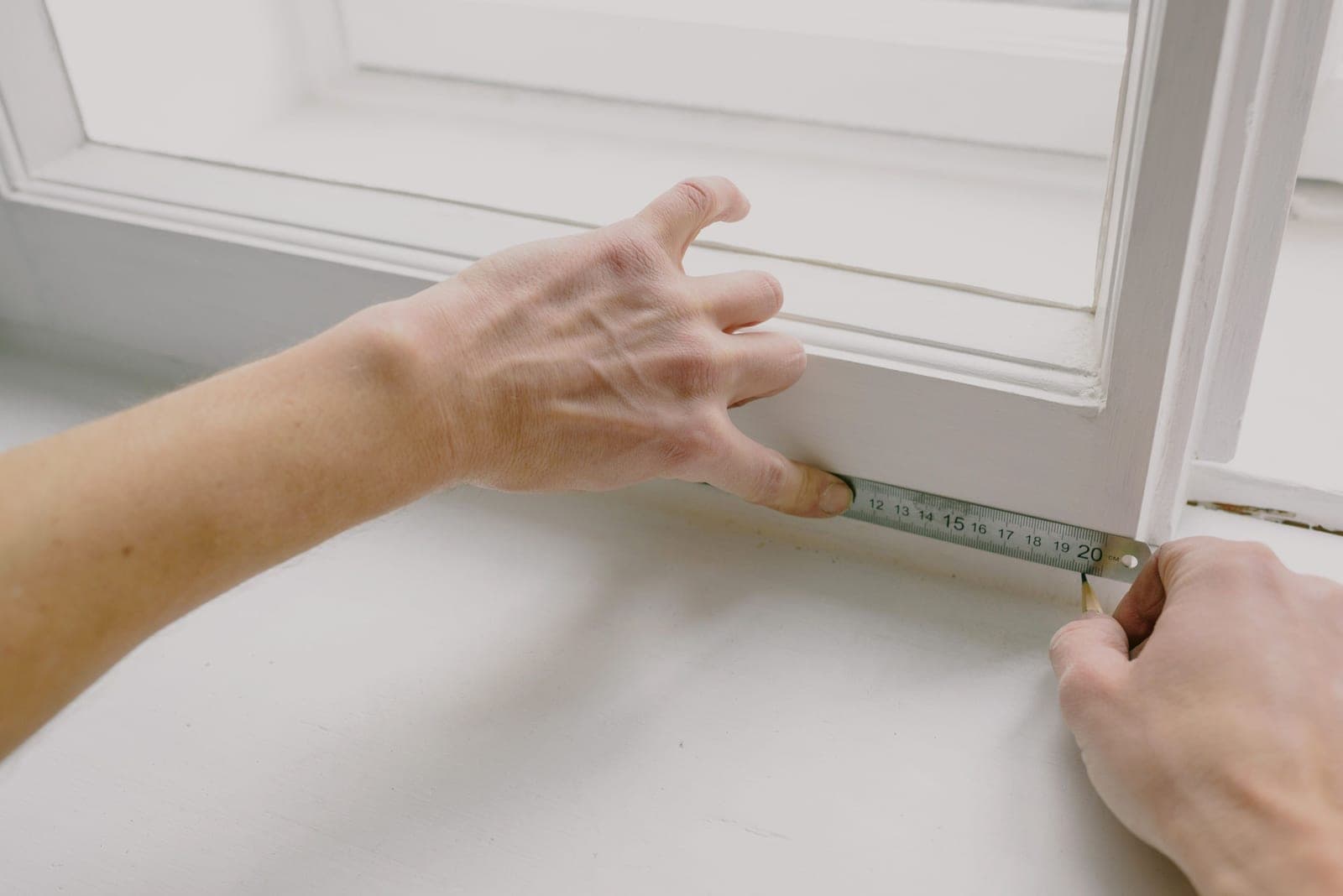
Measure the width at the top, middle and bottom of the recess and use the narrowest. Measure the height at left, center and right and use the longest. Then check the recess depth against the product's minimum. Do not subtract anything for clearance — the manufacturer does that. Subtracting yourself is how people end up with a shade an inch too narrow.
Outside mount
Decide your overlap first: at least 2 inches each side for a shade, 4 to 6 inches each side for a curtain rod. Measure the opening and add it. For height, measure from where the top of the covering will sit — typically 4 to 6 inches above the frame — down to where you want it to finish. More overlap is always better for light, so err generously.
If you are working out rod width for an outside mount, what size curtain rod do I need has the numbers, and how to measure for curtains covers the full sequence.
What we’d buy
The products behind this advice
Picked against the criteria above, not the other way round. We don’t show prices because we don’t have a live price feed — each link goes to the current listing.
| # | Best for | Product | Type | Mount | Price |
|---|---|---|---|---|---|
| 1 | Best inside-mount product | Cordless Cellular Shades, light filtering A tidy, precise covering within the recess, where the trim is worth showing. | Cellular shade | — | Check price on Amazon #ad We don’t show prices — check the current one on Amazon. How we’re funded |
| 2 | Best outside-mount hardware | Room Darkening Blackout Curtain Rod, wrap-around Overlapping the frame, which is the only way to stop light at the edges. | Curtain rod | — | Check price on Amazon #ad We don’t show prices — check the current one on Amazon. How we’re funded |
| 3 | Works either way | Basics Cordless Faux Wood Blinds, 2" routeless slats Windows where you want directional control and are still deciding on the mount. | Slatted blind | — | Check price on Amazon #ad We don’t show prices — check the current one on Amazon. How we’re funded |
01 — Best inside-mount product
Cordless Cellular Shades, light filtering
CHICOLOGY
Made-to-size honeycomb that seals against the recess, diffusing daylight into an even glow with no hotspot while insulating the glass behind it.
Who it’s for: A tidy, precise covering within the recess, where the trim is worth showing.
The catch: Opaque, including the light-filtering fabric — lowering it means losing the view entirely. There is no partial-view position.
At a glance
- Type
- Cellular shade
- Fabric
- Light filtering
- Operation
- Cordless
- Fit
- Made to size
#ad We don’t show prices — check the current one on Amazon. How we’re funded
02 — Best outside-mount hardware
Room Darkening Blackout Curtain Rod, wrap-around
Amazon Basics
A curved rod whose ends bend back to the wall, so the curtain edge meets the wall instead of ending in open air. That built-in return closes the biggest light path on a blackout setup without separate return brackets.
Who it’s for: Overlapping the frame, which is the only way to stop light at the edges.
The catch: The curve keeps the stack slightly over the glass when the panels are open, costing a little daylight.
At a glance
- Type
- Curtain rod
- Feature
- Built-in returns
- Spans
- 28–48 and 48–88 in
- Supports
- Center bracket on wide sizes
#ad We don’t show prices — check the current one on Amazon. How we’re funded
03 — Works either way
Basics Cordless Faux Wood Blinds, 2" routeless slats
LEVOLOR
Two-inch faux wood with the lift cords routed out of the slat face, so the blind closes without a column of light pinholes down the middle — the spec that matters if privacy or darkness is the point.
Who it’s for: Windows where you want directional control and are still deciding on the mount.
The catch: Faux wood is heavy. Over about 60 inches a single blind gets awkward to raise and loads the brackets; two side by side work better.
At a glance
- Type
- Slatted blind
- Material
- Faux wood
- Slat
- 2 in, routeless
- Operation
- Cordless
#ad We don’t show prices — check the current one on Amazon. How we’re funded
FAQ
Questions people actually ask
Is inside or outside mount better for blocking light?
Outside mount, without question. An inside-mounted covering cannot overlap the frame, so light always enters at the edges. Overlap is the only thing that closes that path.
How do I know if my recess is deep enough for an inside mount?
Every shade and blind lists a minimum depth for an inside mount. Measure from the face of the glass to the front edge of the recess and compare. Shallow recesses in older houses often fall short.
Should I subtract anything when measuring for an inside mount?
No. Give the exact narrowest width and the manufacturer applies the clearance deduction. Subtracting yourself is the most common way people end up with a covering an inch too narrow.
How much overlap does an outside mount need?
At least 2 inches each side for a shade, and 4 to 6 inches each side for a curtain rod. For height, 4 to 6 inches above the frame. More is better if light control matters.
Can I use both on the same window?
Yes, and it is the standard answer for a bedroom: a shade inside the recess for precision, a curtain outside it for the edges. Each does the part it is good at.
Keep going
Read next
Rods & Mounting
How to measure for curtains
Four steps in order: rod width, fullness, drop from the rod, header.
Rods & Mounting
What size curtain rod do I need?
Window plus 8 to 12 inches — with the full size table and support rules.

Blackout
How to fix curtain light gaps
Close the side, top, middle and bottom gaps — the cheapest fix for a bright room.

Compare
Best cellular shades
The best-insulating covering there is — and why the fit decides the result.
Rods & Mounting
Best curtain rods
The part everyone underspends on — what each rod carries and when to add a support.
About the author
Janet H.
Janet H. is the owner of Janet Media Group and the person behind Drape & Dawn. She researches every pick against the site's published methodology.
Published by Janet Media Group · Last updated September 23, 2026