Buying guide
How to measure for blinds
Blinds are cut to your number and cannot be let out. Six measurements, in order, and the two rounding rules that go the opposite way.
By Janet H. · Last updated October 10, 2026 · How we choose
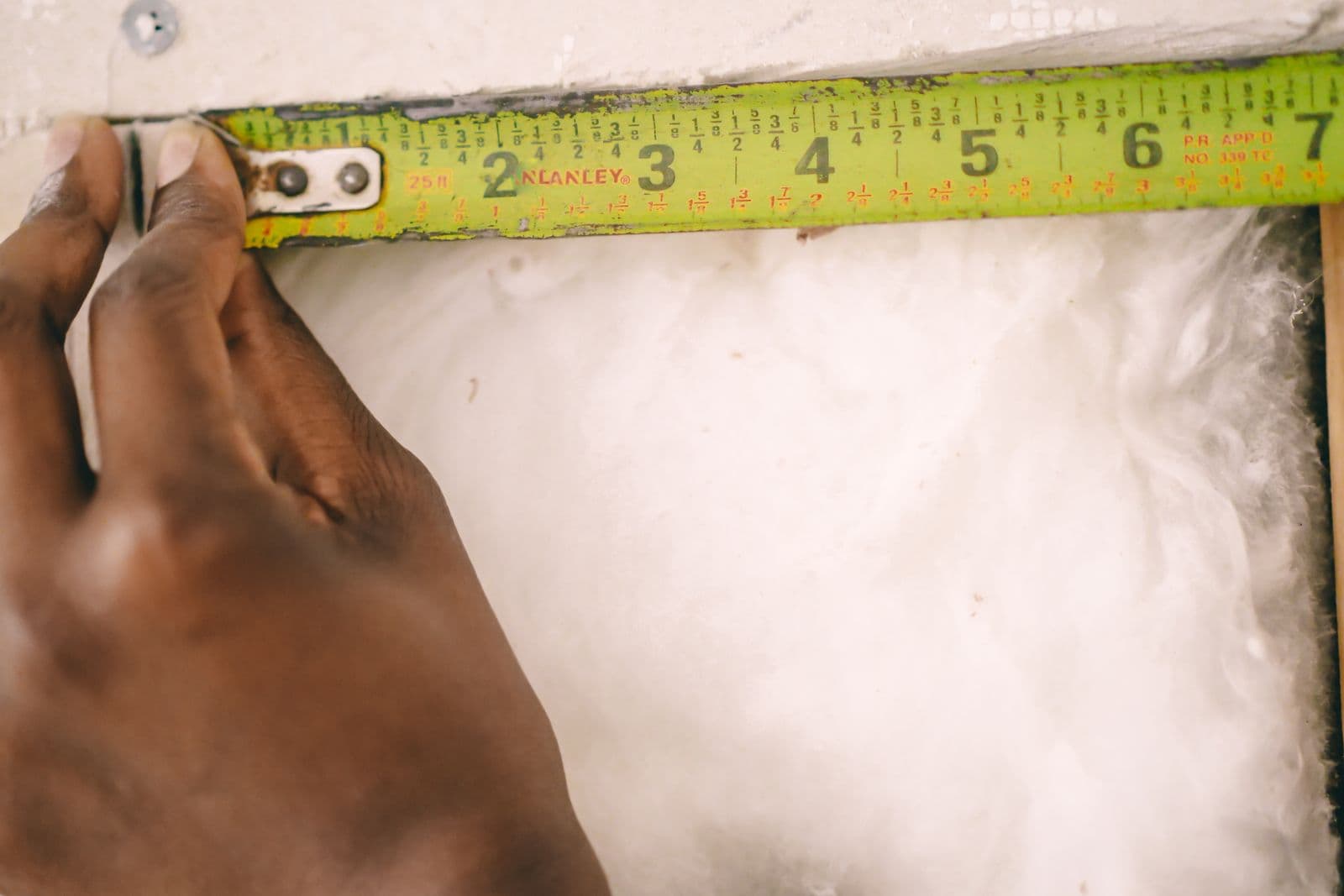
Decide inside or outside mount first, then measure the width in three places and the drop in three places, and work from the narrowest width and the longest drop. For an inside mount, round the width DOWN to the nearest eighth of an inch. For an outside mount, add 2 to 3 inches to each side. Those two rules go in opposite directions and mixing them up is the single most common ordering mistake.
The reason to be careful is that blinds are made to your figure. A curtain that is slightly off still hangs; a blind that is a quarter-inch too wide does not go in, and a quarter-inch too narrow leaves a permanent gap you look at every day. Nothing can be let out afterwards.
Drape & Dawn earns a commission from qualifying purchases made through links on this page, at no extra cost to you. It does not change what we recommend. Full disclosure.
Inside or outside
First decide where the blind is going
Inside mount means the blind sits within the window recess, brackets fixed to the top or sides of the opening. It looks neater, leaves the sill and architrave visible, and leaves a small gap at each side where light gets through. Outside mount means the blind is fixed to the wall or the face of the frame, overlapping the opening. It blocks far more light, hides an out-of-square or damaged opening, and is the right answer when the recess is too shallow for the headrail. The full trade-off is in inside mount vs outside mount.
One thing decides it for you: if the recess depth is less than the headrail needs, an inside mount is not available. Check that before measuring anything else.
The sequence
Measure in this order
- 1
Use a steel tape, never a cloth one
A fabric tape stretches and sags across an opening, and a quarter-inch of sag is exactly the error that ruins a blind order. A rigid steel tape is the only sensible tool for this.
- 2
Measure the width in three places
Top, middle and bottom of the opening, inside edge to inside edge. Window openings are rarely square, and the difference between the three is often a quarter-inch or more. Write all three down.
- 3
Measure the drop in three places
Left, center and right, from the top of the opening down to the sill. Again, write all three down — a sill that slopes for drainage will give you three different numbers.
- 4
Check the recess depth
From the face of the frame back to the glass, and note anything in the way: a tilt-and-turn handle, a casement stay, a crank. Compare that against the headrail depth in the product listing. If the handle will foul the headrail, you are outside mounting.
- 5
Apply the rounding rule for your mount
Inside mount: take the NARROWEST width and round DOWN to the nearest eighth of an inch. Take the LONGEST drop and use it as-is. Outside mount: take the widest width, add 2 to 3 inches to each side, and add 3 inches above the opening for the headrail plus as much below the sill as you want coverage.
- 6
Check whether the maker deducts for you
Most US blind sellers take your inside-mount width as the OPENING size and make their own deduction for clearance. Some expect you to have deducted already. Read the product's measuring instructions before ordering — if both of you deduct, the blind arrives half an inch narrow.
What goes wrong
The mistakes that cost a reorder
Measuring the glass instead of the opening
For an inside mount you want the full recess, inside edge of the frame to inside edge of the frame — not the pane, and not the sight line of the glass. It is an easy error on a window with a wide internal bead, and it produces a blind several inches too narrow.
Rounding the wrong way
Down for inside, up and out for outside. An inside-mount blind rounded up does not fit at all; an outside-mount blind rounded down leaves a light gap at each side, which defeats the main reason to mount outside.
Forgetting the window handle
A handle that projects an inch into the recess will stop the headrail sitting flat, stop the slats closing, or stop the window opening with the blind down. Measure the handle's projection and compare it against the headrail depth and the stack depth of the raised blind.
Measuring one window for several
Three windows that look identical in the same wall are routinely a quarter-inch apart, especially in an older building. Measure every opening individually, and label the measurements as you go — the sheet of paper with three sets of numbers and no labels is its own well-known failure.
What to buy
Blinds that are forgiving to measure
| # | Best for | Product | Forgiving because | Mount | Operation | Price |
|---|---|---|---|---|---|---|
| 1 | Easiest to get right | 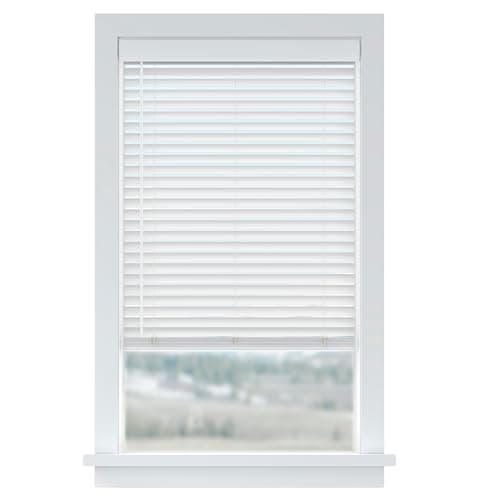 A first blind order, or anyone measuring several windows who wants the forgiving option. | Slats can be removed to shorten | Inside or outside | Cordless | $59.99 · View on Amazon #ad Price as of November 3, 2026, and it can change. How we’re funded |
| 2 | Best if you are unsure | 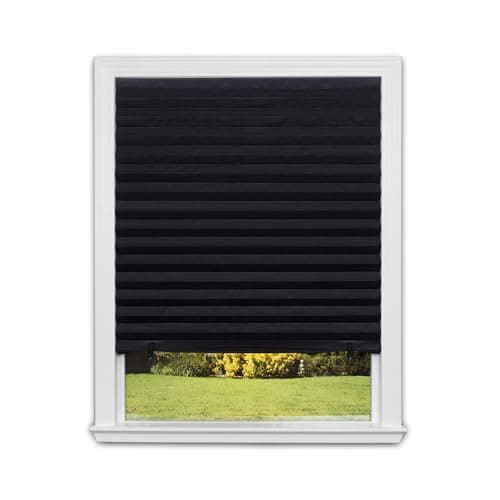 A first attempt at a difficult or out-of-square opening, a rental, or a window you want covered this afternoon. | Cut to size with scissors | Adhesive to the frame | Cordless, hand-raised | $29.97 · View on Amazon #ad Price as of November 3, 2026, and it can change. How we’re funded |
| 3 | Best for a no-drill fit | 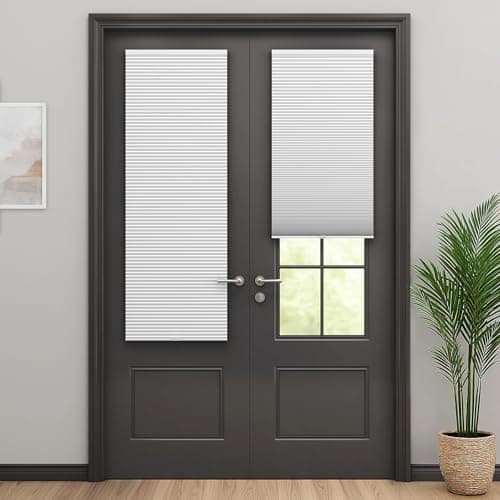 Renters, and anyone measuring a narrow opening such as a door light or a sidelight where fixed brackets leave no margin. | Tension brackets adjust | Tension, no drilling | Cordless | $43.26 · View on Amazon #ad Price as of November 3, 2026, and it can change. How we’re funded |
01 — Easiest to get right
Basics Cordless Faux Wood Blinds, 2" routeless slats
LEVOLOR
Sold in standard stock widths with published headrail dimensions, and the slats can be removed from the bottom to shorten the drop — so a drop measurement that is slightly long is recoverable rather than fatal.
Who it’s for: A first blind order, or anyone measuring several windows who wants the forgiving option.
The catch: Width is still fixed at the point of order and cannot be altered. Faux wood headrails are also deeper than vinyl, so the recess depth check matters more here.
At a glance
- Forgiving because
- Slats can be removed to shorten
- Mount
- Inside or outside
- Operation
- Cordless
- Sizing
- Stock widths
- Care
- Wipe monthly
#ad Price as of November 3, 2026, and it can change. How we’re funded
02 — Best if you are unsure
No Tools Original Blackout Pleated Paper Shade
Redi Shade
A pleated shade you cut to width yourself with household scissors and stick to the frame with adhesive clips. Measuring error is almost eliminated, because you trim it to the opening in front of you rather than ordering to a number.
Who it’s for: A first attempt at a difficult or out-of-square opening, a rental, or a window you want covered this afternoon.
The catch: It is paper — it will not take years of raising and lowering, and the adhesive can lift paint from a frame when removed.
At a glance
- Forgiving because
- Cut to size with scissors
- Mount
- Adhesive to the frame
- Operation
- Cordless, hand-raised
- Sizing
- Trim at home
- Care
- Replace when damaged
#ad Price as of November 3, 2026, and it can change. How we’re funded
03 — Best for a no-drill fit
No Drill Cordless Cellular Shades for Doors
LazBlinds
A cordless cellular shade on tension brackets that clamp into the opening, which gives a small amount of adjustment either side of your measurement — a tolerance screwed brackets do not offer.
Who it’s for: Renters, and anyone measuring a narrow opening such as a door light or a sidelight where fixed brackets leave no margin.
The catch: Tension fixing needs a reasonably square, deep opening with enough grip, and it will not hold a wide or heavy shade.
At a glance
- Forgiving because
- Tension brackets adjust
- Mount
- Tension, no drilling
- Operation
- Cordless
- Sizing
- Narrow and tall
- Care
- Vacuum, spot clean
#ad Price as of November 3, 2026, and it can change. How we’re funded
FAQ
Questions people actually ask
How do you measure a window for blinds?
Decide inside or outside mount, then measure the width at the top, middle and bottom of the opening and the drop at the left, center and right, with a steel tape. For an inside mount use the narrowest width rounded down to the nearest eighth of an inch and the longest drop. For an outside mount add 2 to 3 inches each side and 3 inches above.
Do you round blind measurements up or down?
Down for an inside mount, up and outward for an outside mount. An inside-mount blind rounded up will not fit the opening; an outside-mount blind rounded down leaves the light gap you were trying to remove.
Should I measure the window opening or the glass?
The opening — inside edge of the frame to inside edge of the frame. Measuring the glass or the sight line of the pane produces a blind several inches too narrow, which is an easy mistake on a window with a wide internal bead.
How much should an outside mount blind overlap the window?
Two to three inches past the opening on each side, three inches above it for the headrail, and as far below the sill as you want coverage. More overlap means less edge light, which is usually the reason for mounting outside in the first place.
Do blind makers deduct for clearance automatically?
Most US sellers do: you give them the opening width and they make their own deduction. Some expect the deduction already applied. Read the specific product's measuring instructions, because if both of you deduct, the blind arrives around half an inch narrow and cannot be fixed.
Keep going
Read next
Rods & Mounting
Inside mount vs outside mount
Tidy and leaky, or bigger and light-tight — and how the choice changes your measuring.
Rods & Mounting
How to measure for curtains
Four steps in order: rod width, fullness, drop from the rod, header.
Rods & Mounting
What size curtain rod do I need?
Window plus 8 to 12 inches — with the full size table and support rules.
Rooms
Best blinds for a bedroom
Bedroom blinds for darkness, warmth and privacy, and why one alone rarely gets you dark.
Blackout
Best cordless blackout shades
Cordless blackout shades ranked on real darkness, fixing method and what each gives up.
Compare
Best window blinds
The only covering you can aim — which material suits which room.
About the author
Janet H.
Janet H. is the owner of Janet Media Group and the person behind Drape & Dawn. She researches every pick against the site's published methodology.
Published by Janet Media Group · Last updated October 10, 2026