Buyer's guide
Best window treatments for casement windows
The hinge and the crank handle rule out most inside-mounted coverings. Mount outside the opening and the problem mostly disappears.
By Janet H. · Last updated October 17, 2026 · How we choose
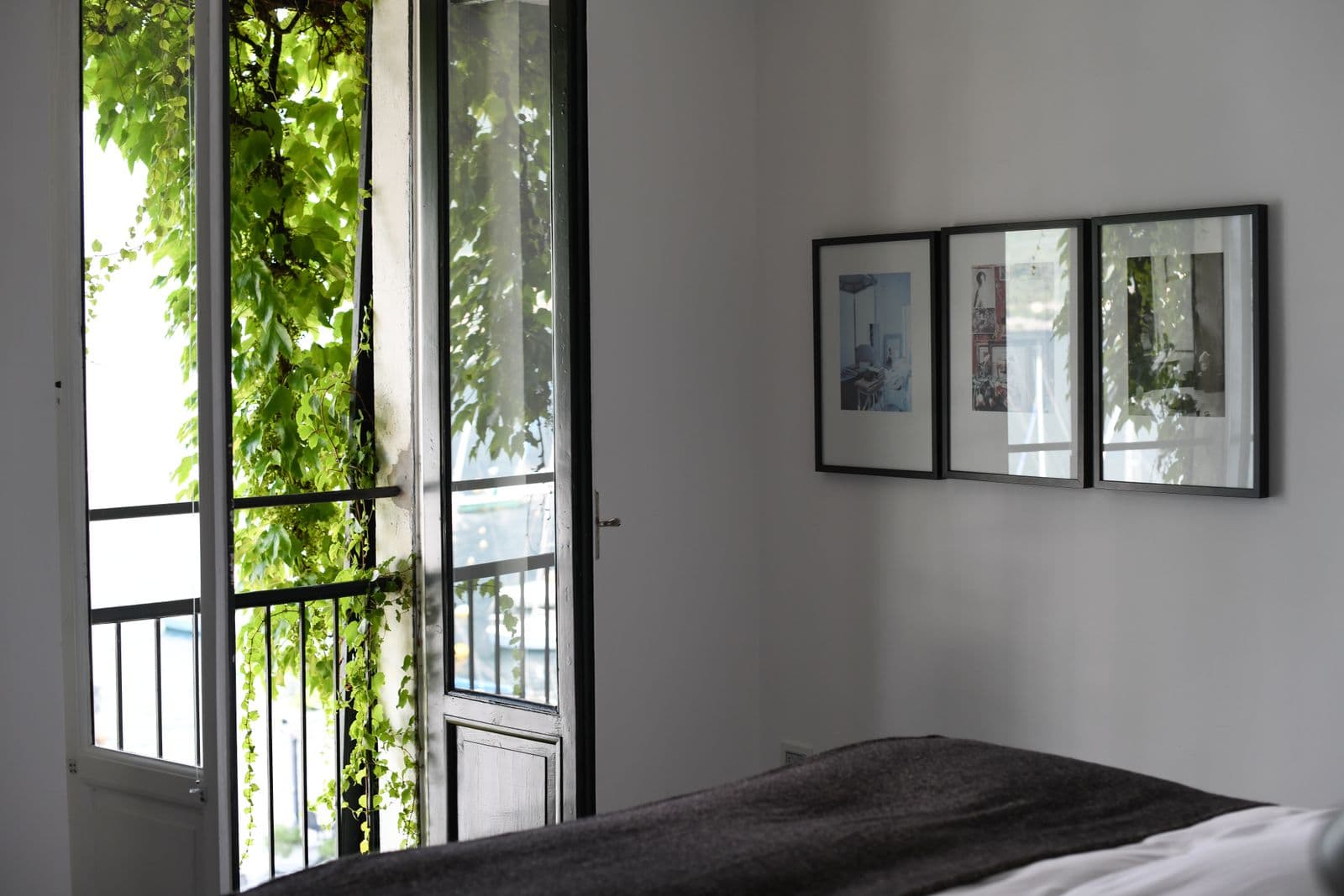
On a casement window, the covering that works almost every time is a curtain mounted outside the opening on a rod wider and higher than the frame - it never touches the crank, never blocks the sash, and can be pushed clear when you want the window open. Inside-mounted blinds and shades are the ones that fight a casement, because the handle and the opening sash both occupy the space the covering wants.
A casement is hinged at the side and opened with a crank or a lever rather than sliding up. That means two obstacles no other window has: a handle standing proud of the frame at the bottom, and a sash that swings through the plane of the glass. Any covering has to clear both, in every position the window is used in.
Drape & Dawn earns a commission from qualifying purchases made through links on this page, at no extra cost to you. It does not change what we recommend. Full disclosure.
First check
Work out which casement you have
- Outward-opening casement - the common type. The sash swings out, so only the crank handle is in the way indoors. The easiest case.
- Inward-opening casement - the sash swings into the room, so nothing can hang inside the opening at all. Outside mount is the only option.
- Awning window - hinged at the top, opens outward from the bottom. Same crank problem; usually enough depth for an inside-mounted shade if the handle folds.
- Casement with a folding handle - the handle hinges down flat against the frame. This is what makes an inside-mounted shade possible.
Open the window and look at the handle in both positions before you measure anything. Whether it folds flat is the single fact that decides between an inside and an outside mount here.
Mounting
Why the outside mount wins on a casement
Mounting above and wider than the opening moves the whole covering out of the window's way. The crank is behind the fabric rather than through it; the sash swings freely; and the panel can be drawn to one side so the window is fully usable. It also brings the ordinary benefits of an outside mount - overlap at the edges, which is the only way to stop light leaking round a covering, and a window that reads taller.
The cost is that you lose the recessed, built-in look, and you need wall above and beside the frame for the hardware. The trade-off is set out in general terms in inside mount vs outside mount.
Buying guide
What to look for
Projection, not just width
The bracket has to hold the rod far enough off the wall that the panel hangs clear of the crank handle. Measure how far the handle stands out from the wall surface and add an inch; that is your minimum rod projection. Standard brackets are often too shallow for a chunky crank, and a double bracket or a spacer solves it.
Returns, if the room needs to be dark
A rod whose ends bend back to the wall closes the gap at each side where light otherwise pours in past the panel edge. On a bedroom casement that single feature does more than a denser fabric would - the mechanism is in how to fix curtain light gaps.
Recess depth, if you are mounting inside anyway
If the handle folds flat and you want the recessed look, measure the depth from the glass to the front of the frame and compare it with the shade's stated depth requirement, then check the sash does not foul the headrail when it opens. How to measure for blinds sets out the three-width method, and on a casement you should measure the depth at the hinge side as well, which is usually the tightest.
Operation you can reach past the handle
A cordless lift is easier to use on a casement than a chain or cord, because you are reaching over or around a crank to get to it. Cordless is also the safer specification generally, and on these windows it is simply the more convenient one.
Ruling out
What not to put on a casement
| Option | Verdict | Why |
|---|---|---|
| Outside-mounted curtains | First choice | Clears the crank and the sash; allows overlap |
| Cordless cellular shade, inside | Good if the handle folds | Recessed look, insulation, no cords to catch |
| Slatted blind, inside mount | Usually poor | Slats and tilt wand collide with the crank |
| Roman shade, inside mount | Poor | Deep stack plus handle clearance rarely both fit |
| Tension rod inside the recess | Poor | Sits in the sash's swing path on an inward-opening casement |
| Film on the glass | Fine | Touches nothing; the option when no hardware will fit |
Methodology
How we chose
We select on published construction and materials, on fitness for a window with a crank and a swinging sash, and on failure patterns that recur across owner feedback rather than headline scores. We do not lab-test these products. Full criteria on the methodology page.
What we’d buy
The products behind this advice
Picked against the criteria above, not the other way round. Prices are read from Amazon and refreshed daily; each link goes to the current listing.
| # | Best for | Product | Type | Operation | Price |
|---|---|---|---|---|---|
| 1 | Best overall | 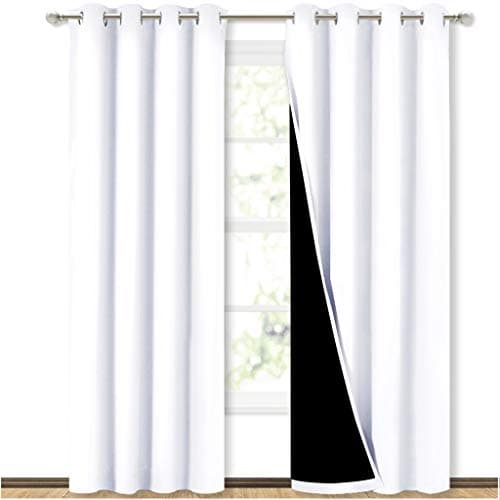 Almost every casement: mounted outside the opening, a curtain never touches the crank or the sash. | Blackout curtain | — | $19.99 · View on Amazon #ad Price as of November 3, 2026, and it can change. How we’re funded |
| 2 | Best rod for it | 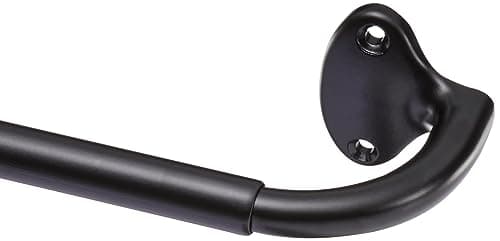 A casement in a bedroom, where the return at each end closes the light gap an outside mount would otherwise leave. | Curtain rod | — | $29.97 · View on Amazon #ad Price as of November 3, 2026, and it can change. How we’re funded |
| 3 | Best inside-mount option | Cordless Cellular Shades, light filtering Casements whose handle folds flat against the frame, and awning windows with enough depth to clear the shade. | Cellular shade | Cordless | Check price on Amazon #ad No current price for this one — check it on Amazon. How we’re funded |
01 — Best overall
Thermal Insulated Blackout Curtains
NICETOWN
Triple-weave polyester with no coating to crack or peel, machine washable, and sold in a wider ladder of drops than most ranges — including the 108-inch length a near-ceiling rod needs.
Who it’s for: Almost every casement: mounted outside the opening, a curtain never touches the crank or the sash.
The catch: The grommet header holds the panel an inch off the wall with open gaps between grommets, so light still comes over the top. Add a pelmet, or choose a back-tab version, if that is your problem.
At a glance
- Type
- Blackout curtain
- Construction
- Triple-weave, uncoated
- Care
- Machine wash cold
- Drops
- 63 / 84 / 96 / 108 in
#ad Price as of November 3, 2026, and it can change. How we’re funded
02 — Best rod for it
Room Darkening Blackout Curtain Rod, wrap-around
Amazon Basics
A curved rod whose ends bend back to the wall, so the curtain edge meets the wall instead of ending in open air. That built-in return closes the biggest light path on a blackout setup without separate return brackets.
Who it’s for: A casement in a bedroom, where the return at each end closes the light gap an outside mount would otherwise leave.
The catch: The curve keeps the stack slightly over the glass when the panels are open, costing a little daylight.
At a glance
- Type
- Curtain rod
- Feature
- Built-in returns
- Spans
- 28–48 and 48–88 in
- Supports
- Center bracket on wide sizes
#ad Price as of November 3, 2026, and it can change. How we’re funded
03 — Best inside-mount option
Cordless Cellular Shades, light filtering
CHICOLOGY
Made-to-size honeycomb that seals against the recess, diffusing daylight into an even glow with no hotspot while insulating the glass behind it.
Who it’s for: Casements whose handle folds flat against the frame, and awning windows with enough depth to clear the shade.
The catch: Opaque, including the light-filtering fabric — lowering it means losing the view entirely. There is no partial-view position.
At a glance
- Type
- Cellular shade
- Fabric
- Light filtering
- Operation
- Cordless
- Fit
- Made to size
#ad No current price for this one — check it on Amazon. How we’re funded
FAQ
Questions people actually ask
What window treatments work on casement windows?
Curtains mounted outside the opening work on almost every casement, because they clear both the crank handle and the swinging sash. Cordless cellular shades fitted inside the recess work where the handle folds flat against the frame and there is enough depth. Film on the glass works where no hardware will fit at all.
How do you cover a casement window with a crank?
Mount the rod or headrail above and wider than the opening so the covering hangs in front of the handle rather than around it, and choose a bracket with enough projection that the panel clears the crank by about an inch. If you must mount inside, the handle has to fold flat.
Can you put blinds on casement windows?
Sometimes, and it is the fussiest option. Slats and a tilt wand usually collide with the crank, and an inward-opening sash leaves no room at all. A blind mounted outside the opening avoids the collision but loses the recessed look that was the reason for choosing a blind.
Should casement curtains be inside or outside the recess?
Outside, in nearly every case. It clears the mechanism, allows the overlap that stops edge light, and lets the panel be pushed fully clear when you want the window open. Inside mounting a casement is only worth it where the handle folds and the look matters more than the function.
What about an awning window above a door?
High awning windows are usually left bare or given film, because anything with a lift you cannot reach becomes a nuisance. If it must be covered and reached, a cordless shade with a long wand or a motorized option is the honest shortlist - see best smart blinds.
Keep going
Read next
Rods & Mounting
Inside mount vs outside mount
Tidy and leaky, or bigger and light-tight — and how the choice changes your measuring.
Rods & Mounting
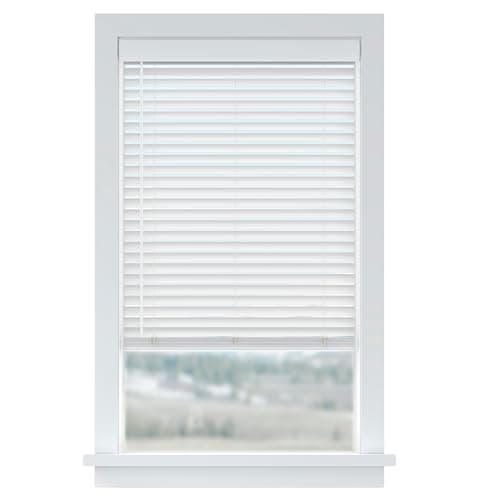
How to measure for blinds
Six measurements in order, plus the rounding rules that differ for inside and outside mount.
Rooms
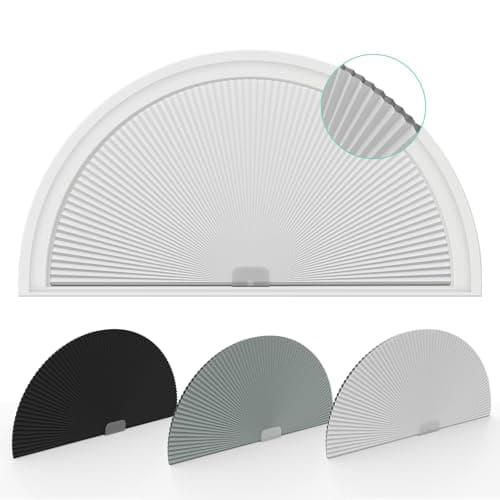
Window treatments for arched windows
Cover the rectangle, decide separately about the arch — measuring, options and honest limits.
Compare
Best window treatments
One pick per window problem - light, heat, glare, privacy, renting - and what each one gives up.
Rods & Mounting
How to hang curtains from the ceiling
Fixing a rod to the ceiling: where the joists are, the longer panel it needs, and when to skip it.
About the author
Janet H.
Janet H. is the owner of Janet Media Group and the person behind Drape & Dawn. She researches every pick against the site's published methodology.
Published by Janet Media Group · Last updated October 17, 2026