Guide
How to hang curtains from the ceiling
Moving the rod from the wall to the ceiling buys height and kills the light over the top. It also changes the panel length you need.
By Janet H. · Last updated October 17, 2026 · How we choose
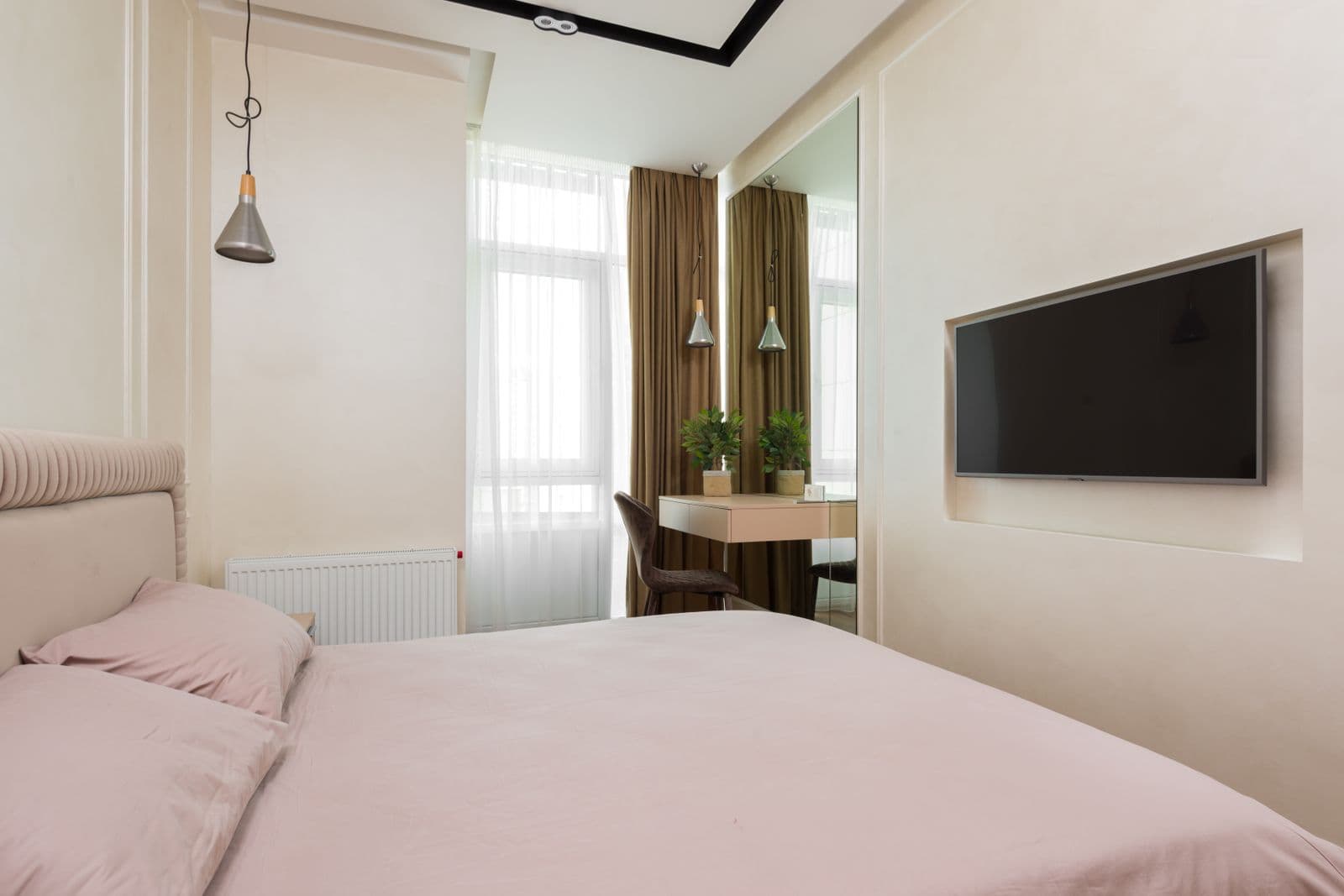
To hang curtains from the ceiling, fix the brackets into ceiling joists or into proper drywall anchors 4 to 6 inches out from the wall, keep the rod 8 to 12 inches wider than the window, and buy panels long enough for the new drop - which in an 8-foot room means 96 inches, and in a 9-foot room 108 inches. The length is the part people get wrong, because the drop is measured from the rod and the rod has just moved up a foot.
It is worth doing for two reasons. A ceiling-mounted rod makes the window read as full height, which is the cheapest way to make a room feel taller. And it removes the gap above the rod that light pours through on a conventional wall mount - the reason a bedroom with blackout curtains is still bright at the top of the window.
Drape & Dawn earns a commission from qualifying purchases made through links on this page, at no extra cost to you. It does not change what we recommend. Full disclosure.
Before you drill
Decide whether the ceiling is the right fixing
Ceiling mounting is better than a high wall mount when there is almost no wall between the window head and the ceiling - under about four inches - or when you want a curtain that runs past the window as a wall of fabric. It is worse when the ceiling is the one surface you must not damage, when there is a sloped or textured ceiling that brackets cannot sit flat on, or when the window is short and a full-height curtain would look out of proportion with it.
If there is 4 inches or more of wall above the frame, a high wall mount gets most of the same benefit with an easier fixing - the numbers are in how high to hang curtains.
The fixing
Find something to fix into
A ceiling fixing is in tension and shear at once, and a pair of lined 108-inch panels is heavy. Three cases:
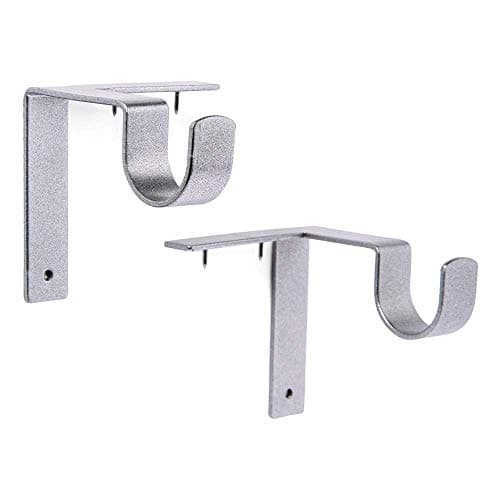
- Joists - the best case. Find them with a stud finder, mark them, and fix the brackets straight into timber. Joists usually run one way only, so the rod position may be dictated by where they are.
- Drywall between joists - use purpose-made hollow-ceiling anchors rated well above the load, not plastic wall plugs. Any fixing that only grips the paper face of the board will pull out.
- Concrete - a masonry bit and sleeve anchors. Slower, and the strongest of the three once in.
If none of those is available or permitted - a rental, a concrete ceiling you cannot drill, an artex finish - a floor-to-ceiling tension system carries the load to the floor instead and drills nothing.
Numbers
Get the measurements right
Drop, from the ceiling
Measure from the underside of the ceiling bracket to where you want the hem, then subtract for the rings or grommets. In a standard 8-foot room that lands on a 96-inch panel; a 9-foot ceiling needs 108 inches, and a 10-foot ceiling is into made-to-measure territory. Half an inch clear of the floor is the right hem for a room you walk through; the full ladder of lengths is in the curtain length guide.
Projection, so the panel clears the sill
The rod needs to sit far enough out from the wall that the panel hangs clear of a projecting sill, a radiator or a window handle. Four to six inches out from the wall suits most rooms; measure the deepest obstacle below and add an inch.
Width, still the same rule
Window width plus 8 to 12 inches, so the panels stack off the glass and overlap the frame when closed. Moving the rod to the ceiling does not change that - see what size curtain rod do I need.
Step by step
Fitting it
- 1
Mark the rod line on the ceiling
Measure out from the wall at both ends of the run, snap or pencil a straight line between the marks, and check it is parallel to the wall rather than parallel to the window - windows are often not square to the room.
- 2
Locate joists along that line
Run a stud finder along the line and mark every joist. If a bracket position misses a joist, either move the whole rod out an inch to catch them or commit to hollow-ceiling anchors.
- 3
Fix the end brackets first
Drill, fix, and check both brackets are level with each other using a long level or a laser rather than measuring down from the ceiling - ceilings are rarely flat.
- 4
Add a center support on any long span
Over about 60 inches, a center bracket is what stops a visible bow. On a ceiling mount it matters more, because the load hangs further from the fixing than on a wall bracket.
- 5
Hang the panels and check the hem
Hang before you hem, and let heavy fabric settle for a day or two - lined panels drop slightly under their own weight before they find their final length.
Hardware
Rod or track
A rod on ceiling brackets is the simple route and keeps a decorative finial. A ceiling track sits flush, disappears visually, and is what you want for a wall-to-wall run or a room divider, at the cost of looking like hardware rather than a feature. For a single window, a rod on ceiling-fixed brackets is almost always the better-looking answer.
Methodology
How we chose
We select on published construction and materials, on fitness for the specific problem each pick addresses, and on failure patterns that recur across owner feedback rather than headline scores. We do not lab-test hardware and publish no load figure of our own; weight ratings quoted are manufacturers' own and are labeled as such. Full criteria on the methodology page.
What we’d buy
The products behind this advice
Picked against the criteria above, not the other way round. Prices are read from Amazon and refreshed daily; each link goes to the current listing.
| # | Best for | Product | Type | Load | Price |
|---|---|---|---|---|---|
| 1 | The panel length it needs | 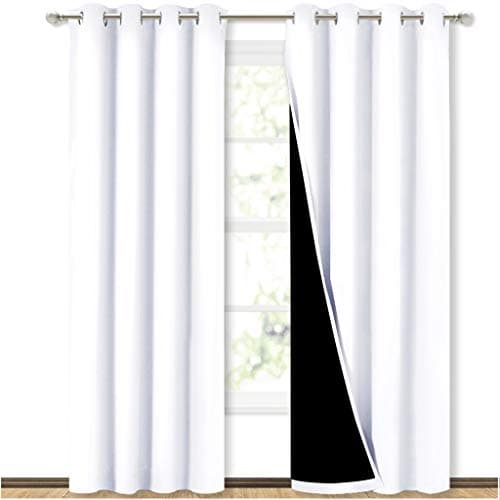 Anyone ceiling-mounting in a standard room, where the drop grows to 96 or 108 inches the moment the rod leaves the frame. | Blackout curtain | — | $19.99 · View on Amazon #ad Price as of November 3, 2026, and it can change. How we’re funded |
| 2 | Best rod for a ceiling mount | 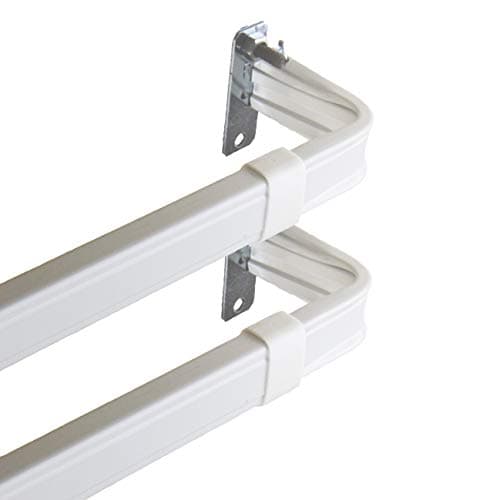 Long drops and lined panels, where the extra weight hangs further from the bracket than a wall mount ever puts it. | Curtain rod | Heavy | $42.17 · View on Amazon #ad Price as of November 3, 2026, and it can change. How we’re funded |
| 3 | Best if you cannot drill the ceiling | 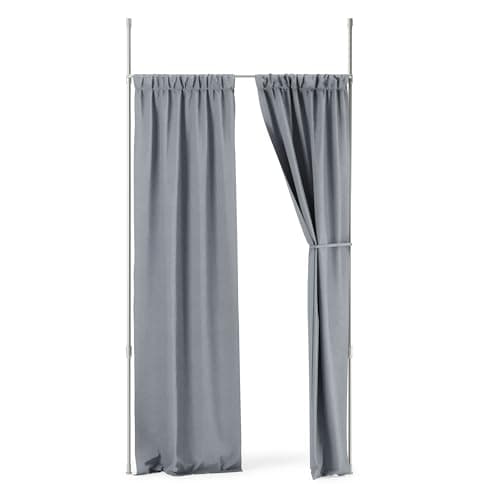 Rentals, concrete ceilings and anywhere the fixing is the problem rather than the rod. | Floor-to-ceiling tension | Heavy | $53.06 · View on Amazon #ad Price as of November 3, 2026, and it can change. How we’re funded |
01 — The panel length it needs
Thermal Insulated Blackout Curtains
NICETOWN
Triple-weave polyester with no coating to crack or peel, machine washable, and sold in a wider ladder of drops than most ranges — including the 108-inch length a near-ceiling rod needs.
Who it’s for: Anyone ceiling-mounting in a standard room, where the drop grows to 96 or 108 inches the moment the rod leaves the frame.
The catch: The grommet header holds the panel an inch off the wall with open gaps between grommets, so light still comes over the top. Add a pelmet, or choose a back-tab version, if that is your problem.
At a glance
- Type
- Blackout curtain
- Construction
- Triple-weave, uncoated
- Care
- Machine wash cold
- Drops
- 63 / 84 / 96 / 108 in
#ad Price as of November 3, 2026, and it can change. How we’re funded
02 — Best rod for a ceiling mount
Heavy-duty lock-seam drapery rod set
Rod Desyne
Lock-seam steel tube with brackets proportioned to match, which is what stops a rod bowing in the middle or drooping at the ends under lined panels.
Who it’s for: Long drops and lined panels, where the extra weight hangs further from the bracket than a wall mount ever puts it.
The catch: Function over appearance — the finishes are plain. If the rod is meant to be a decorative feature, you are trading looks for stiffness.
At a glance
- Type
- Curtain rod
- Diameter
- 3/4–1 in
- Load
- Heavy
- Supports
- Center bracket available
#ad Price as of November 3, 2026, and it can change. How we’re funded
03 — Best if you cannot drill the ceiling
Anywhere Expandable Curtain Rod and Room Divider
Umbra
Vertical poles jammed between floor and ceiling carry a horizontal rod, so the load runs to the floor rather than into a wall. It handles weight no bracket-free wall mount will, and works where there is no usable trim at all.
Who it’s for: Rentals, concrete ceilings and anywhere the fixing is the problem rather than the rod.
The catch: The poles take floor space and are plainly visible. This is furniture rather than hidden hardware, and the height range is fixed.
At a glance
- Type
- Floor-to-ceiling tension
- Load
- Heavy
- Needs
- Floor and ceiling clearance
- Leaves
- Nothing
#ad Price as of November 3, 2026, and it can change. How we’re funded
FAQ
Questions people actually ask
Can you hang curtains from the ceiling?
Yes, and it is the best option when there is less than about four inches of wall above the window. Fix into joists where possible, or into hollow-ceiling anchors rated well above the load, 4 to 6 inches out from the wall so the panel clears the sill.
What length curtains do I need for a ceiling mount?
Measure from the underside of the bracket to half an inch above the floor and subtract for rings or grommets. In a standard 8-foot room that is a 96-inch panel; a 9-foot ceiling needs 108 inches. The drop is always measured from the rod, which is why a ceiling mount needs longer panels than a wall mount at the same window.
How far from the wall should a ceiling curtain rod be?
Four to six inches for most rooms, which keeps the panel clear of a projecting sill or a radiator. Measure the deepest obstacle below the window and add an inch; that is your minimum.
Do ceiling-mounted curtains make a room look taller?
Yes - taking the eye to the ceiling rather than stopping it at the window head is the single cheapest way to make a room read taller, which is why it is such a common decorating recommendation. It works best when the panels are floor length and the rod runs wider than the window.
What if I cannot drill the ceiling?
Use a floor-to-ceiling tension system, which jams vertical poles between floor and ceiling and carries a horizontal rod between them. The load goes to the floor rather than into any fixing, so it works in rentals and on ceilings you must not damage - at the cost of visible poles.
Keep going
Read next
Rods & Mounting
How high to hang curtains
Higher than you think — ceiling height to rod height to curtain length.
Rods & Mounting
Curtain length guide
Standard drops, six hem finishes, and the measurement everyone gets wrong.
Rods & Mounting
What size curtain rod do I need?
Window plus 8 to 12 inches — with the full size table and support rules.
Rods & Mounting
Best curtain rods for heavy curtains
What carries lined blackout panels without bowing — rod, bracket and anchor.
Renter-Friendly
Best no-drill curtain rods
Match the mount to the weight and surface — what each no-drill option really holds.
Blackout
How to fix curtain light gaps
Close the side, top, middle and bottom gaps — the cheapest fix for a bright room.
About the author
Janet H.
Janet H. is the owner of Janet Media Group and the person behind Drape & Dawn. She researches every pick against the site's published methodology.
Published by Janet Media Group · Last updated October 17, 2026