Comparison
Blinds vs shades vs shutters
Three hard coverings for the same window, separated by how they move and by how permanent they are.
By Janet H. · Last updated October 15, 2026 · How we choose

Choose a blind when you want to aim the daylight cheaply. Choose a shade when you want the window covered neatly, insulated, or darkened. Choose shutters when you intend to stay in the house, want a built-in look, and are prepared to measure carefully and wait for them. The first two are products you fit this week; the third is closer to joinery.
All three are hard coverings, so none of them soften a room the way fabric panels do, and none is the cheapest way to fix a window. What separates them is movement. A blind tilts. A shade travels up and down as one continuous piece. A shutter tilts like a blind but is fixed to the window frame, so it never leaves the opening at all.
Drape & Dawn earns a commission from qualifying purchases made through links on this page, at no extra cost to you. It does not change what we recommend. Full disclosure.
At a glance
The short version
| Blinds | Shades | Shutters | |
|---|---|---|---|
| Control | Directional — tilt | Positional — height | Directional — tilt |
| View when in use | Partial, through the slats | None once lowered | Partial, through the louvers |
| Darkness | Never total | Good to total, by fabric | Never total |
| Insulation | Essentially none | Best, with cellular fabric | Modest, from the panel itself |
| Wet rooms | Vinyl and faux wood are fine | Depends on fabric | Faux wood is fine, real wood is not |
| Fitting | Minutes, brackets in the box | Minutes, brackets in the box | Measured, made to order, screwed to the frame |
| Cost per window | Lowest | Low to mid | Highest by a wide margin |
| Moves with you | Yes | Yes | No — it stays with the house |
Definitions
What each one actually is
A blind is a set of horizontal or vertical slats on a headrail. The slats tilt to aim light and privacy, and the whole stack raises out of the way. A shade is one continuous piece of material — roller, cellular, roman, zebra — that covers the part of the window you lower it over, with no tilt at all. A shutter is a rigid panel of louvers hinged to the window frame: it swings open like a small door and its louvers tilt like a blind's slats.
The decisive practical difference is that blinds and shades are fittings and shutters are close to a building element. Shutters are made to the measurements of your specific opening, screwed to the frame, and left behind when you move. That is the source of both their appeal and their cost. Blinds vs shades and blinds vs shutters take the pairs one at a time; this page is for when all three are still on the table.
Light
Light control: blinds and shutters do the same trick
Slats and louvers both give directional control: you keep daylight and lose the glare by angling them, and you can aim the sightline up above head height so the room is private but not dark. A shade cannot do this. It gives positional control instead — covering exactly the part of the window you lower it over, completely, which is a better answer when the problem is low sun at a particular height rather than general brightness.
Shutters tilt in wider louvers than a blind's slats, typically 2.5 to 4.5 inches, so they look cleaner and leave a more open view when tilted — but the louvers are thicker, so the frame they sit in eats more of the glass than a blind headrail does. If glare at a desk is the problem rather than privacy, how to stop screen glare from windows is the more direct route.
Comfort
Darkness and insulation: shades, decisively
Only a shade can make a room dark, and only one kind of shade keeps it warm. A blackout roller or a blackout cellular shade is a solid piece of material; closed inside a recess it leaves gaps at the edges, and mounted outside the frame it closes most of those too. Slats and louvers leak at every joint by design, so neither a blind nor a shutter makes a bedroom dark, whatever the showroom says.
Insulation works the same way. Cellular honeycomb fabric traps a layer of still air against the glass, which is the only mechanism among these three that measurably slows heat moving through a window — see best insulated cellular shades. A shutter panel is a solid-ish barrier and does a little. A blind does next to nothing, because air moves freely through the open structure.
Durability
Rooms that get wet or greasy
Vinyl and faux wood blinds, faux wood shutters and coated roller fabrics all survive a bathroom or a kitchen. Real wood blinds and real wood shutters do not — wood swells, warps and discolors over a bath or above a sink, and the paint cracks at the louver pins. Fabric shades vary: a vinyl-coated roller is fine, a cellular or a roman will hold damp and smell. Best blinds for bathroom windows is the version of this with specific products.
Money
Cost and what you actually get for it
Blinds are the cheapest finished window of the three in vinyl, and still inexpensive in faux wood at common sizes. Shades sit a little above that, rising with width and with made-to-size ordering. Shutters are in a different bracket entirely — several times the price of a blind for the same window once they are measured and made, even from the value-priced sellers that ship direct.
What the money buys is permanence rather than performance. Shutters do not sag, do not need replacing every few years, survive pets and children better than anything else here, and are generally treated as part of the house at resale. If you are staying put, that arithmetic can work. If you might move inside five years, you are paying for a fixture you will leave behind.
Installation
Fitting, and the part that goes wrong
A blind or a shade arrives with brackets and goes up in minutes, and a stock size that is slightly wrong can be trimmed or returned. Shutters are made to your measurements of your opening, which means a mis-measure is expensive and usually not returnable. Measure the width and the height in three places each, check the recess is square, and confirm the depth available for the louvers before ordering anything custom. How to measure for blinds covers the method, and it applies with more force here.
Lead time matters too. A blind is on the window this week; made-to-order shutters are quoted in weeks, and the direct sellers that ship fastest still need a couple of weeks from order to installed. If the window is overlooked right now, fit something cheap while you wait.
If shutters win
Shutter styles, and the one most people mean
Three arrangements account for nearly everything sold. Full height is one panel covering the whole opening, louvers tilting together — the plain, modern default. Café style covers the lower half only, leaving the top of the window clear, which is the classic answer for a street-facing front room where you want privacy at eye level and all the daylight above it. Tier on tier is two stacked sets of panels that open and tilt independently, giving you the café effect when you want it and full coverage when you do not, at the highest price of the three.
Louver width changes the look more than anything else: narrow louvers around 2.5 inches read traditional and cottage-like, wide ones at 3.5 to 4.5 inches read contemporary and leave a more open view when tilted. Wider louvers also mean fewer of them, which is less to dust. If what you actually want is the lower-half privacy rather than the joinery, privacy at night without losing daylight lists the cheaper ways to get it.
Safety
Cords, children and pets
This is one place shutters are genuinely ahead: there is nothing to pull. A hinged panel with a tilt rod has no cord, no chain and no loop, which is why they turn up so often in nurseries and playrooms. Blinds and shades have caught up — cordless lifts are now the default on stock sizes and are what we recommend throughout — but any older corded blind inherited with a house is worth replacing rather than tying up. Are cordless blinds worth it covers the tradeoffs of the mechanism itself.
The recommendation
What we would actually do
- 1A bedroom that needs to be dark: a blackout shade, mounted outside the frame, with curtains over it if the room is also cold.
- 2A living room you want to look finished: shutters if you are staying and the budget is there; otherwise faux wood blinds, which get most of the way at a fraction of the cost.
- 3A kitchen or bathroom: faux wood or vinyl blinds. Cheap, wipeable, replaceable when they finally give up.
- 4A rental: a shade or a blind, every time. Shutters belong to the window, not to you.
What we’d buy
The products behind this advice
Picked against the criteria above, not the other way round. Prices are read from Amazon and refreshed daily; each link goes to the current listing.
| # | Best for | Product | Type | Operation | Price |
|---|---|---|---|---|---|
| 1 | If you chose a blind | 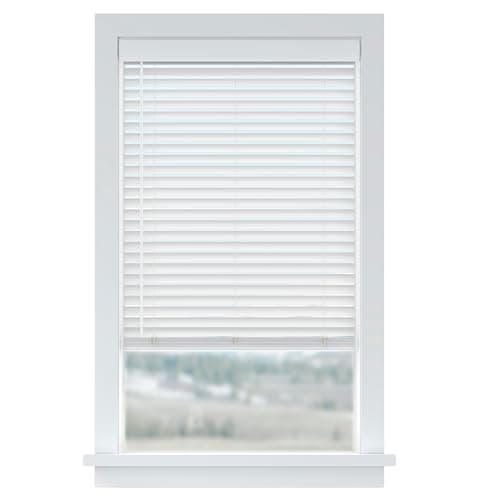 The cheapest way to aim daylight, and the only one of the three you can fit the day it arrives. | Slatted blind | Cordless | $59.99 · View on Amazon #ad Price as of November 3, 2026, and it can change. How we’re funded |
| 2 | If you chose a shade | 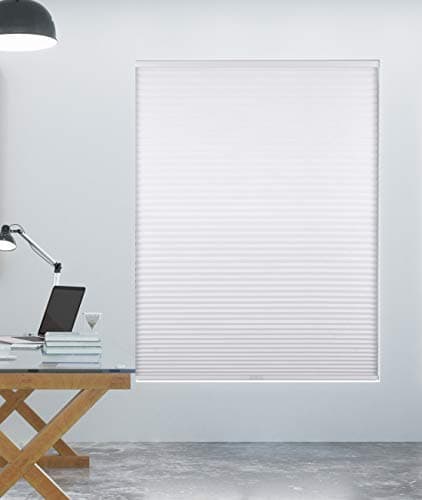 Rooms that need to be darker or warmer — the one covering here that does both, since slats and louvers do neither. | Cellular shade | Cordless | $50.99 · View on Amazon #ad Price as of November 3, 2026, and it can change. How we’re funded |
| 3 | If you chose shutters | 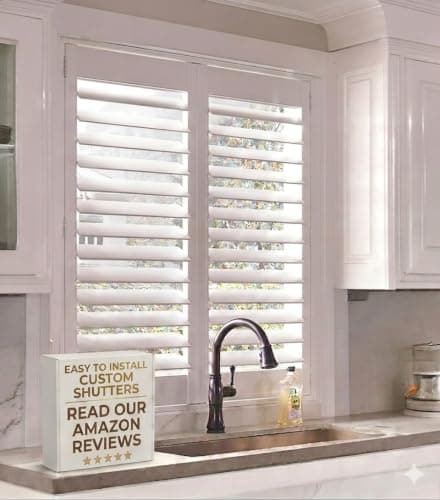 A window you intend to keep as it is for years, in a house you are staying in, where the built-in look is the thing you are buying. | Interior shutter | Hinged panels, tilting louvers | $149.00 · View on Amazon #ad Price as of November 3, 2026, and it can change. How we’re funded |
01 — If you chose a blind
Basics Cordless Faux Wood Blinds, 2" routeless slats
LEVOLOR
Two-inch faux wood with the lift cords routed out of the slat face, so the blind closes without a column of light pinholes down the middle — the spec that matters if privacy or darkness is the point.
Who it’s for: The cheapest way to aim daylight, and the only one of the three you can fit the day it arrives.
The catch: Faux wood is heavy. Over about 60 inches a single blind gets awkward to raise and loads the brackets; two side by side work better.
At a glance
- Type
- Slatted blind
- Material
- Faux wood
- Slat
- 2 in, routeless
- Operation
- Cordless
#ad Price as of November 3, 2026, and it can change. How we’re funded
02 — If you chose a shade
Single Cell Room Darkening Cordless Cellular Shades
Arlo Blinds
Room-darkening honeycomb fabric that dims a room to a comfortable dusk while it stays usable in daylight, with cordless lift and the insulation the cell structure brings.
Who it’s for: Rooms that need to be darker or warmer — the one covering here that does both, since slats and louvers do neither.
The catch: Room darkening, not blackout. In a bedroom that has to be dark at 5am in June this is the wrong specification.
At a glance
- Type
- Cellular shade
- Fabric
- Room darkening
- Operation
- Cordless
- Fit
- Made to size
#ad Price as of November 3, 2026, and it can change. How we’re funded
03 — If you chose shutters
Plantation Shutters, interior, custom made
Suncraft
Louvered interior shutter panels built to the measurements of your own opening and shipped flat for you to fit yourself. This version has no front tilt rod, so the louvers are moved by hand and the face of the panel stays clean; the listing quotes a make-and-ship time of around ten days.
Who it’s for: A window you intend to keep as it is for years, in a house you are staying in, where the built-in look is the thing you are buying.
The catch: Made to order from measurements you take yourself, so an error is expensive and generally not returnable, and it screws to the frame and stays with the house when you move. Louvers also leak light at every joint, so shutters will not darken a bedroom.
At a glance
- Type
- Interior shutter
- Fit
- Made to your measurements
- Operation
- Hinged panels, tilting louvers
- Install
- DIY, fixed to the frame
#ad Price as of November 3, 2026, and it can change. How we’re funded
FAQ
Questions people actually ask
Are shutters better than blinds?
Better built and more permanent, not better performing. Shutters tilt like a blind, last far longer, and read as part of the house. They cost several times as much, still leak light at every louver, and stay behind when you move.
Do shutters or shades insulate better?
A cellular shade insulates better, because the honeycomb traps a layer of still air against the glass. A shutter panel helps a little as a physical barrier, but louvers have gaps all through them and nothing is trapped.
Which is best for a bedroom?
A shade, in blackout fabric, mounted outside the frame. Blinds and shutters both leak light at the slat and louver joints, so neither takes a bedroom genuinely dark. If the room is cold as well, add lined curtains over the shade.
Do plantation shutters add value to a home?
They are generally treated as a fixture that stays with the house and are often listed as a feature, which is more than can be said for a blind. Whether they return their cost depends entirely on your market, so treat resale as a bonus rather than the reason to buy.
What is the cheapest of the three?
Blinds, in vinyl, with the brackets in the box. Shades follow, rising with width and made-to-size ordering. Shutters are several times the price of either, because every panel is made to the measurements of your opening.
Can you fit shutters in a bathroom?
Faux wood or vinyl shutters, yes — they tolerate humidity the way faux wood blinds do. Real wood shutters over a bath or a shower will swell and the finish will crack at the louver pins, so most makers void the warranty for wet rooms.
Sources
What we referenced
Keep going
Read next
Compare
Blinds vs shades
Slats that tilt or one piece that raises — everything else follows.
Compare
Blinds vs shutters
Same tilt control, very different commitment — when shutters actually earn the cost.
Compare
Best window blinds
The only covering you can aim — which material suits which room.
Compare
Best cellular shades
The best-insulating covering there is — and why the fit decides the result.
Compare
Curtains vs drapes vs blinds
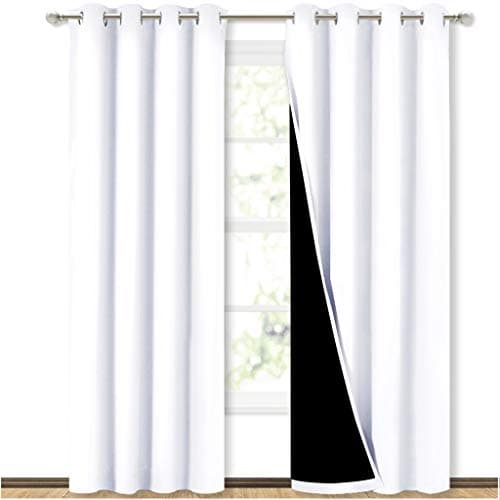
The real difference between a curtain, a drape and a blind, and which one your room needs.
Compare
Blinds vs cellular shades
Aim the light or insulate the window — two products, two different problems.
About the author
Janet H.
Janet H. is the owner of Janet Media Group and the person behind Drape & Dawn. She researches every pick against the site's published methodology.
Published by Janet Media Group · Last updated October 15, 2026