Roundup
Best window treatments for large windows
Stock window coverings stop at widths a picture window laughs at. Four ways to cover one anyway, and the trade each makes.
By Janet H. · Last updated October 10, 2026 · How we choose
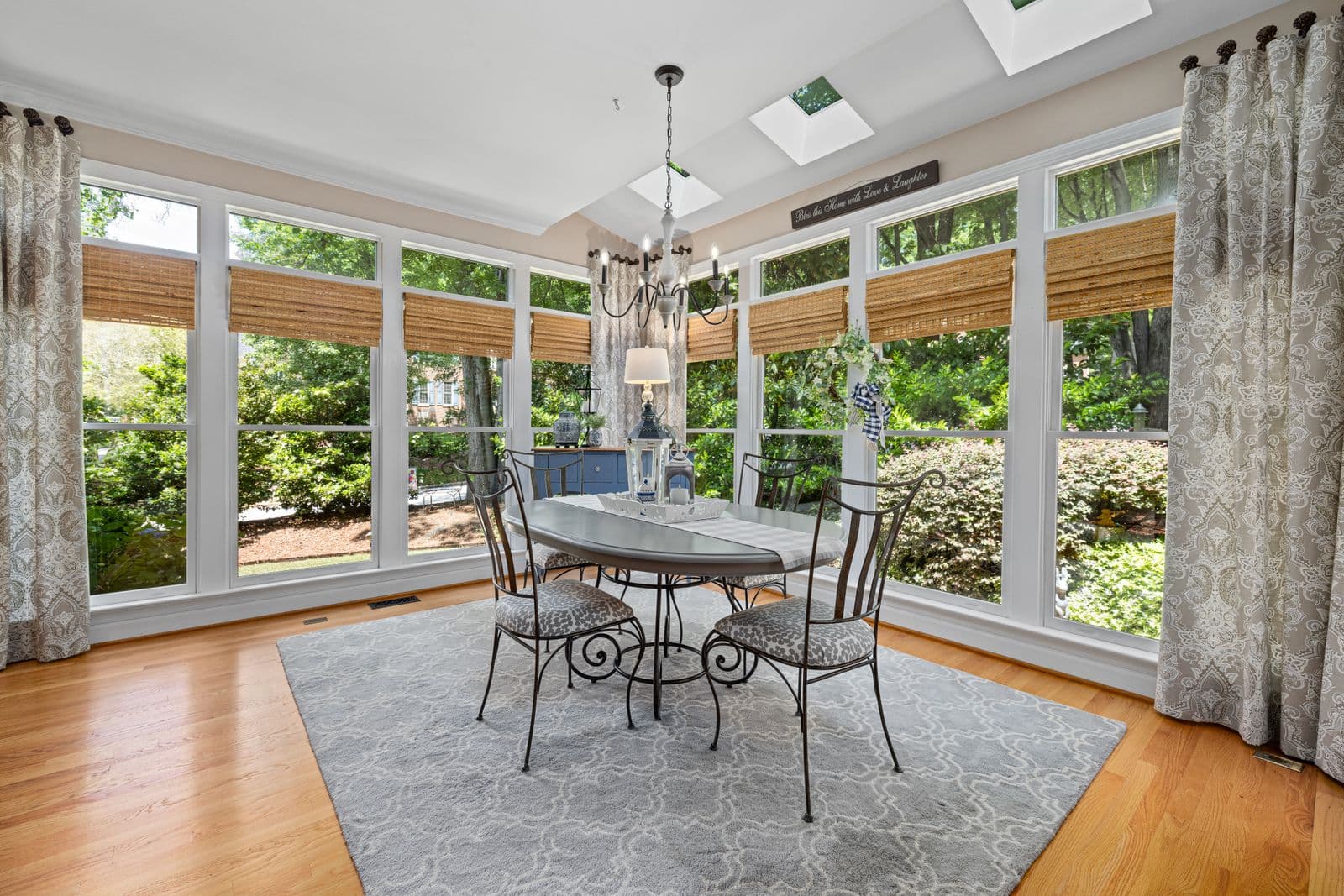
On a large window the best answer is almost always multiple panels on one long rod — three or four single long-drop blackout panels such as the NICETOWN Thermal Insulated Blackout Curtains in a 108-inch drop, on a lock-seam rod with a center support. Curtains scale by adding panels; blinds and shades do not scale at all past their maximum width.
That is the structural fact behind every large-window problem. Stock shades top out somewhere around 72 inches wide, and above that you are either paying for custom or ganging — fitting two or three shades side by side across the opening, with a visible gap between them. Curtains have no such limit: fullness comes from adding panels, and a rod can be supported as often as it needs to be.
Drape & Dawn earns a commission from qualifying purchases made through links on this page, at no extra cost to you. It does not change what we recommend. Full disclosure.
Before the list
Measure first, because the ceiling decides
Two numbers set the budget. Width, because every stock product has a maximum and yours is either under it or not. Drop, because a floor-to-ceiling window needs 108 inches or more of panel and that is the top of the stock range — above it, you are buying custom or accepting a visible gap at the top.
Then the question that matters more than either: what is the window actually doing wrong? A wall of glass is usually a glare and heat problem first, a heat-loss problem second and a darkness problem a distant third. Buying a blackout treatment for a glare problem turns a bright room into a dark one, which nobody wanted. Work out which of those it is before choosing between the four approaches below.
| # | Best for | Product | Approach | Scales to | Best at | Price |
|---|---|---|---|---|---|---|
| 1 | Best overall approach | 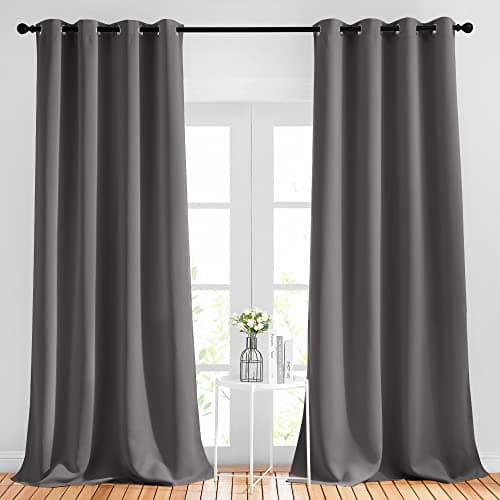 Any large window where you want full coverage, warmth and the option of darkness — the default answer above about 72 inches wide. | Multiple panels, one rod | Any width | Coverage, warmth, darkness | $31.89 · View on Amazon #ad Price as of November 3, 2026, and it can change. How we’re funded |
| 2 | The hardware that carries it | 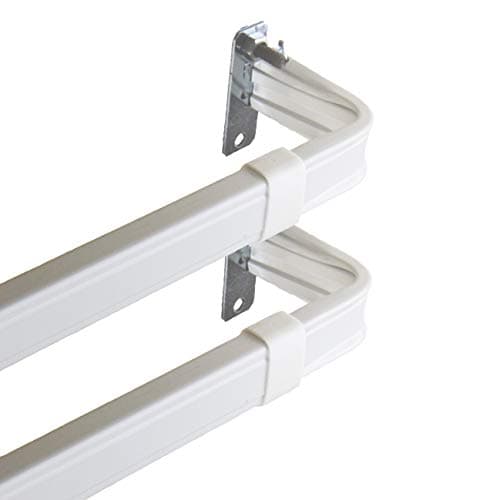 Every large-window curtain installation. On this scale the rod is not an accessory. | Hardware | Wide spans with support | Not bowing | $42.17 · View on Amazon #ad Price as of November 3, 2026, and it can change. How we’re funded |
| 3 | Best for glare and solar heat | Snap-N-Glide Cordless Roller Shades A picture window whose problem is afternoon glare and heat rather than privacy or darkness. | Ganged roller shades | Gang 2–3 units | Glare and solar gain | Check price on Amazon #ad No current price for this one — check it on Amazon. How we’re funded |
| 4 | Best for heat loss | 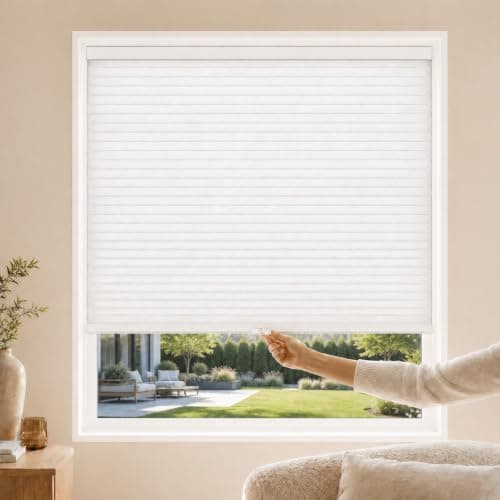 A big window in a cold room, ganged in two or three sections across the opening. | Ganged cellular shades | Gang 2–3 units | Insulation | $29.99 · View on Amazon #ad Price as of November 3, 2026, and it can change. How we’re funded |
01 — Best overall approach
Thermal Insulated Blackout Curtains, long drops
NICETOWN
Sold as single panels in the 95 to 108-inch drops a floor-to-ceiling window needs, which is what makes it the scalable choice: buy four or five, run them on one rod, and the joins vanish into the gathers. Triple-weave construction means no coating to crack along the long fold lines a tall panel develops.
Who it’s for: Any large window where you want full coverage, warmth and the option of darkness — the default answer above about 72 inches wide.
The catch: The weight of four or five long panels is substantial, and the hardware has to be specified for it. This is not a product problem, it is a bracket-and-stud problem.
At a glance
- Approach
- Multiple panels, one rod
- Scales to
- Any width
- Best at
- Coverage, warmth, darkness
- Typical drops
- 95 / 100 / 108 in
- Care
- Machine wash cold
#ad Price as of November 3, 2026, and it can change. How we’re funded
02 — The hardware that carries it
Heavy-duty lock-seam drapery rod set
Rod Desyne
A lock-seam telescoping rod with drapery-rated brackets and a center support. The seam is what resists the twist a long rod develops under four or five lined panels — the failure mode that makes a wide installation sag in the middle.
Who it’s for: Every large-window curtain installation. On this scale the rod is not an accessory.
The catch: Telescoping rods have a published maximum span and a practical one that is shorter. Over about ten feet, two rods meeting at a center bracket is more rigid than one long one.
At a glance
- Approach
- Hardware
- Scales to
- Wide spans with support
- Best at
- Not bowing
- Typical spans
- Telescoping, wide
- Care
- N/A
#ad Price as of November 3, 2026, and it can change. How we’re funded
03 — Best for glare and solar heat
Snap-N-Glide Cordless Roller Shades
CHICOLOGY
A cordless solar-screen roller shade: a woven mesh that cuts the harsh component of daylight and a share of the solar heat while keeping the view through it. Gang two across a wide opening and the join is far less visible than on an opaque shade.
Who it’s for: A picture window whose problem is afternoon glare and heat rather than privacy or darkness.
The catch: Semi-transparent in both directions, so it is not a privacy product after dark, and each stock shade has a maximum width that a very wide window will exceed.
At a glance
- Approach
- Ganged roller shades
- Scales to
- Gang 2–3 units
- Best at
- Glare and solar gain
- Operation
- Cordless
- Care
- Sponge clean
#ad No current price for this one — check it on Amazon. How we’re funded
04 — Best for heat loss
Cordless Cellular Shades, insulated
CHICOLOGY
An insulated honeycomb shade that traps a layer of still air against the glass. On a large window — which is usually the biggest single heat loss in the room — that trapped air does more thermal work than any amount of fabric weight.
Who it’s for: A big window in a cold room, ganged in two or three sections across the opening.
The catch: Ganging leaves a visible vertical gap between units, and each stock unit has a maximum width. Cellular fabric is also a dust trap on a window this size.
At a glance
- Approach
- Ganged cellular shades
- Scales to
- Gang 2–3 units
- Best at
- Insulation
- Operation
- Cordless
- Care
- Dust, spot clean
#ad Price as of November 3, 2026, and it can change. How we’re funded
Buying guide
The four ways to cover a large window
Multiple panels on one long rod
The approach that scales. Buy single panels rather than pairs, run as many as fullness requires, and support the rod every five or six feet. A 120-inch window at 2x fullness wants roughly 240 inches of panel — four or five standard panels. The visible join between panels disappears into the gathers, which is why this looks continuous where ganged shades do not.
Ganged shades, side by side
Two or three stock shades fitted across the opening, each operated separately. The advantages are real: you can part-raise one section and not another, and a single failure replaces one shade rather than the whole window. The cost is the gap — a visible vertical line of light between each pair, which on a blackout shade in a bedroom is exactly where the problem is. In a living room nobody notices.
Solar screen for glare and heat
If the window is a glare and solar-gain problem rather than a privacy one, a solar-screen roller shade is the efficient answer: it cuts the harsh component of the light and a share of the heat while keeping the view, which is the reason you have a large window in the first place. Ganging two across a wide opening is less objectionable here because the fabric is semi-transparent anyway.
Exterior shading, which beats all of it
On a large sun-facing window, anything you hang inside is working after the heat has already come through the glass. Stopping it outside — an awning, an exterior roller shade, a tree — is several times more effective per dollar for summer heat. It does nothing for privacy or darkness, so it is usually an addition rather than a replacement. Best curtains to keep heat out covers the physics.
Methodology
How we chose
Chosen for what is available in stock sizes wide and long enough to be useful on a large window, and on whether the approach scales honestly rather than by hiding a compromise. Selected on published construction and dimensions and on the failure patterns owners report at scale — bowed rods, sagging headrails, ganged shades that no longer align. No lab testing. Criteria on the methodology page.
FAQ
Questions people actually ask
What is the best window treatment for a large window?
Multiple curtain panels on one supported rod, in most cases. Curtains are the only category that scales without a maximum width — fullness comes from adding panels — whereas stock shades top out around 72 inches and above that you are ganging units or paying for custom.
How do you cover a window wider than any blind you can buy?
Gang two or three stock shades side by side across the opening, each operating independently, and accept a visible vertical gap between them. Or switch to curtains, where width is solved by adding panels rather than by a bigger single product.
How many curtain panels for a 120-inch window?
Around 240 to 300 inches of combined panel width at 2 to 2.5 times fullness, which is four to six standard panels depending on their width. Buy single panels rather than pairs so you can hit an odd number, and order them all together so the color matches.
Do large windows need special curtain rods?
They need a rod that will not bow: a lock-seam telescoping rod, brackets anchored into studs, and a center support every five or six feet. Over about ten feet, two rods meeting at a center bracket is more rigid than one long span.
What is the best way to stop a large window overheating?
Shade it outside the glass — an awning, an exterior roller shade or planting. Anything hung inside is working after the solar energy has already entered the room. Interior solar-screen shades are the next best option, and dark blackout panels are the worst, because they absorb the heat and re-radiate it inward.
Keep going
Read next
Rooms
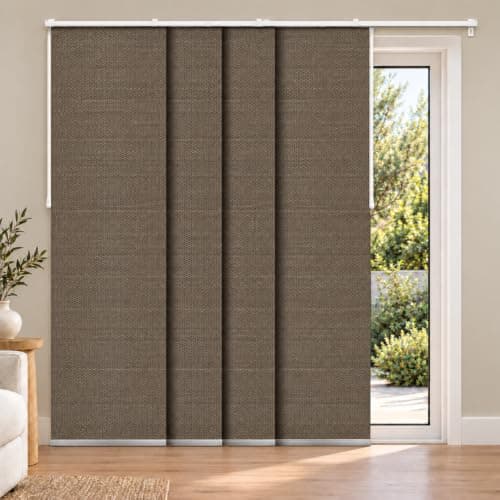
Best window treatments for sliding glass doors
Panel tracks, verticals, curtains and no-drill shades for a patio door, ranked by the problem each one fixes.
Rooms
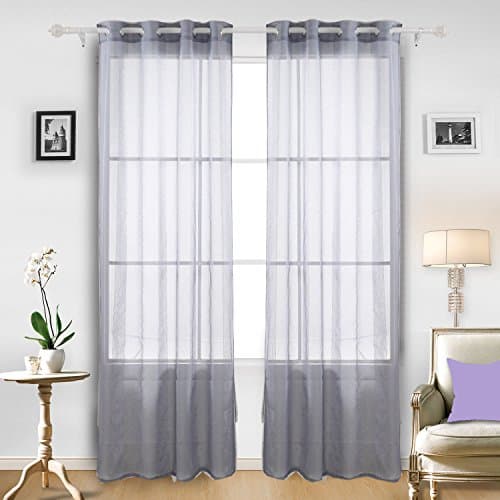
Window treatments for a living room
Glare, evening privacy and a big opening — handled with two light layers, not one heavy one.
Rooms
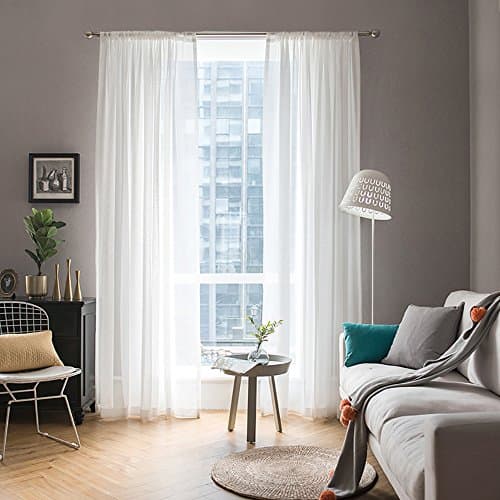
Best curtains for a living room
Panels for glare, privacy, cold and appearance — and which job each one gives up.
Rods & Mounting
Best curtain rods for heavy curtains
What carries lined blackout panels without bowing — rod, bracket and anchor.
Rods & Mounting
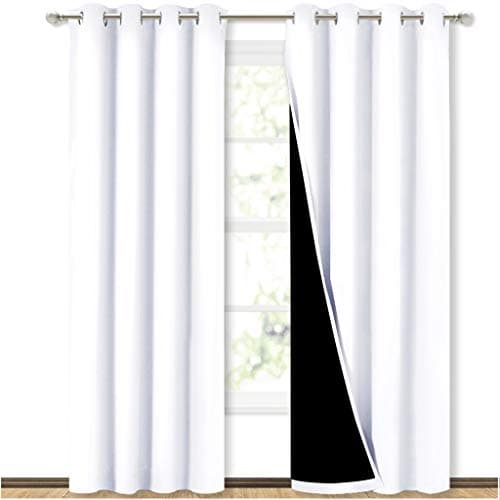
How many curtain panels do I need?
The 2x fullness rule, worked for common window widths, and why pairs go wrong.
Drafts
Best curtains to keep heat out
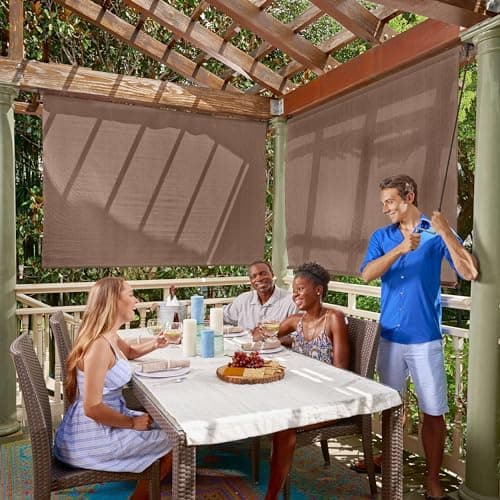
Reflect the sun before the fabric absorbs it — and why a dark blackout panel backfires.
Glare
Best roller shades for glare
Lower it to exactly the height of the glare — and the openness number that decides the rest.
About the author
Janet H.
Janet H. is the owner of Janet Media Group and the person behind Drape & Dawn. She researches every pick against the site's published methodology.
Published by Janet Media Group · Last updated October 10, 2026