Roundup
Best curtains to keep heat out
Dark blackout panels can make a hot room hotter. What you want is something that reflects, ideally before the glass.
By Janet H. · Last updated September 23, 2026 · How we choose
Summer heat is a radiation problem, not a conduction one, and that changes the answer completely. Sunlight passes through glass easily and is absorbed by whatever it lands on — including your curtains. A dark blackout panel absorbs that energy and then re-radiates a good share of it into the room. It blocks the light beautifully and does surprisingly little about the heat.
What you want instead is something that reflects the radiation before it is absorbed — a light-colored or metallic-backed surface facing the glass — and, best of all, something that intercepts the sun outside the glass entirely. Once the energy is through the window it is largely already in the room.
Drape & Dawn earns a commission from qualifying purchases made through links on this page, at no extra cost to you. It does not change what we recommend. Full disclosure.
The mechanism
Why outside beats inside
Glass is transparent to incoming short-wave solar radiation and fairly opaque to the long-wave heat that warm surfaces emit. So sunlight gets in easily, warms your floor and furniture, and the heat that comes off them does not get back out. That is the greenhouse effect, running in your living room.
An interior covering can only intercept the light after it is through the glass — at which point the energy is already inside and the covering itself becomes a warm surface radiating into the room. An exterior shade intercepts it before the trap closes, and the heat it absorbs is carried away by outside air. This is why outdoor and patio roller shades outperform anything you can hang indoors.
| # | Best for | Product | Mechanism | Position | Keeps view | Price |
|---|---|---|---|---|---|---|
| 1 | Best overall | Outdoor Roller Shade with wand Patio doors, covered porches and any window with something overhead to mount from. The single most effective option on this page. | Blocks sun outside the glass | Exterior | Partial, through the weave | Check price on Amazon #ad We don’t show prices — check the current one on Amazon. How we’re funded |
| 2 | Best interior curtain | Thermal Insulated Blackout Curtains, silver backed West and south-facing rooms without an exterior mounting option — the common case. | Reflective backing | Interior | No, when closed | Check price on Amazon #ad We don’t show prices — check the current one on Amazon. How we’re funded |
| 3 | Best for keeping the view | Snap-N-Glide Cordless Roller Shades, solar screen Living rooms and home offices where the window is hot in the afternoon and the view matters the rest of the time. | Solar screen weave | Interior | Yes, partial | Check price on Amazon #ad We don’t show prices — check the current one on Amazon. How we’re funded |
| 4 | Best all-season | Cordless Cellular Shades, insulated Rooms that are too hot in summer and too cold in winter — which is most rooms with a large window. | Trapped air, both directions | Interior | No | Check price on Amazon #ad We don’t show prices — check the current one on Amazon. How we’re funded |
| 5 | Best no-hardware option | Frosted heat-blocking window film Rentals, awkward windows, and rooms where you do not want any hardware at all. | Film at the glass | On the pane | No, frosted | Check price on Amazon #ad We don’t show prices — check the current one on Amazon. How we’re funded |
01 — Best overall
Outdoor Roller Shade with wand
Coolaroo
An exterior knitted shade, rated by the manufacturer at up to 90% UV block, mounted outside the glass on a soffit, beam or pergola. It stops the radiation before it enters, which is the only approach that prevents the heat rather than managing it.
Who it’s for: Patio doors, covered porches and any window with something overhead to mount from. The single most effective option on this page.
The catch: It needs somewhere outdoors to fix to, which rules it out on a bare wall with no overhang. It also has to be rolled up in high wind.
At a glance
- Mechanism
- Blocks sun outside the glass
- Position
- Exterior
- Keeps view
- Partial, through the weave
- Operation
- Wand
- Best for
- Patios, porches, pergolas
#ad We don’t show prices — check the current one on Amazon. How we’re funded
02 — Best interior curtain
Thermal Insulated Blackout Curtains, silver backed
Deconovo
A silver-tone thermal coating facing the glass reflects solar radiation back out before the fabric absorbs it. This is the mechanism that separates a genuinely heat-rejecting curtain from a merely heavy one.
Who it’s for: West and south-facing rooms without an exterior mounting option — the common case.
The catch: It still works after the light is through the glass, so it cannot match an exterior shade. And the coating restricts washing and eventually cracks.
At a glance
- Mechanism
- Reflective backing
- Position
- Interior
- Keeps view
- No, when closed
- Operation
- Draw
- Best for
- Sun-facing rooms
#ad We don’t show prices — check the current one on Amazon. How we’re funded
03 — Best for keeping the view
Snap-N-Glide Cordless Roller Shades, solar screen
CHICOLOGY
Solar-screen fabric is woven specifically to reject a share of solar energy while you can still see out of it. For a window with a view that you do not want to lose to a wall of blackout fabric, this is the right compromise.
Who it’s for: Living rooms and home offices where the window is hot in the afternoon and the view matters the rest of the time.
The catch: An open weave by definition lets some radiation through, so it reduces heat rather than stopping it. A tighter, darker screen rejects more and shows less view.
At a glance
- Mechanism
- Solar screen weave
- Position
- Interior
- Keeps view
- Yes, partial
- Operation
- Cordless
- Best for
- Windows with a view
#ad We don’t show prices — check the current one on Amazon. How we’re funded
04 — Best all-season
Cordless Cellular Shades, insulated
CHICOLOGY
The air pockets work in both directions: they slow heat entering in July and slow heat leaving in January. For a room that is a problem at both ends of the year, one product covers both cases.
Who it’s for: Rooms that are too hot in summer and too cold in winter — which is most rooms with a large window.
The catch: Opaque when lowered, so summer comfort means losing the window during the hours you would most like to be looking out of it.
At a glance
- Mechanism
- Trapped air, both directions
- Position
- Interior
- Keeps view
- No
- Operation
- Cordless
- Best for
- Year-round problem rooms
#ad We don’t show prices — check the current one on Amazon. How we’re funded
05 — Best no-hardware option
Frosted heat-blocking window film
rabbitgoo
Film applied to the glass itself rejects a share of solar energy at the pane, without any bracket, rail or fabric. It also gives permanent privacy, which on a bathroom or stairwell window is a useful two-for-one.
Who it’s for: Rentals, awkward windows, and rooms where you do not want any hardware at all.
The catch: The heat rejection is modest compared with an exterior shade, and it is permanent — you cannot take it off for the winter, when you might actually want the solar gain.
At a glance
- Mechanism
- Film at the glass
- Position
- On the pane
- Keeps view
- No, frosted
- Operation
- None — applied once
- Best for
- Rentals, small windows
#ad We don’t show prices — check the current one on Amazon. How we’re funded
Buying guide
What to look for
A reflective surface facing the glass
Silver or foil-toned thermal backings are the mechanism that matters here — they bounce radiation back out through the window before the fabric absorbs it. Make sure the coated side faces the glass; hung the wrong way round, the coating reflects room heat back at you instead.
Light colors, on the window side
A white or pale surface facing the glass reflects far more than a dark one. If you want a dark curtain in the room, a lined panel with a pale liner gives you both — the room sees the color you chose, the window sees white.
Solar screen, if you want to keep the view
Solar-screen roller fabric is engineered specifically to reject a share of solar energy while remaining see-through. It is the best interior option for a window you still want to look out of, and it is specified by openness factor — see best roller shades.
Close it before the room heats up
Timing matters as much as the product. A covering closed at noon, after the sun has been on the glass for three hours, is mostly trapping heat that is already in. Close sun-facing windows in the morning before they are hit. More in summer vs winter curtain setup.
Methodology
How we chose
Selection is on the presence and type of reflective backing, on fabric color options for the window-facing side, and on whether the product can be positioned to intercept sun before it lands on room surfaces. We do not measure temperature reduction and do not quote a degree figure. Methodology.
FAQ
Questions people actually ask
Do blackout curtains keep heat out?
Some, and less than people expect. Dark blackout fabric absorbs solar energy and re-radiates part of it into the room. A light-colored or silver-backed panel reflects more before it is absorbed, which is the mechanism you actually want.
What color curtains keep a room coolest?
Light or reflective on the side facing the glass. What the room sees matters less — a dark curtain with a pale or silver liner gives you the color you want indoors and the reflection you want at the window.
Are exterior shades really better than interior ones?
Yes, clearly. Stopping radiation before it passes through the glass prevents the heat gain entirely, while an interior covering can only intercept light after the energy is already inside the room.
When should I close the curtains in summer?
Before the sun reaches the window, not after. A covering closed at noon on a window that has been in sun since nine is mostly trapping heat that is already in the room.
Does window film help with heat?
Yes, modestly. Film rejects a share of solar energy at the pane, which is better than nothing and much less than an exterior shade. It is also permanent, so you lose the winter solar gain too.
Sources
What we referenced
Keep going
Read next
Drafts
Summer vs winter curtain setup
Same curtains, opposite routine — the free change most people never make.
Glare
Outdoor and patio roller shades
Stop the sun before it reaches the glass — mounting, wind and realistic expectations.
Glare
Best roller shades for glare
Lower it to exactly the height of the glare — and the openness number that decides the rest.
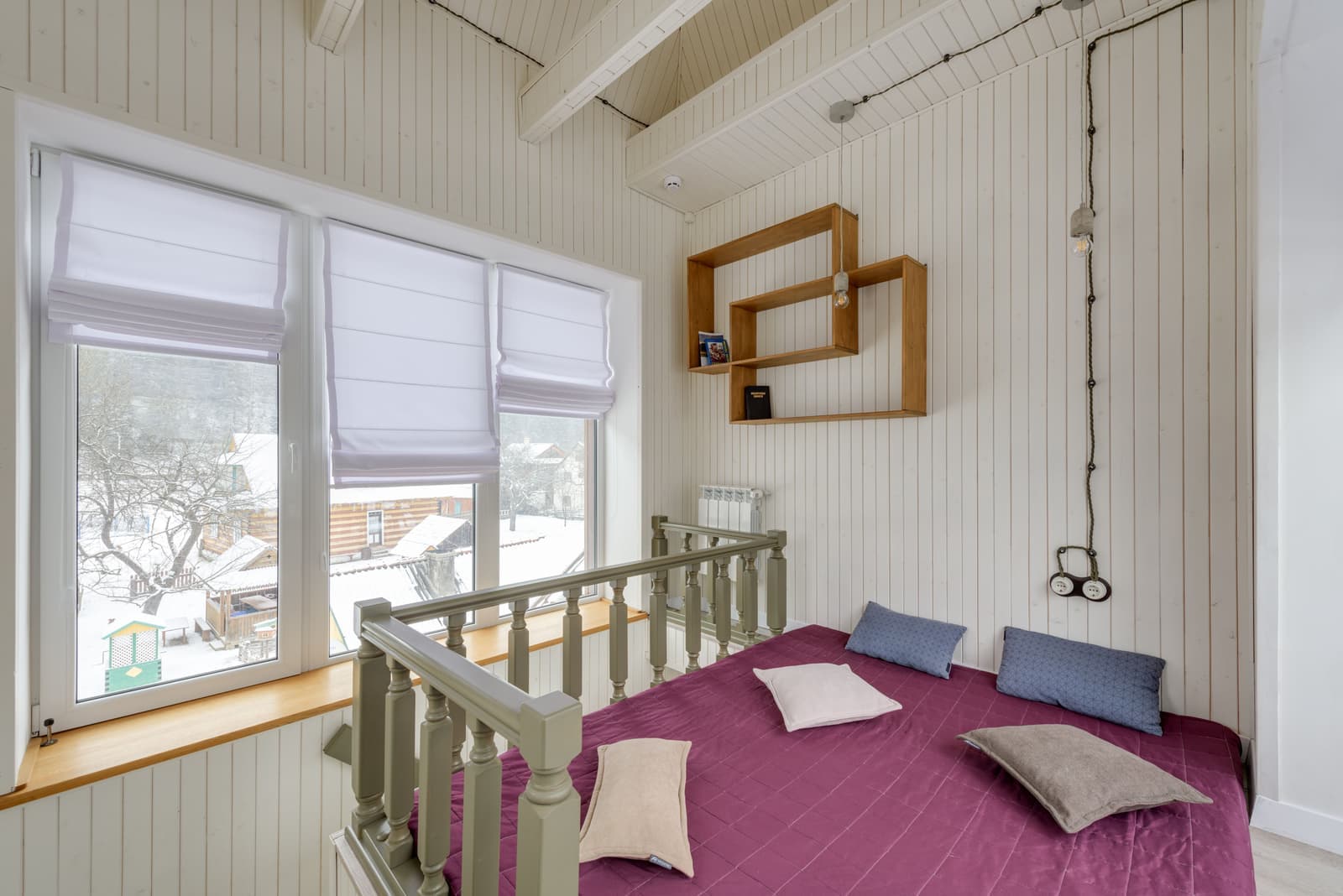
Drafts
Best insulated cellular shades
The strongest thermal performer in window coverings — if you measure the fit properly.
Rooms
Window treatments for a living room
Glare, evening privacy and a big opening — handled with two light layers, not one heavy one.
About the author
Janet H.
Janet H. is the owner of Janet Media Group and the person behind Drape & Dawn. She researches every pick against the site's published methodology.
Published by Janet Media Group · Last updated September 23, 2026