Buying guide
How many curtain panels do I need?
One number drives the answer: total panel width should be two to two and a half times the window. Here is the arithmetic, worked through.
By Janet H. · Last updated October 10, 2026 · How we choose
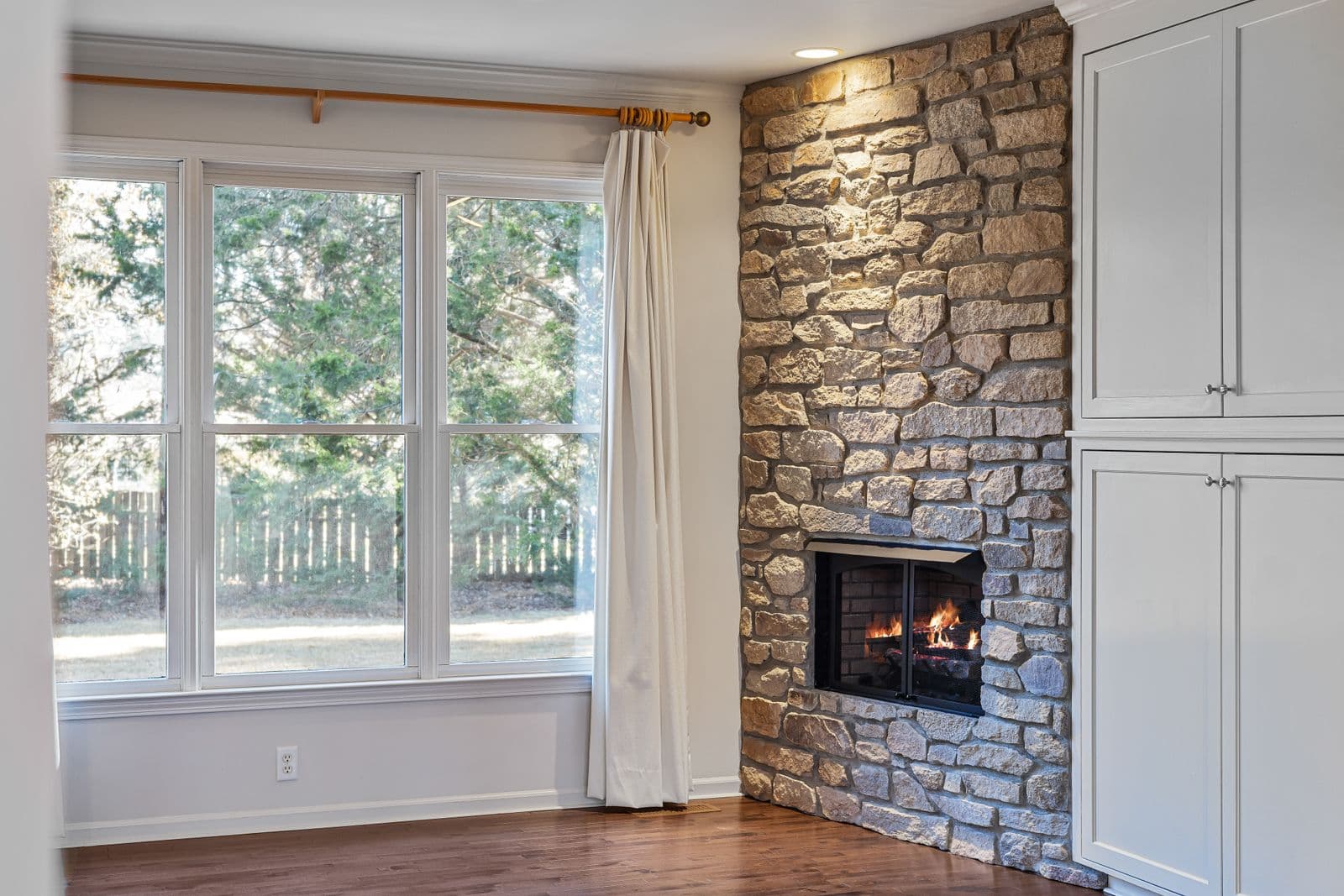
Multiply your window width by 2 to 2.5, divide by the width of one panel, and round up. A 48-inch window at 2x fullness needs about 96 inches of panel, which is two 52-inch panels. A 96-inch window needs about 192 inches, which is four. The window width is not the panel width you buy — that is the mistake this page exists to prevent.
Fullness is the reason. Curtains are supposed to hang in folds, and the folds come from having more fabric than the opening needs. Buy panels that add up to the window width and they stretch flat like a bedsheet, look cheap, and let light run down the flat face instead of being absorbed into the gathers.
Drape & Dawn earns a commission from qualifying purchases made through links on this page, at no extra cost to you. It does not change what we recommend. Full disclosure.
The arithmetic
The calculation
Work from the rod length, not the window, because the rod extends 8 to 12 inches past the window on each side and the panels have to cover it. Multiply the rod length by your fullness factor, divide by one panel's width, round up to a whole number.
- 2x fullness — the standard. Normal-looking folds, works with any fabric weight.
- 2.5x fullness — generous. Worth it on sheers, which look thin at 2x, and on a feature window where the curtain is the point.
- 1.5x fullness — stationary panels only. Acceptable for decorative panels at the edges of a window that never close; too flat for anything that actually draws.
| Window width | Rod length | Panel width needed at 2x | Panels at 52 in each |
|---|---|---|---|
| 36 in | 48 in | 96 in | 2 |
| 48 in | 60 in | 120 in | 3 |
| 60 in | 72 in | 144 in | 3 |
| 72 in | 84 in | 168 in | 4 |
| 96 in | 108 in | 216 in | 5 |
| 120 in | 132 in | 264 in | 6 |
The packaging trap
Why buying in pairs goes wrong
Most curtains are sold as a pair, and a pair is two panels. That works out at exactly 2x fullness on a window of about half the combined width — which is why a pair of 52-inch panels suits a 48-inch window and nothing wider. On a 72-inch window a pair gives you 1.4x, which reads as flat and mean, and the fix is three panels, which means buying a pair plus a single.
Buy single panels wherever you can for this reason. It is also insurance: the recurring complaint about adding a panel later is that the color does not match the first batch, because dye lots differ. Order every panel for a window in one go.
Where the panels go
Stack space, the number people forget
Open panels have to live somewhere, and the stack takes roughly a fifth of the total panel width per side. Four 52-inch panels is 208 inches of fabric, so about 20 inches of stack at each end of the rod. If the window sits 6 inches from a corner, that stack is going across the glass whether you like it or not.
Two ways out. Extend the rod further onto the wall so the stack lands beside the window rather than over it — which also means buying a longer rod and more fullness. Or use a one-way draw, stacking everything to one side, which works well on a sliding door or a window tight into a corner.
Check before you divide
Panel width is not a standard
The calculation needs one panel's actual width, and that number varies more than people assume. Common stock widths run from about 34 inches up to 54, and some ranges list the width of the pair rather than the panel — so a listing reading 104 inches may be two 52-inch panels, not one very wide one. Read the dimensions rather than the headline, because dividing by the wrong figure doubles or halves your panel count.
Header style changes the effective width too. A grommet panel loses a little width to the gathers at each grommet; a pinch-pleated panel is sewn to a fixed finished width that is already much narrower than the flat fabric. If the listing quotes a flat width and a finished width, the finished one is what covers your window.
Panel count in practice
Odd numbers, and the one-way draw
Nothing requires an even number of panels. A three-panel window — two at one side, one at the other, or all three drawing one way — is common and looks deliberate once it is hanging, because the gathers hide the joins. What looks wrong is two panels stretched thin across an opening that needed four.
A one-way draw puts every panel on one side and pulls the whole set across in a single direction. It suits a window tight into a corner, a sliding door where only one leaf moves, and any opening with wall space on one side and none on the other. The panel count is identical; only the stacking changes, and you buy the same total width either way.
Finally, if the window is tall as well as wide, check the drop before the count. A panel long enough for a floor-length install on a high-mounted rod is 96 or 108 inches, and the widest panels in a range are often not offered in the longest drops — which can quietly force you into more, narrower panels than the arithmetic suggested. The curtain length guide has the drop table.
The weight check
Then check the rod can carry it
Four or five lined panels at 96 inches is real weight. Over about 60 inches of span, add a center support bracket; over about ten feet, two rods meeting at a center bracket is more rigid than one long one. Brackets want studs or proper cavity anchors — driven into bare plasterboard they pull out eventually. Start from best curtain rods for heavy curtains if the panels are lined.
What to buy
Panels sold singly, and the rods to carry them
| # | Best for | Product | Sold as | Typical width | Best for | Price |
|---|---|---|---|---|---|---|
| 1 | Best panel sold singly | 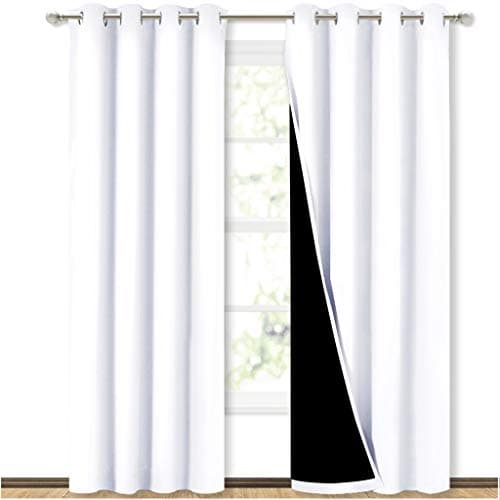 Any window that needs an odd panel count, and any wide window where fullness matters more than the packaging. | Singles and pairs | 34–52 in per panel | Odd panel counts | $19.99 · View on Amazon #ad Price as of November 3, 2026, and it can change. How we’re funded |
| 2 | Best sheer for 2.5x fullness |  A living room or dining room sheer layer, where several panels are going on one rod and the gathers are visible all day. | Singles and pairs | 52 in per panel | Generous fullness | $7.93 · View on Amazon #ad Price as of November 3, 2026, and it can change. How we’re funded |
| 3 | The rod for four or more panels | 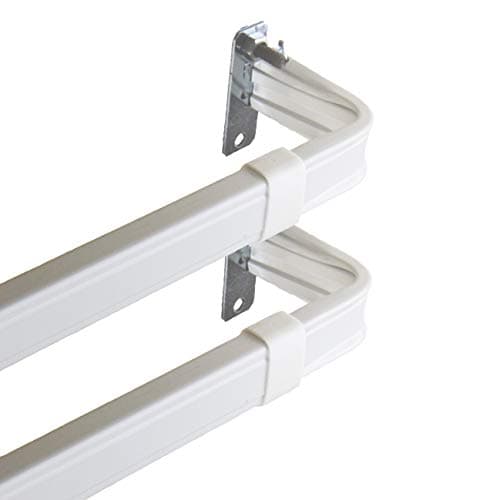 Any window wide enough to need more than two panels — which, on the arithmetic above, is most windows over 60 inches. | Rod and bracket set | Telescoping, wide | Four or more panels | $42.17 · View on Amazon #ad Price as of November 3, 2026, and it can change. How we’re funded |
01 — Best panel sold singly
Thermal Insulated Blackout Curtains
NICETOWN
Triple-weave blackout panels available as single panels as well as pairs, in a wide set of widths and drops — which is what lets you buy three or five for a wide window instead of being forced into an even number.
Who it’s for: Any window that needs an odd panel count, and any wide window where fullness matters more than the packaging.
The catch: Color consistency between separately-ordered batches is the recurring complaint in this bracket. Order every panel for one window at the same time.
At a glance
- Sold as
- Singles and pairs
- Typical width
- 34–52 in per panel
- Best for
- Odd panel counts
- Drops
- 63 / 84 / 96 / 108 in
- Care
- Machine wash cold
#ad Price as of November 3, 2026, and it can change. How we’re funded
02 — Best sheer for 2.5x fullness
Solid color sheer voile panels
MIULEE
Plain voile panels in a wide color and size range. Sheers are the case where the extra fullness genuinely pays — at 2x a voile reads as thin, and at 2.5x it reads as fabric, so panel count matters more here than on a blackout.
Who it’s for: A living room or dining room sheer layer, where several panels are going on one rod and the gathers are visible all day.
The catch: More panels on a sheer means a bigger stack of fabric at the ends of the rod, which on a narrow wall eats into the glass.
At a glance
- Sold as
- Singles and pairs
- Typical width
- 52 in per panel
- Best for
- Generous fullness
- Drops
- 63 / 84 / 96 in
- Care
- Machine wash cold, low heat
#ad Price as of November 3, 2026, and it can change. How we’re funded
03 — The rod for four or more panels
Heavy-duty lock-seam drapery rod set
Rod Desyne
A lock-seam telescoping rod with drapery-rated brackets and a center support. The seam resists the twist that a long rod develops under four or five lined panels, which is the failure mode behind every rod that sags in the middle.
Who it’s for: Any window wide enough to need more than two panels — which, on the arithmetic above, is most windows over 60 inches.
The catch: The brackets need studs or proper cavity anchors; their load rating assumes a solid fixing. Telescoping rods also have a practical maximum span shorter than the published one.
At a glance
- Sold as
- Rod and bracket set
- Typical width
- Telescoping, wide
- Best for
- Four or more panels
- Drops
- N/A
- Care
- N/A
#ad Price as of November 3, 2026, and it can change. How we’re funded
FAQ
Questions people actually ask
How many curtain panels do I need per window?
Enough that the combined panel width is 2 to 2.5 times the rod length. With the common 52-inch panel, that is two panels for a window up to about 48 inches, three up to about 60, four up to about 72 and five or six on a picture window. Round up, never down.
How many curtain panels for a 72 inch window?
Four 52-inch panels. The rod will be about 84 inches, and 2x fullness on that is roughly 168 inches of panel — four panels at 52 inches gives 208, comfortably above the minimum. A pair would give about 1.4x, which looks flat.
Do I need two curtain panels or one?
Two for any window that closes in the middle, because one panel cannot be drawn from both sides. One panel is right only for a narrow window with a one-way draw, or for a stationary decorative panel that never closes.
Is 2x fullness enough for curtains?
Yes for most fabrics, and it is the standard. Go to 2.5x on sheers, which look thin at 2x, and on a feature window where the curtain is the main event. Below 2x, keep the panels stationary — anything that actually draws will look stretched.
How much wall space do open curtain panels need?
Roughly a fifth of the total panel width per side. Four 52-inch panels is 208 inches of fabric, so about 20 inches of stack at each end. If there is not that much wall, extend the rod further out or use a one-way draw and stack everything to one side.
Keep going
Read next
Rods & Mounting
How to measure for curtains
Four steps in order: rod width, fullness, drop from the rod, header.
Rods & Mounting
What size curtain rod do I need?
Window plus 8 to 12 inches — with the full size table and support rules.
Rods & Mounting
Curtain length guide
Standard drops, six hem finishes, and the measurement everyone gets wrong.
Rods & Mounting
Best curtain rods for heavy curtains
What carries lined blackout panels without bowing — rod, bracket and anchor.
Rooms
Best curtains for a living room
Panels for glare, privacy, cold and appearance — and which job each one gives up.
Rooms
Best window treatments for large windows
Covering a picture window with stock-size products, and what each approach gives up.
About the author
Janet H.
Janet H. is the owner of Janet Media Group and the person behind Drape & Dawn. She researches every pick against the site's published methodology.
Published by Janet Media Group · Last updated October 10, 2026