Room
Window treatments for a bay window
One continuous run, or one shade per section. Everything else follows from that choice.
By Janet H. · Last updated October 8, 2026 · How we choose
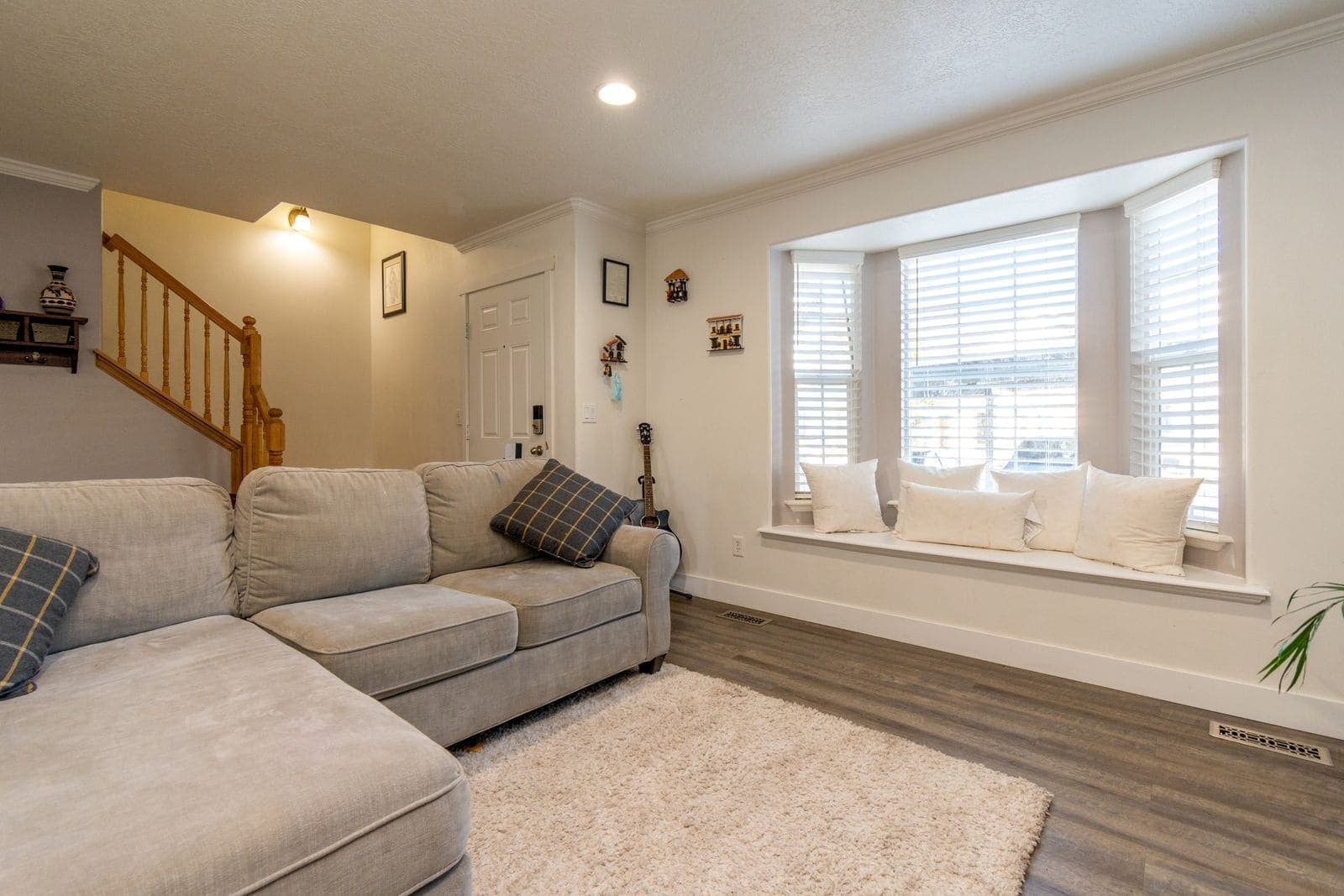
A bay window is the opening people most often get wrong, and almost always in the same way: they treat it as one wide window. It is not. It is three windows meeting at two corners, usually set into a recess, frequently with a seat or a radiator underneath, and the corners are where every straightforward plan falls apart.
There is one decision to make here and it governs everything else. Either you run one continuous curtain around the inside of the bay, which needs hardware that turns a corner, or you fit one shade per section and leave the corners alone. Both are legitimate. They solve different problems, cost very different amounts, and suit different bays. Pick the wrong one and no amount of good fabric rescues it.
Drape & Dawn earns a commission from qualifying purchases made through links on this page, at no extra cost to you. It does not change what we recommend. Full disclosure.
The decision
The fork: one run, or one per section
Start here, because it determines what you measure, what you buy, and what the window looks like when everything is open.
| One continuous curtain run | One shade per section | |
|---|---|---|
| Hardware | Bay rod set, or straight rod plus corner connectors | Three independent brackets, nothing joins |
| Blocks light at the corners | Yes — fabric carries through the angle | No — a visible line at each corner |
| Where the fabric sits when open | Stacked at both ends, inside the bay | Rolled or folded at the head of each section |
| Works over a window seat | Only with sill-length panels | Yes, naturally |
| Works over a radiator | Only with sill-length panels | Yes |
| Typical cost | Mid — the hardware is the expense | Low to mid — three small shades |
| Hardest part | Getting the corner angle right | Measuring three openings that are rarely identical |
The short version: if the bay is empty underneath and you want the room dark or warm, run one continuous curtain. If there is a window seat, a radiator or a deep sill you want to keep usable, fit a shade per section. If it is a bedroom bay and you need it genuinely dark, you will likely end up doing both, and that is fine.
The real constraint
Why the corners decide everything
Hang three separate curtain rods across a bay and you get two vertical gaps where the panels meet the corner posts. In a living room that is a cosmetic annoyance. In a bedroom it is two bright stripes across the ceiling at sunrise, and it is one of the most common reasons somebody concludes their blackout curtains do not work. The fabric was never the problem — how to fix curtain light gaps covers the same failure at an ordinary window.
A continuous run closes those gaps because the curtain never stops at the corner; it carries through the angle on a rod that turns with it. That is the entire argument for bay hardware, and it is why a bay rod set costs noticeably more than a straight rod of the same length. You are paying for two elbows.
Shades per section do not close the corners and do not pretend to. What they do instead is cover the glass completely and tightly, which handles glare, daytime privacy and heat loss well, and handles sunrise light only partially. Know which problem you are solving first — the problem hubs, blackout, glare, privacy and drafts, are organized exactly that way.
Four numbers and an angle
Measuring a bay
- 1
Measure each section separately
Three widths, not one. Bay sections are frequently not identical — the two angled returns are often narrower than the center, and in an older house they can differ from each other by an inch or more. Write all three down.
- 2
Find the corner angle
Hold a sheet of paper into the corner, crease it along both walls, and measure the crease against a protractor or a phone level app. Residential bays are usually 90, 135 or 150 degrees. Connector sets and bay rod sets are sold by the angle they cover, so this number is what you shop with.
- 3
Measure the recess depth
From the face of the wall to the glass. This decides whether an inside-mounted shade physically fits, and whether a rod can sit inside the bay without the panels pressing against the glass.
- 4
Decide the drop before you buy anything
Floor length if the bay is empty underneath; sill length — about half an inch below the sill — if there is a seat or a radiator. Measure from where the rod will actually go, not from the top of the frame.
- 5
Add the stack allowance
Curtains gather somewhere. In a bay there is no wall to gather onto, so the stack sits over the glass at each end of the run. Allow roughly a sixth of each end section's width and accept losing that much daylight, or choose shades instead.
The general sequence, with the parts that apply to any window, is in how to measure for curtains, and the rod-span table is in what size curtain rod do I need.
What to buy
What to fit
Prices move constantly on everything below, so the figure on each card is the live one rather than a number typed into this page. We have not lab-tested any of these: the reasoning is published specification, fitness for a bay specifically, and the failure patterns that recur in owner feedback. Our methodology says exactly what that does and does not mean.
| # | Best for | Product | Covers | Mount | Corners | Price |
|---|---|---|---|---|---|---|
| 1 | Best overall | 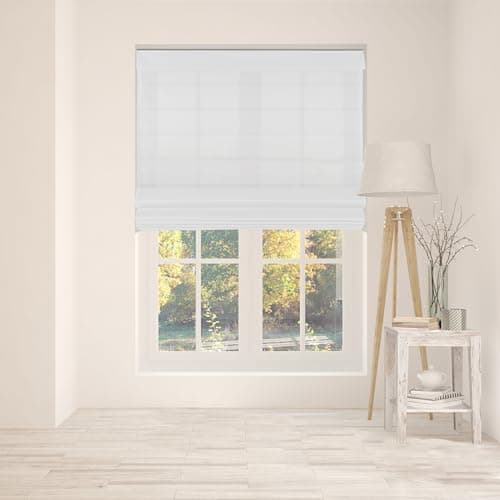 Any bay with a seat, a radiator or a deep sill under it, and the default answer for a living-room bay. | Glass only, section by section | Inside each recess | Not covered | $36.99 · View on Amazon #ad Price as of November 3, 2026, and it can change. How we’re funded |
| 2 | Best for a continuous run | 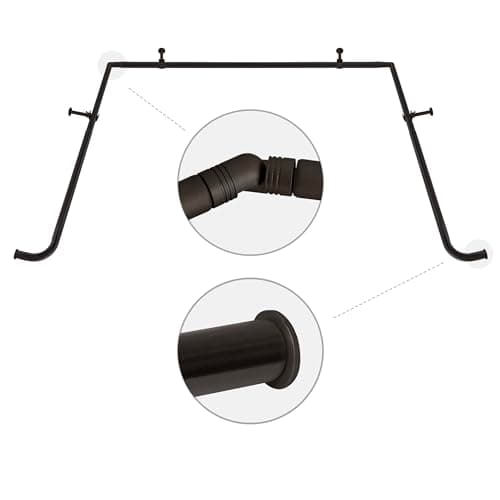 Bays with nothing underneath, where the job is darkness, warmth or evening privacy rather than just covering glass. | Glass and both corners | Inside the bay, above the frames | Carried through | $46.98 · View on Amazon #ad Price as of November 3, 2026, and it can change. How we’re funded |
| 3 | Best curtain to hang on it | 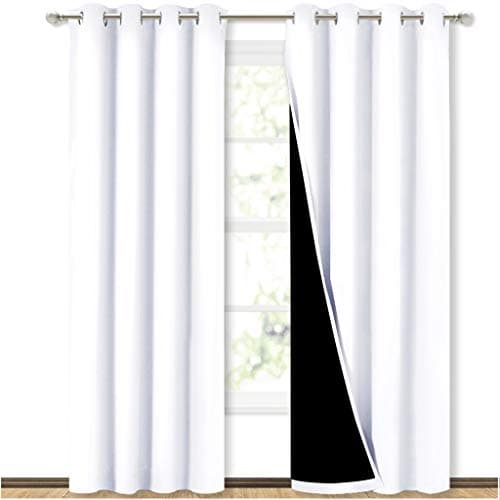 Bedroom bays, and any bay where the evening privacy problem is the real complaint. | Glass, corners and edges | On the bay rod | Carried through | $19.99 · View on Amazon #ad Price as of November 3, 2026, and it can change. How we’re funded |
| 4 | Best for a cold bay | 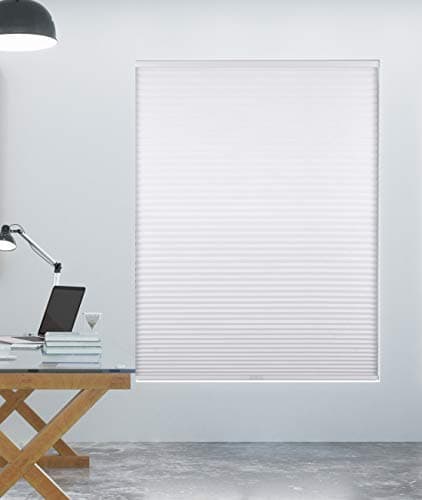 Bays that are noticeably colder than the rest of the room, and bays with a radiator you must not cover. | Glass only, section by section | Inside each recess | Not covered | $50.99 · View on Amazon #ad Price as of November 3, 2026, and it can change. How we’re funded |
| 5 | Best budget per section | 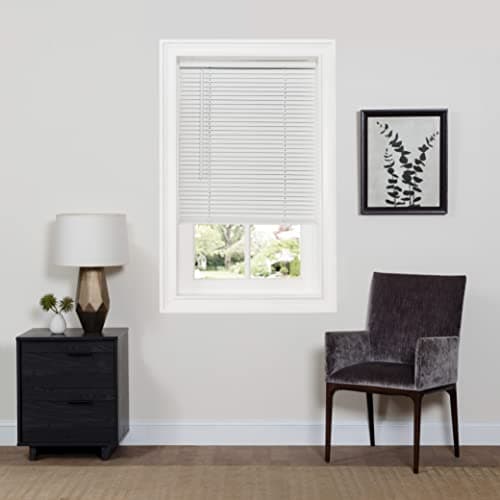 Rental bays, bays you are still deciding about, and bays where the only real complaint is that people can see in. | Glass only, section by section | Inside each recess | Not covered | $17.28 · View on Amazon #ad Price as of November 3, 2026, and it can change. How we’re funded |
01 — Best overall
Cordless Fabric Roman Shades, one per section
Arlo Blinds
A light-filtering fabric Roman shade ordered to each section's own width, cordless, inside-mounted. Three of them turn a bay into three ordinary windows, which is the whole point — nothing has to negotiate a corner.
Who it’s for: Any bay with a seat, a radiator or a deep sill under it, and the default answer for a living-room bay.
The catch: Leaves a visible light line at each corner post. In a bedroom you will want a curtain over the top of these as well.
At a glance
- Covers
- Glass only, section by section
- Mount
- Inside each recess
- Corners
- Not covered
- Operation
- Cordless
#ad Price as of November 3, 2026, and it can change. How we’re funded
02 — Best for a continuous run
1-inch diameter bay window curtain rod set
Meriville
A rod set with the elbows built in, so one curtain run carries through both corners of a standard three-sided bay. The 1-inch diameter is substantial enough for lined panels rather than only sheers.
Who it’s for: Bays with nothing underneath, where the job is darkness, warmth or evening privacy rather than just covering glass.
The catch: Sized for the common bay geometries. Measure your corner angle first, because an unusual bay will not be served by any off-the-shelf set.
At a glance
- Covers
- Glass and both corners
- Mount
- Inside the bay, above the frames
- Corners
- Carried through
- Diameter
- 1 in
#ad Price as of November 3, 2026, and it can change. How we’re funded
03 — Best curtain to hang on it
Thermal Insulated Blackout Curtains
NICETOWN
Triple-weave blackout with no coating to crack and no separate liner to buy, washable, and sold in enough drops that a bay's unusual height is usually covered. On a bay rod this is what closes the corners.
Who it’s for: Bedroom bays, and any bay where the evening privacy problem is the real complaint.
The catch: A grommet header leaves a gap along the top of the run, and in a bay that gap is three windows wide. Add a pelmet if a streetlight sits above it.
At a glance
- Covers
- Glass, corners and edges
- Mount
- On the bay rod
- Corners
- Carried through
- Drops
- 63 / 84 / 96 / 108 in
#ad Price as of November 3, 2026, and it can change. How we’re funded
04 — Best for a cold bay
Single Cell Room Darkening Cordless Cellular Shades
Arlo Blinds
A honeycomb shade per section, fitted tightly in the recess so the cells hold still air against the glass. A bay has far more glass per square foot of wall than a flat window, which is why it is reliably the coldest spot in the room.
Who it’s for: Bays that are noticeably colder than the rest of the room, and bays with a radiator you must not cover.
The catch: Room darkening, not blackout — it dims a bay to dusk rather than dark. If sunrise is the complaint, put blackout fabric on a bay rod over the top.
At a glance
- Covers
- Glass only, section by section
- Mount
- Inside each recess
- Corners
- Not covered
- Opacity
- Room darkening
#ad Price as of November 3, 2026, and it can change. How we’re funded
05 — Best budget per section
Cordless room darkening vinyl blinds
Achim
Plain cordless mini blinds, one per section. They cover the glass, tilt for daytime privacy, and cost little enough that fitting three of them is not a project.
Who it’s for: Rental bays, bays you are still deciding about, and bays where the only real complaint is that people can see in.
The catch: Slats mean light gets through even when closed, and vinyl in a wide section can bow over time. A holding answer, not a permanent one.
At a glance
- Covers
- Glass only, section by section
- Mount
- Inside each recess
- Corners
- Not covered
- Operation
- Cordless
#ad Price as of November 3, 2026, and it can change. How we’re funded
If yours has one
The window seat problem
A window seat is the most common reason a bay ends up with the wrong treatment. Floor-length curtains either hang in front of the seat — making it unusable and looking like a mistake — or get tucked behind it, which crushes the fabric and leaves a draft channel open at the bottom.
Two workable answers. Sill-length panels on a bay rod, finishing about half an inch below the cushion, which keeps the continuous run and keeps the seat. Or a shade in each section, which is tidier and leaves the seat entirely clear. If the seat is the reason you love the bay, the shades usually win.
A real heat problem
If there is a radiator in the bay
Bays very often have a radiator in them, because a bay is a cold spot and that is where the heating went. Drop a floor-length curtain in front of it and you have built a chimney: the radiator's output is trapped between the fabric and three panes of cold glass and goes straight up the window instead of into the room.
Keep the curtain at sill length there, or move the insulating job onto a cellular shade fitted tightly in each section, where the honeycomb holds still air against the glass without covering the radiator at all. Do thermal curtains save energy covers the mechanism; best insulated cellular shades covers the shade side.
Where to read more
Hardware, briefly
If you have settled on a continuous run, the hardware choice — adjustable corner connectors on a straight rod versus a purpose-built bay set, and how each behaves at 135 degrees — has its own page: best curtain rods for bay windows. One thing worth knowing before you shop: a bay run is long and often carries heavy fabric, so bracket spacing matters more here than at a normal window, and best curtain rods for heavy curtains has that side of it.
Two other awkward openings get asked about in the same breath. A French door beside or inside a bay has its own rules, because anything you hang must clear a swinging door and a handle — see window treatments for French doors. An arched top over a bay section is a separate purchase from the rectangle below it, covered in window treatments for arched windows.
Go deeper
Hanging it, once you have chosen
The install - section-by-section measuring, corner angles, and when one shade per section beats any rod - is in how to hang curtains in a bay window.
FAQ
Questions people actually ask
What is the best window treatment for a bay window?
It depends on what is underneath it. An empty bay takes one continuous curtain on a bay rod, which is the only arrangement that covers the corners. A bay with a window seat or a radiator takes one shade per section, so the seat stays usable and the radiator stays uncovered. A bedroom bay usually needs both layers.
Can you use a regular curtain rod on a bay window?
Only across the front of the bay, which gives up the recess and the window seat and makes the bay read as a flat wall with a hole in it. Inside the bay you need either corner connectors joining straight rod sections or a purpose-built bay set, because a straight rod cannot turn a 135 degree corner.
Should bay window curtains be floor length or sill length?
Floor length if the bay is empty underneath. Sill length, finishing about half an inch below the sill or cushion, if there is a window seat or a radiator — a floor-length panel in front of a radiator traps its heat against the glass and sends it up the window.
How do I stop light coming in at the corners of my bay window?
Cover the corners with fabric rather than trying to seal them. Three separate shades always leave a line at each corner post; a curtain on a bay rod carries through the angle and closes it. If you want shades for the glass, run a curtain over the top of them.
How do I measure a bay window for blinds?
Measure each section's width separately — they are rarely identical, especially in an older house — then the recess depth to confirm an inside mount fits, then the drop. If you are buying a rod rather than shades you also need the corner angle, which is usually 90, 135 or 150 degrees.
Are blinds or curtains better for a bay window?
Blinds and shades fit the geometry better; curtains block light better. Shades sit inside each section and leave the seat and sill clear but never cover the corners. A curtain on a bay rod covers everything and costs you some daylight to the stack at each end.
Keep going
Read next
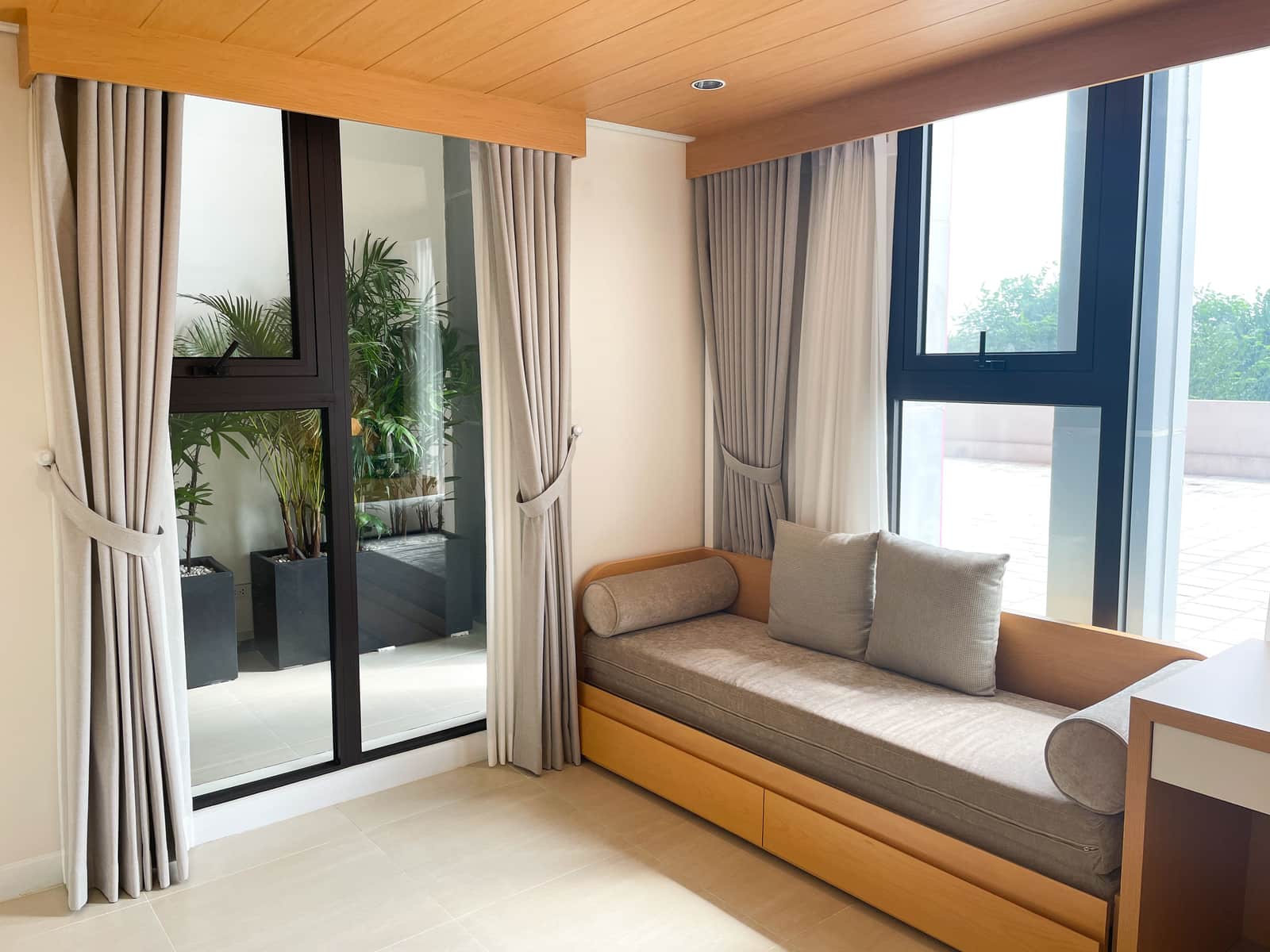
Rods & Mounting
Best curtain rods for bay windows
Connector sets and bay rods for a three-sided opening — and how to measure the angles.
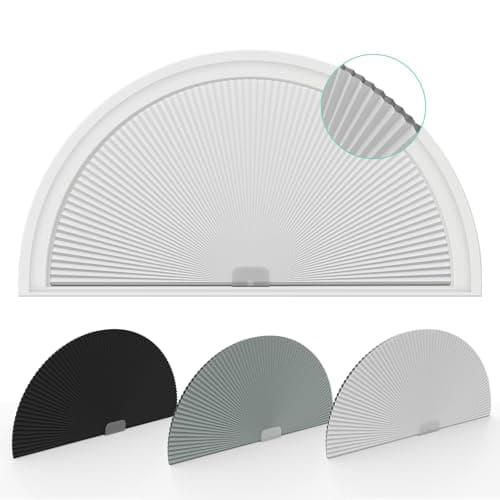
Rooms
Window treatments for arched windows
Cover the rectangle, decide separately about the arch — measuring, options and honest limits.
Rooms
Window treatments for French doors
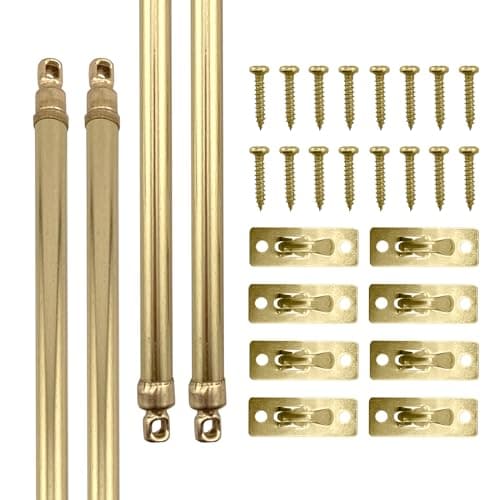
Coverings that travel with a swinging door and clear the handle — sash rods, door panels and no-drill shades.
Rods & Mounting
How to measure for curtains
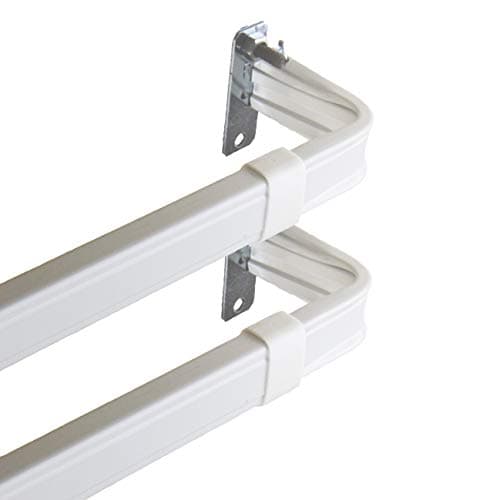
Four steps in order: rod width, fullness, drop from the rod, header.
Blackout
How to fix curtain light gaps
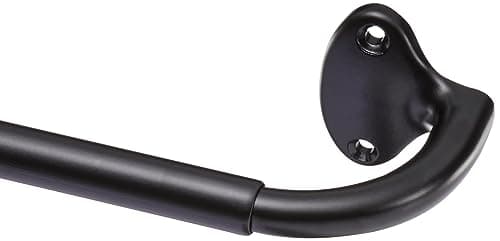
Close the side, top, middle and bottom gaps — the cheapest fix for a bright room.
Drafts
Best insulated cellular shades
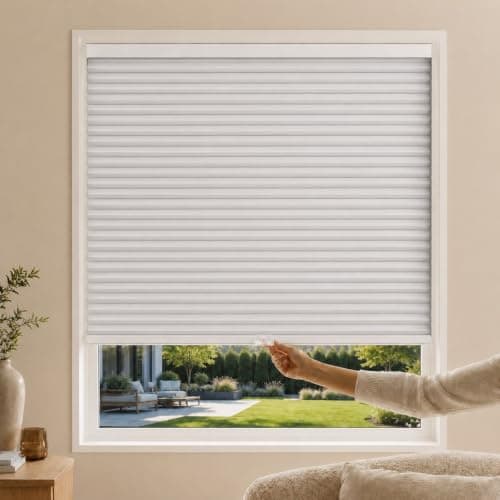
The strongest thermal performer in window coverings — if you measure the fit properly.
About the author
Janet H.
Janet H. is the owner of Janet Media Group and the person behind Drape & Dawn. She researches every pick against the site's published methodology.
Published by Janet Media Group · Last updated October 8, 2026