Guide
How to hang curtains in a bay window
A bay is three or four windows pretending to be one. The corners are the whole problem, and there are only three honest ways to deal with them.
By Janet H. · Last updated October 17, 2026 · How we choose
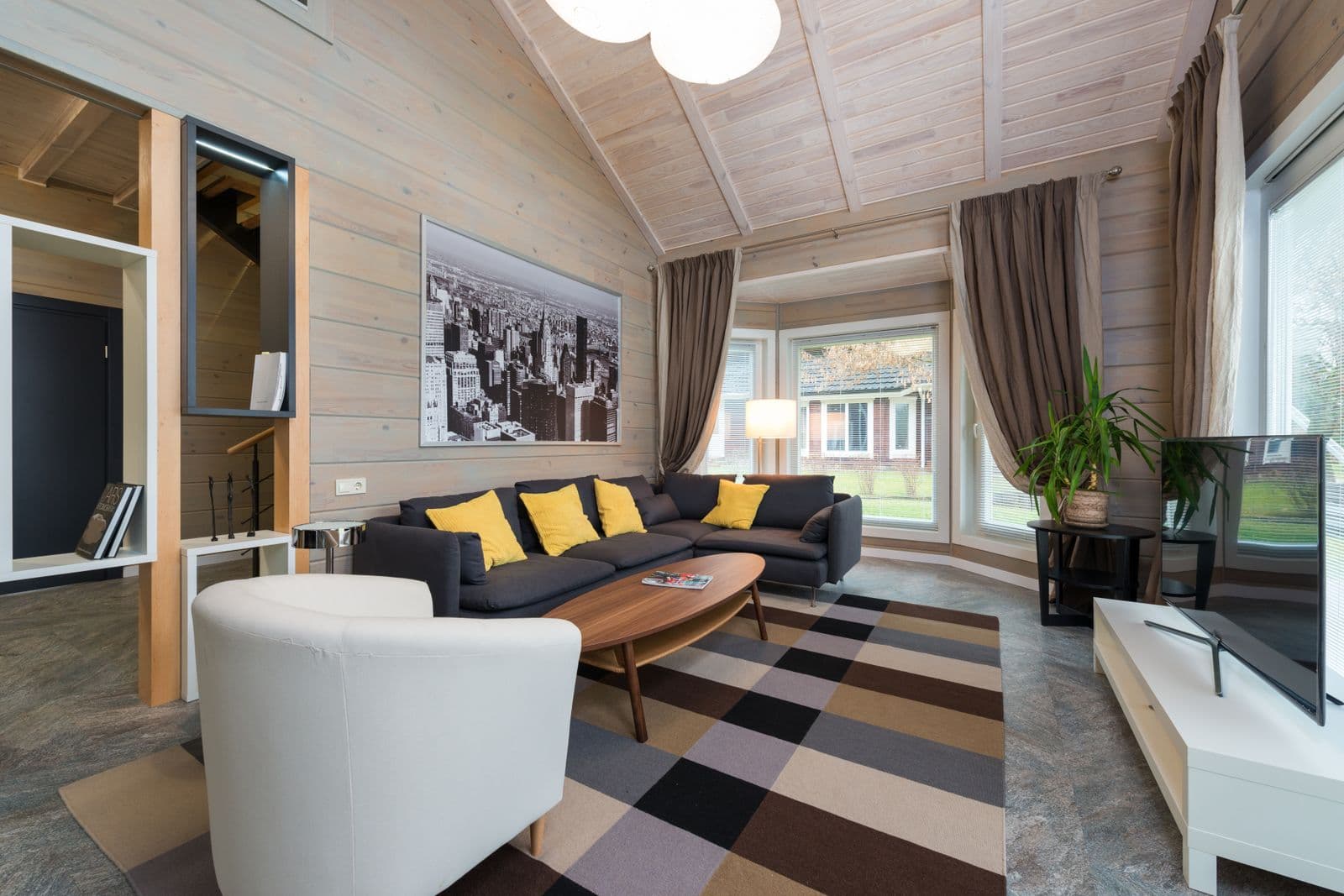
There are three ways to hang curtains in a bay window: one continuous rod joined at the corners with adjustable connectors, a purpose-made bay rod set with elbows included, or a separate covering inside each section of the bay. For most bays the connector route is the cheapest and most flexible, and for an awkward bay the per-section route is the easiest to get right.
Everything difficult about a bay happens at the corners. A curtain panel cannot slide past a connector, so each section needs its own panel or pair; the angles are rarely the 135 degrees you assume; and the return at each outer end has to reach a wall that may be only a few inches wide. Measure the corners before you buy anything.
Drape & Dawn earns a commission from qualifying purchases made through links on this page, at no extra cost to you. It does not change what we recommend. Full disclosure.
First
Measure the bay properly
- 1
Measure each section separately
Width of each window, plus the flat wall either side of it, measured along the face of that section rather than across the room. Three or four numbers, not one.
- 2
Measure the angle at each corner
Hold a piece of card into the corner and mark the two wall lines, or use a protractor app. Bays are commonly 135 degrees but 120 and 150 both exist, and bow windows are a series of shallow angles.
- 3
Measure the wall at each outer end
This is where the panel has to stack. Less than about 8 inches and the panel will sit over the glass when open - which is the reason some bays end up with shades instead.
- 4
Measure the drop from the proposed rod height
Rod 4 to 6 inches above the frame, and if there is a window seat or a radiator the hem stops above it rather than behind it. Measure at both ends of each section; bay sills are often not level.
- 5
Check what is above the frame
Bays frequently have a structural beam or a very shallow head above the glass. If there is less than 4 inches of wall, you are ceiling mounting - see how to hang curtains from the ceiling.
Most flexible
Option 1: rods joined with corner connectors
Adjustable hinged connectors clamp two rods together at whatever angle your corner actually is, usually anywhere between 90 and 180 degrees. You buy a rod cut or telescoped to each section plus a connector per corner, and brackets either side of each corner so the joint is supported.
It is the cheapest route, it copes with any geometry, and it lets you choose the rod rather than accept whatever a kit includes. The limitation is that panels cannot pass a connector, so you need a panel per section and the fabric meets at the corners rather than sliding through.
Simplest
Option 2: a purpose-made bay rod set
A bay set ships with telescoping rods, fixed elbows and brackets in one package, sized around conventional bay geometry. If your bay is a standard three-sided one, this is the least thinking for the money, and a four-sided or bow bay needs the version built for it. The risk is fit: an unusually deep, shallow or wide bay can fall outside the telescoping ranges, which is why measuring first matters more here than anywhere else. The full comparison of sets and connectors is in best curtain rods for bay windows.
Often the best answer
Option 3: one covering per section
Instead of solving the corner, avoid it. A shade inside each section gives neater light control per window, removes the corner problem entirely, and frequently costs less than a custom bay rod. It also suits bays with shallow corner walls, where a continuous rod would leave panels stacked across the glass.
The usual combination is a shade per section for daytime control plus one pair of curtains on a straight rod mounted across the front of the bay for the evening. That gives you darkness without asking the curtain to follow the geometry - and the shade options are in window treatments for bay windows.
| Approach | Best for | Watch out for |
|---|---|---|
| Corner connectors | Non-standard angles; choosing your own rod | Panels cannot pass a joint; needs brackets each side of every corner |
| Bay rod set | Conventional three-sided bays | Telescoping range may not reach an unusual bay |
| Shade per section | Shallow corner walls, awkward angles | Three or four lifts to operate instead of one pair of panels |
| Straight rod across the front | Darkness and a simple install | Loses the bay - the recess is closed off when the curtains are shut |
Avoid
The mistakes that cost most
- Assuming 135 degrees. Order connectors or a set to the angle you measured, not the angle bays are supposed to be.
- One bracket per corner. A joint needs support on both sides or it sags and the connector works loose.
- Panels sized for the whole bay. Each section needs its own fullness - roughly 2 to 2.5 times that section's width.
- Hems that fight a window seat. Decide early whether panels stop above the seat or hang in front of the whole bay; a panel bunched on a seat looks like a mistake because it is one.
- Forgetting the returns. The outer ends need to reach the wall or light pours in at both edges, as covered in how to fix curtain light gaps.
Methodology
How we chose
We select on published construction and materials, on fitness for the geometry at a bay window, and on failure patterns that recur across owner feedback rather than headline scores. We do not lab-test hardware and publish no load figure of our own. Full criteria on the methodology page.
What we’d buy
The products behind this advice
Picked against the criteria above, not the other way round. Prices are read from Amazon and refreshed daily; each link goes to the current listing.
| # | Best for | Product | Type | Angle range | Price |
|---|---|---|---|---|---|
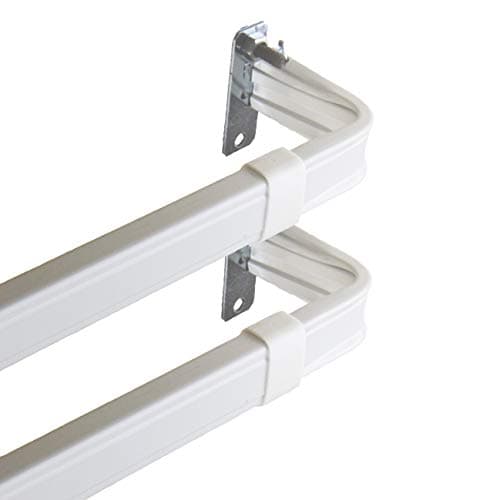
| 1 | Best for an unusual bay | Window corner curtain rod connectors, adjustable Bays whose angles are not standard, and anyone who wants to choose each section's rod rather than accept a kit. | Rod connectors | ~90-180 degrees | Check price on Amazon #ad No current price for this one — check it on Amazon. How we’re funded |
| 2 | Best complete kit | 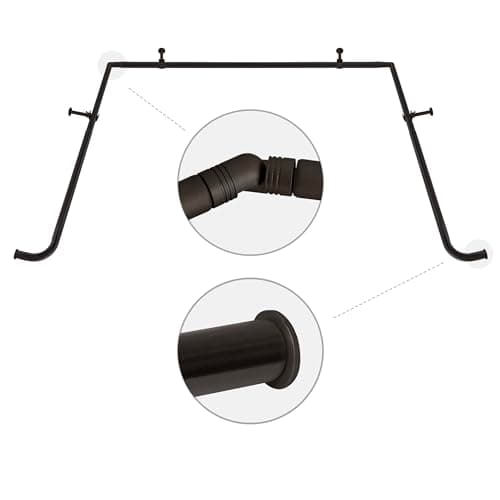 Conventional three-sided bays, where buying one package beats assembling a system. | Complete bay set | Standard bay angles | $46.98 · View on Amazon #ad Price as of November 3, 2026, and it can change. How we’re funded |
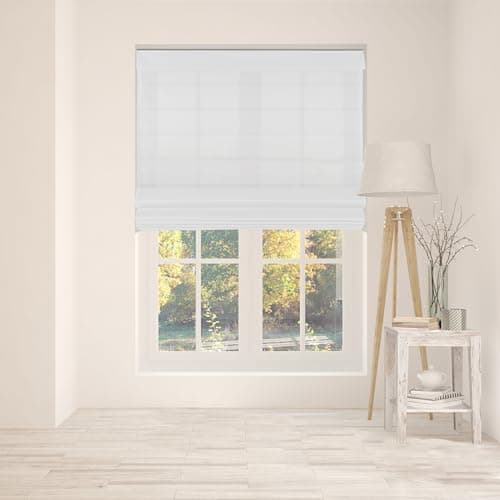
| 3 | Best way to avoid the corner | 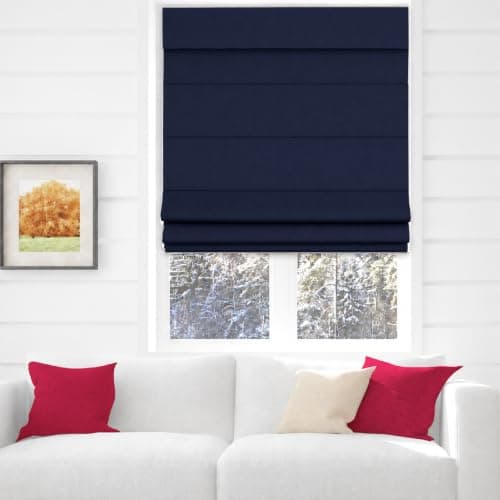 Bays with shallow corner walls or awkward angles, where one shade per section is neater than any rod. | Roman shade | — | $46.99 · View on Amazon #ad Price as of November 3, 2026, and it can change. How we’re funded |
01 — Best for an unusual bay
Window corner curtain rod connectors, adjustable
Corner connector sets
Hinged connectors that clamp two 1-inch rods together at an angle you set, typically adjustable between 90 and 180 degrees, sold in pairs with fixing screws. Buy a rod to suit each section of the bay and join them.
Who it’s for: Bays whose angles are not standard, and anyone who wants to choose each section's rod rather than accept a kit.
The catch: You are assembling a system rather than buying one, so each section's rod length is yours to get right. Panels cannot slide past a connector.
At a glance
- Type
- Rod connectors
- Angle range
- ~90-180 degrees
- Fits rod
- 1 in diameter
- Includes
- Two connectors, screws
#ad No current price for this one — check it on Amazon. How we’re funded
02 — Best complete kit
1-inch diameter bay window curtain rod set
Meriville
A purpose-made bay set: telescoping rods for each section, elbow connectors and brackets, in one package sized for a conventional three-sided bay.
Who it’s for: Conventional three-sided bays, where buying one package beats assembling a system.
The catch: Sized around typical bay geometry. An unusually deep, shallow or wide bay can fall outside what the telescoping ranges cover.
At a glance
- Type
- Complete bay set
- Angle range
- Standard bay angles
- Fits rod
- 1 in, supplied
- Includes
- Rods, elbows, brackets
#ad Price as of November 3, 2026, and it can change. How we’re funded
03 — Best way to avoid the corner
Thermal Room Darkening Fabric Roman Shades
Arlo Blinds
A cordless fabric roman with a thermal room-darkening lining that folds into soft horizontal pleats as it rises — the look of drapery on a window with no room for a curtain to stack beside it.
Who it’s for: Bays with shallow corner walls or awkward angles, where one shade per section is neater than any rod.
The catch: Room darkening rather than blackout, and the folded stack sits lower than a rolled or cellular shade, so part of the glass stays covered even fully raised.
At a glance
- Type
- Roman shade
- Fabric
- Thermal room darkening
- Operation
- Cordless
- Fit
- Stock and made to size
#ad Price as of November 3, 2026, and it can change. How we’re funded
FAQ
Questions people actually ask
How do you hang curtains in a bay window?
Either join a rod at each corner with adjustable connectors, buy a purpose-made bay rod set with elbows included, or fit a separate shade inside each section. Measure every section and every corner angle first: panels cannot slide past a connector, so each section needs its own panel.
What angle are bay window corners?
Commonly 135 degrees on a three-sided bay, but 120 and 150 both occur and bow windows are a series of shallower angles. Measure yours with a piece of card or a protractor app before ordering connectors - adjustable connectors typically cover about 90 to 180 degrees.
Should curtains go across the front of a bay or inside it?
Inside the bay if you want to keep the recess and the window seat usable, which is the usual choice. Across the front on a straight rod if darkness and a simple install matter more - it is the easiest option and it closes the bay off when the curtains are shut.
Can you use one long curtain in a bay window?
Only on a bow window with very shallow angles, and even then it will not slide past the corner supports. On a conventional bay, one panel per section is the arrangement that works, with the fabric meeting at each corner.
Are shades better than curtains in a bay window?
Often, yes. A shade per section avoids the corner problem completely, gives neater control per window, and frequently costs less than a custom bay rod. The common resolution is shades inside the bay for the day and one pair of curtains across the front for the evening.
Keep going
Read next
Rods & Mounting
Best curtain rods for bay windows
Connector sets and bay rods for a three-sided opening — and how to measure the angles.
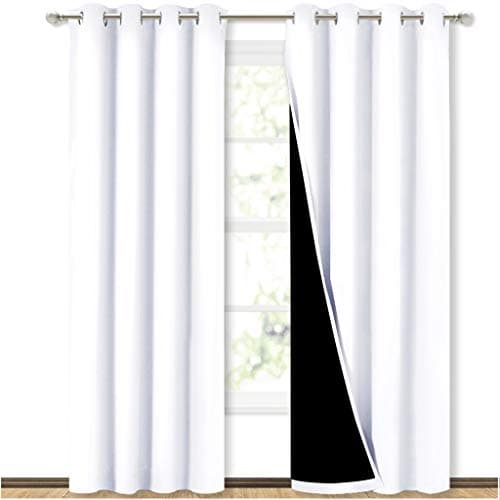
Rooms
Window treatments for a bay window
One curtain run around the bay, or a shade per section — and how to measure the corners.
Rods & Mounting
How to measure for curtains
Four steps in order: rod width, fullness, drop from the rod, header.
Rods & Mounting
How to hang curtains from the ceiling
Fixing a rod to the ceiling: where the joists are, the longer panel it needs, and when to skip it.
Rods & Mounting
How high to hang curtains
Higher than you think — ceiling height to rod height to curtain length.
Compare
Best roman shades
Fabric softness with a shade's precision — plus the stack depth nobody mentions.
About the author
Janet H.
Janet H. is the owner of Janet Media Group and the person behind Drape & Dawn. She researches every pick against the site's published methodology.
Published by Janet Media Group · Last updated October 17, 2026