Comparison
Curtains vs shades
One hangs outside the opening, the other sits inside it. Almost every practical difference follows from that.
By Janet H. · Last updated October 10, 2026 · How we choose
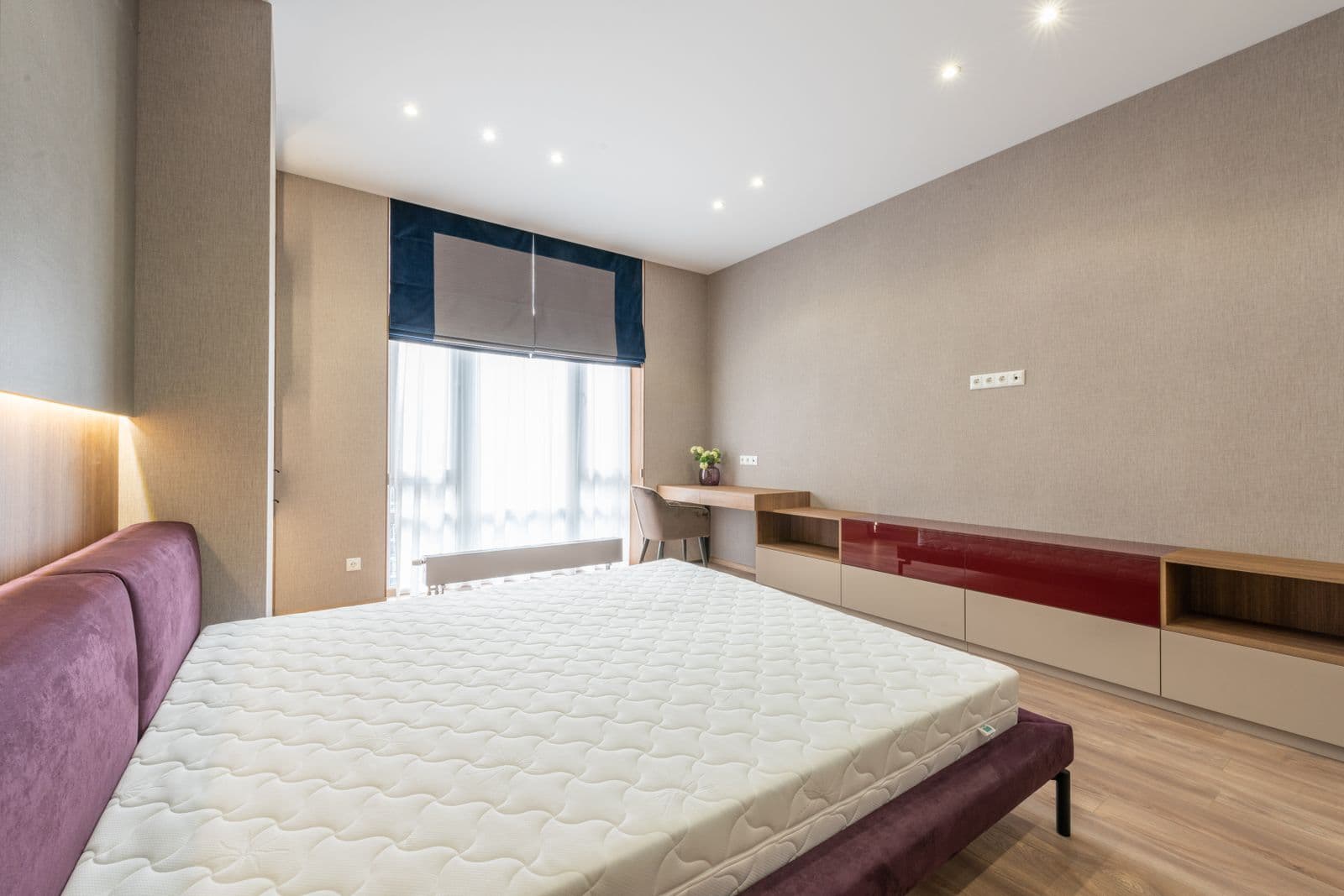
Curtains hang from a rod outside the window and can be mounted wider and higher than the opening. Shades fit the opening itself and pull down across it. Curtains therefore win on darkness, warmth and awkward shapes; shades win on neatness, precise part-opening, cost per window and taking up no wall space.
If you want one sentence to decide by: choose a shade if the window needs to look tidy and be adjustable, and a curtain if the room needs to be dark or warm. Everything below is the detail behind that, including the cases where the answer is one of each.
Drape & Dawn earns a commission from qualifying purchases made through links on this page, at no extra cost to you. It does not change what we recommend. Full disclosure.
The decision table
Side by side
| Curtains | Shades | |
|---|---|---|
| Where it mounts | On the wall, outside the opening | Inside the opening, or just over it |
| Can overlap the frame | Yes — the key advantage | Only if outside mounted |
| Darkness achievable | High, with a wide, high rod | Limited by the side gaps |
| Insulation | Moderate; good if floor length and sealed at top | High on cellular, none on roller |
| Part-open control | Sideways only | Any height, and top-down on some |
| Wall space needed | Stack space either side | None |
| Awkward shapes | Bays, arches, doors, glass walls | Rectangles, sized exactly |
| Cleaning | Many are machine washable | Dust or wipe; cells cannot be washed |
| Cost per window | Panels plus rod and brackets | One unit, usually lower |
| Renting | Tension rods, tap-in brackets | No-drill tension shades, adhesive shades |
Deciding
Choose curtains if…
- The room has to be genuinely dark — only a curtain can be mounted wider and higher than the window, and that overlap is what stops edge light.
- Heat loss through a large pane is the problem and you want floor-length fabric sealing the whole opening.
- The window is not a plain rectangle: a bay, an arch, a sliding door, a wall of glass.
- The room feels hard and bare and you want fabric to soften the sound and the look.
- You want something you can put in a washing machine.
Deciding
Choose shades if…
- There is no wall space beside the window for open panels to stack onto.
- You want to part-open to an exact height — half the window, or the top third only.
- It is a kitchen, bathroom or utility room where wipeable beats washable.
- Several windows need covering and cost per window is the constraint.
- The window has a deep sill, a radiator under it, or furniture against it that a floor-length curtain cannot clear.
The common mistakes
Where people get this wrong
Buying a blackout shade for a bedroom and expecting darkness. A shade sized to the recess leaves an eighth to a quarter of an inch at each side plus a slot above the headrail, and on a summer morning that outline is enough to read by. The fabric is not the problem; the geometry is. A curtain solves it by overlapping the wall, or an outside-mounted shade gets most of the way there.
Buying curtains for a window with no stack space. Open panels occupy roughly a fifth of their width per side. On a window that sits tight into a corner or beside a tall unit, there is nowhere for them to go, and the result is panels permanently half-drawn across the glass. That is a shade window, whatever you wanted.
Assuming shades are always cheaper. Per window they usually are, because there is no rod, no brackets and no anchors. But shades are sized to order and cannot be altered, so a mis-measure is a replacement rather than an adjustment, and ganging two units across a wide window costs more than running extra curtain panels on one rod.
Where each one wins
Room by room
Bedroom: a curtain, because darkness is the requirement and only a curtain overlaps the wall. A cellular shade underneath it adds insulation and daytime control, which is why this is the room most likely to want both.
Living room: usually a shade for the day and a curtain for the evening, because the two requirements are genuinely contradictory — you want the daylight diffused at three in the afternoon and the room closed at nine at night. A single layer here is always a compromise on one of them.
Kitchen and bathroom: a shade, in a coated or wipeable fabric, or a hard blind. Fabric curtains near cooking absorb airborne grease and cannot be washed back, and a floor-length panel beside a bath is a damp-hem problem waiting to happen. A short café curtain is the one fabric exception.
Nursery: both, for the same reason as a bedroom but with a higher standard, since the hour that matters is the middle of the afternoon rather than dawn. The shade also has to be cordless, which rules out part of the shade category rather than any of the curtain one.
Sliding doors, bays and arches: a curtain. Shades are rectangle products, and the exceptions — arch kits, ganged units across a bay — cost more and look less resolved than fabric does on the same opening.
The budget view
What each one really costs
A shade is one purchase: the unit, and brackets in the box. A curtain is three — panels, a rod, and brackets with anchors that suit your wall — plus a center support over about sixty inches of span. People compare panel prices against shade prices and get a misleading answer, because the hardware is routinely a third of the curtain budget and is invisible until checkout.
Where that flips is on wide windows and on mistakes. Above about seventy-two inches a single stock shade often does not exist, so you are ganging two units or going custom, while curtains simply take another panel on the same rod. And a shade is cut to your measurement: get it wrong by a quarter of an inch and you buy another one, where a curtain that is slightly off still hangs.
What to buy
One of each
| # | Best for | Product | Type | Best at | Mount | Price |
|---|---|---|---|---|---|---|
| 1 | Best curtain | 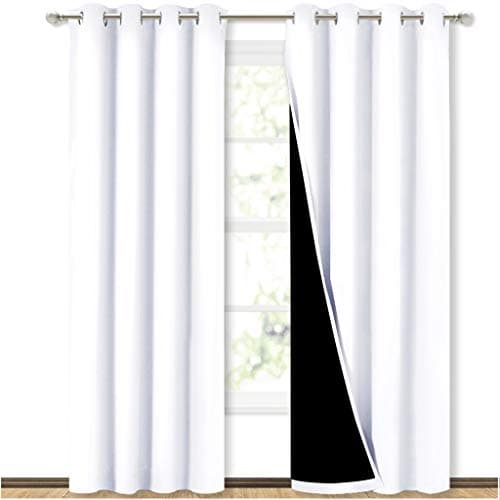 Bedrooms, and any window where darkness or warmth is the point rather than neatness. | Curtain | Darkness, warmth, coverage | Outside, wide and high | $19.99 · View on Amazon #ad Price as of November 3, 2026, and it can change. How we’re funded |
| 2 | Best shade | 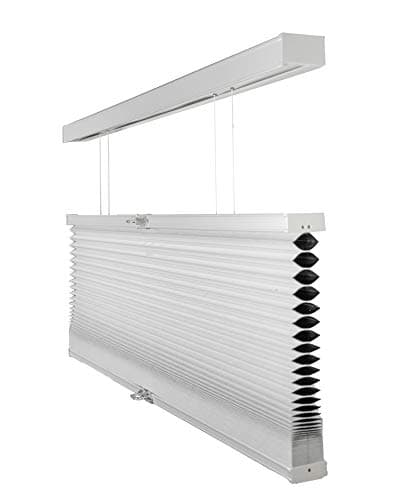 Windows with no stack space, rooms where tidiness matters, and anyone who wants to part-open to an exact height. | Cellular shade | Neatness, part-opening, insulation | Inside the recess | $150.28 · View on Amazon #ad Price as of November 3, 2026, and it can change. How we’re funded |
| 3 | The hardware for layering both | 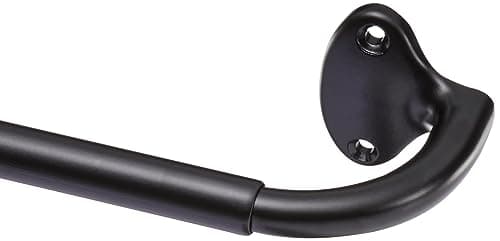 Anyone running a curtain over a shade, which is what most rooms end up wanting. | Curtain rod | Clearing a shade, closing edges | Outside, above the frame | $29.97 · View on Amazon #ad Price as of November 3, 2026, and it can change. How we’re funded |
01 — Best curtain
Thermal Insulated Blackout Curtains
NICETOWN
The triple-weave blackout panel that does the thing no shade can: mounted wide and high it overlaps the frame and closes the edges, which is the only route to a genuinely dark room. Machine washable, and available in the long drops a floor-length install needs.
Who it’s for: Bedrooms, and any window where darkness or warmth is the point rather than neatness.
The catch: Sideways only — no part-height adjustment — and the open panels need wall space to stack onto.
At a glance
- Type
- Curtain
- Best at
- Darkness, warmth, coverage
- Mount
- Outside, wide and high
- Operation
- Draw sideways
- Care
- Machine wash cold
#ad Price as of November 3, 2026, and it can change. How we’re funded
02 — Best shade
Blackout Cellular Shades, cordless
CHICOLOGY
A cordless blackout cellular shade: neat inside the recess, adjustable to any height, and insulating because the honeycomb traps still air against the glass. It is the shade that comes closest to doing a curtain's thermal job.
Who it’s for: Windows with no stack space, rooms where tidiness matters, and anyone who wants to part-open to an exact height.
The catch: Leaks at the side gaps and above the headrail, which a curtain mounted outside the opening does not.
At a glance
- Type
- Cellular shade
- Best at
- Neatness, part-opening, insulation
- Mount
- Inside the recess
- Operation
- Cordless, any height
- Care
- Vacuum, spot clean
#ad Price as of November 3, 2026, and it can change. How we’re funded
03 — The hardware for layering both
Room Darkening Blackout Curtain Rod, wrap-around
Amazon Basics
A wrap-around rod mounted outside the recess clears a shade's headrail and closes the curtain's side gap at the same time — the piece that makes the two-layer answer actually work rather than just fit.
Who it’s for: Anyone running a curtain over a shade, which is what most rooms end up wanting.
The catch: Check the projection clears your shade's headrail before ordering, and add a center support over about six feet.
At a glance
- Type
- Curtain rod
- Best at
- Clearing a shade, closing edges
- Mount
- Outside, above the frame
- Operation
- N/A
- Care
- N/A
#ad Price as of November 3, 2026, and it can change. How we’re funded
If the shade you mean is a roman shade
Roman shades are fabric rather than a mechanism, which changes the comparison — the question becomes mounting and wall space rather than material. Curtains vs roman shades covers that pairing specifically.
Go deeper
Two neighboring decisions
If the shade you are considering is a roman rather than a cellular one, cellular shades vs roman shades separates them on warmth and on looks. And if the honest answer might be neither, curtains vs no curtains makes the case for a bare window where one holds.
FAQ
Questions people actually ask
Are curtains or shades better?
Curtains for darkness, warmth and awkward window shapes, because they can be mounted wider and higher than the opening. Shades for neatness, precise part-opening, cost per window and windows with no wall space beside them. Many rooms end up with a shade inside the recess and a curtain over it.
Are shades cheaper than curtains?
Usually per window, because there is no rod, brackets or anchors to buy. The gap narrows on wide windows, where a single shade may not be available and ganging two units costs more than adding panels to one rod. Shades are also sized to order, so a mis-measure is a replacement rather than an adjustment.
Can you use curtains and shades together?
Yes, and it is the most common good answer. Fit the shade inside the recess, then mount the curtain rod outside it — high enough and with enough projection to clear the headrail, and wider than the window so the panels overlap the frame.
Which is better for blocking light, curtains or shades?
Curtains, decisively, because the mounting position is what matters. A recess-mounted shade always leaves gaps at the sides and above the headrail; a curtain on a rod 8 to 12 inches wider than the window overlaps the wall and closes them. An outside-mounted shade gets part of the way there.
Which is better for insulation?
A cellular shade and a floor-length lined curtain are close, by different mechanisms: the shade traps still air against the glass, the curtain seals the whole opening including the wall around it. A roller shade does no insulating at all. Best results come from both together.
Keep going
Read next
Compare
Curtains vs blinds
Complete coverage versus precise adjustment — and why most rooms want both.
Compare
Curtains vs blinds vs shades
A decision order for all three families, by the problem you are trying to solve.
Compare
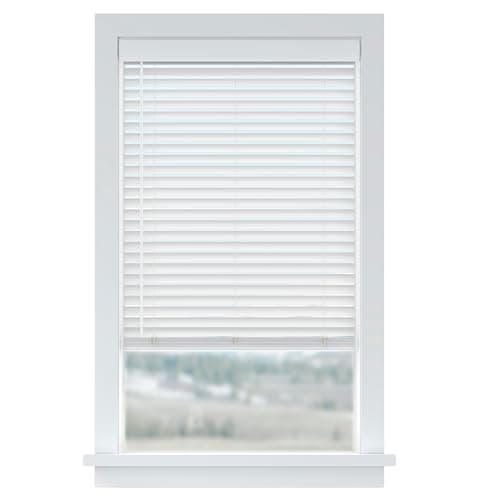
Blinds vs shades
Slats that tilt or one piece that raises — everything else follows.

Compare
Best cellular shades
The best-insulating covering there is — and why the fit decides the result.
Blackout
Best blackout curtains for a room that's too bright
Panels that block light, plus the mounting rule that decides whether any of them works.
Rods & Mounting
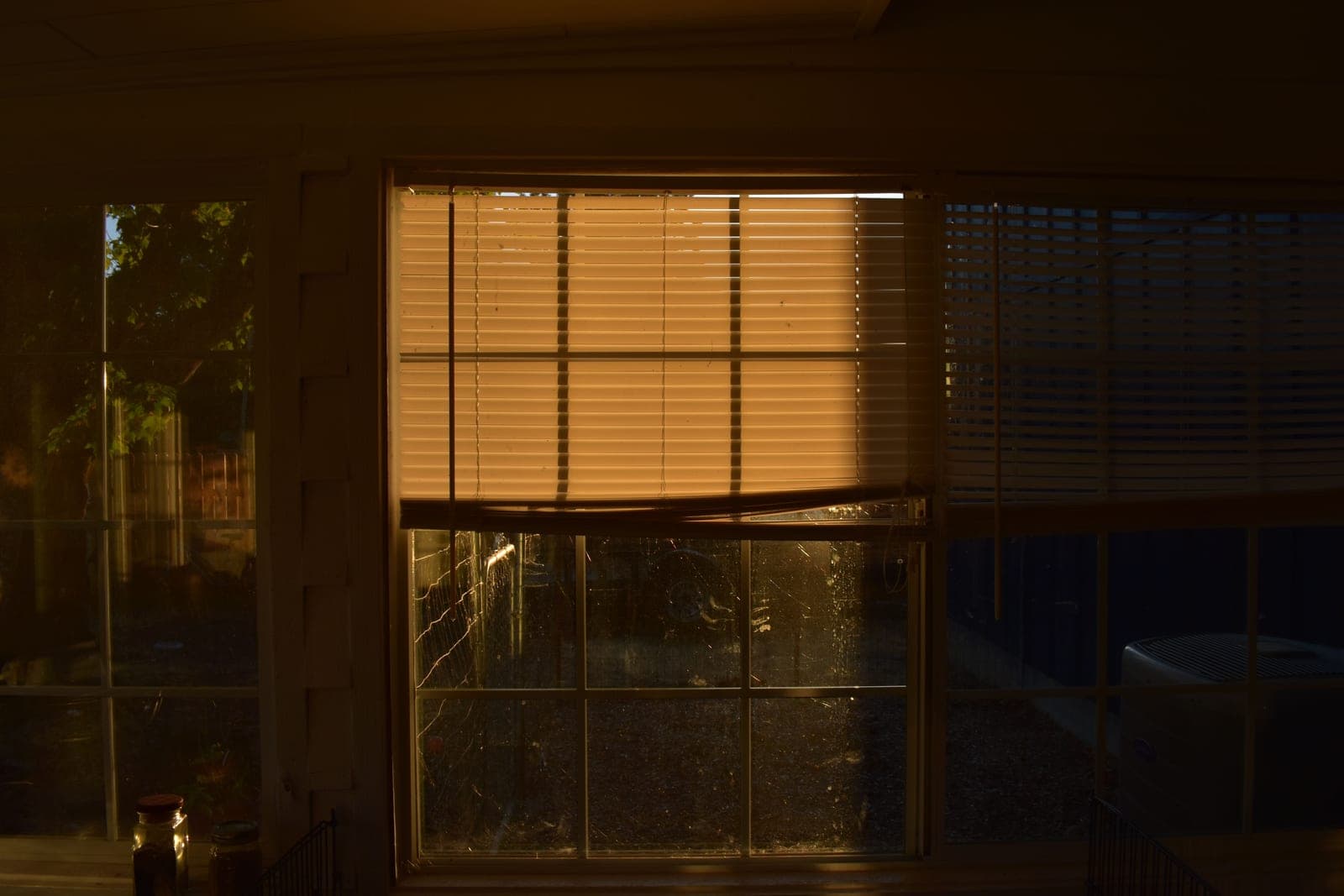
Inside mount vs outside mount
Tidy and leaky, or bigger and light-tight — and how the choice changes your measuring.
About the author
Janet H.
Janet H. is the owner of Janet Media Group and the person behind Drape & Dawn. She researches every pick against the site's published methodology.
Published by Janet Media Group · Last updated October 10, 2026