Comparison
Curtains vs blinds vs shades
Three families, three different strengths. Start from the problem rather than the product and the choice makes itself.
By Janet H. · Last updated October 10, 2026 · How we choose
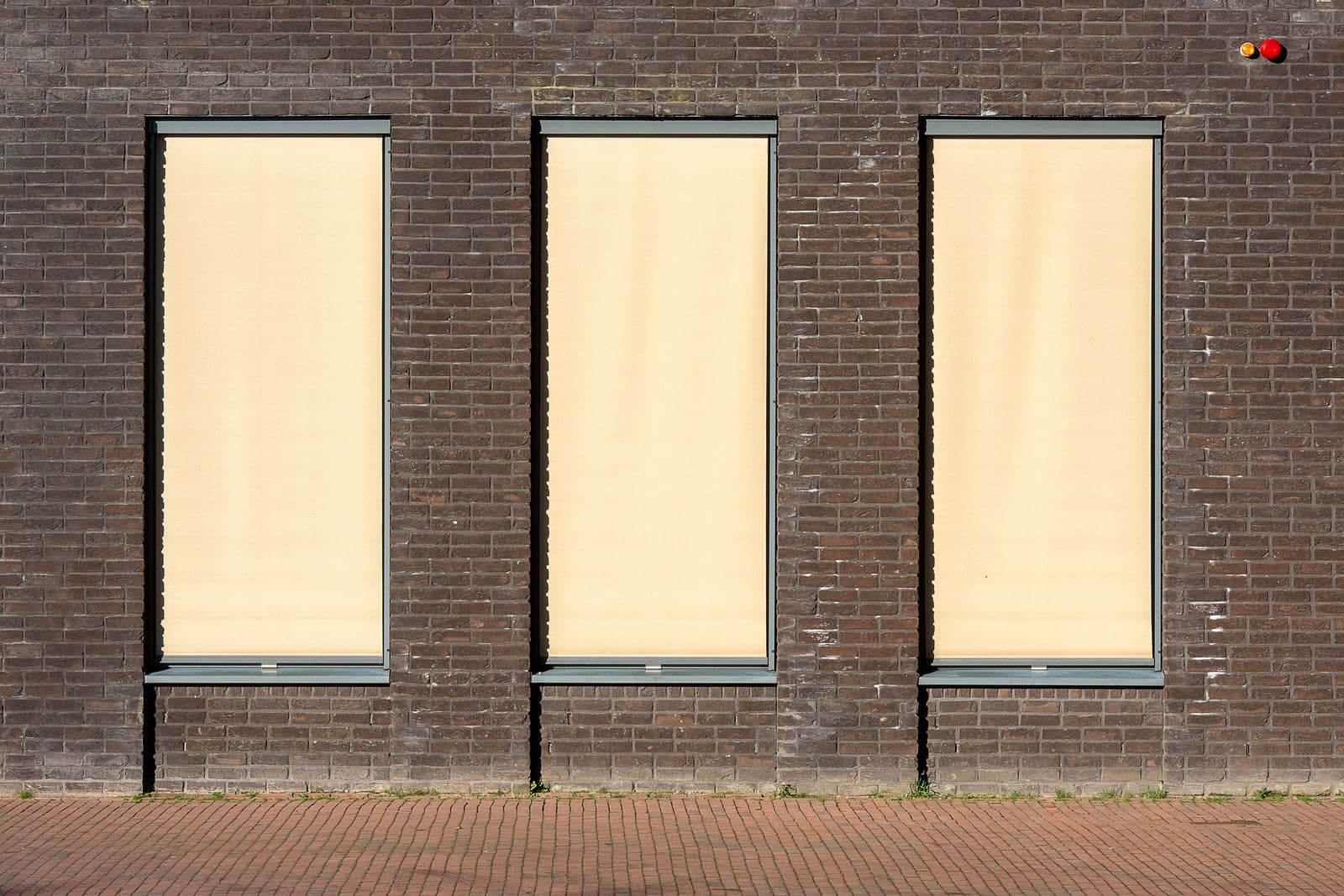
Curtains are fabric panels on a rod outside the opening; blinds are hard slats that tilt; shades are a single piece of fabric that pulls down inside the opening. Curtains own darkness and warmth, blinds own precise daytime light control, shades own neatness and part-height adjustment. Pick by which of those three your window is failing at.
The reason this question comes up at all is that the three categories overlap heavily in marketing and barely at all in physics. A blind cannot be made dark, a roller shade cannot be made warm, and a curtain cannot be made to tilt. Knowing which of those limits is a dealbreaker for your room is the entire decision.
Drape & Dawn earns a commission from qualifying purchases made through links on this page, at no extra cost to you. It does not change what we recommend. Full disclosure.
The decision table
All three, side by side
| Curtains | Blinds | Shades | |
|---|---|---|---|
| What it is | Fabric panels on a rod | Hard tilting slats | One piece of fabric that pulls down |
| Mounts | Outside the opening | Inside or outside | Inside, or just over |
| Darkness | High | Low — slat and route gaps | Medium — edge gaps |
| Daytime control | Open or closed | Tilt to any angle | Any height; top-down on some |
| Insulation | Moderate to good | None | High on cellular, none on roller |
| Awkward shapes | Bays, arches, doors | Rectangles only | Rectangles; arch kits exist |
| Humidity and grease | Poor near cooking | Excellent in vinyl or faux wood | Fine on coated roller, poor on fabric |
| Cleaning | Many machine washable | Wipe; a bent slat is permanent | Dust or sponge; cells cannot be washed |
| Wall space | Needs stack space | None | None |
| Cost per window | Panels plus hardware | Generally the lowest | Low to medium |
A decision order
Decide in this order
- 1Does the room have to be dark? If yes, a curtain is in the scheme, because only a curtain can be mounted wider and higher than the opening and overlap is what stops edge light. Everything else is a second layer.
- 2Is the window wet or greasy? A bathroom or a window over a hob rules out fabric and points at vinyl or faux wood blinds, or coated roller fabric.
- 3Is it an awkward shape? A bay, an arch, a sliding door or a wall of glass is a curtain problem; blinds and shades are rectangle products with expensive exceptions.
- 4Do you need to adjust light through the day? That is what slats are for, and nothing else does it. If this is the main requirement, a blind is the answer.
- 5Is there wall space either side? If not, curtains cannot stack and you are choosing between a blind and a shade whatever the earlier answers said.
- 6Is the window cold? A cellular shade or a floor-length lined curtain. A slatted blind contributes nothing thermally.
The hard limits
What each family is structurally unable to do
Blinds cannot be dark. A slatted blind has a gap at every slat edge, side gaps against the recess, and on corded designs a row of route holes punched through each slat. Routeless slats remove the last of those. Nothing removes the first two.
Roller shades cannot be warm. A single sheet of coated fabric on a tube traps no air, so it has no thermal function at all. Cellular shades are the exception in the shade family, because the honeycomb holds a still-air layer against the glass — which is why cellular is the shade to buy if winter is the problem.
Curtains cannot be precise. A curtain is open or closed, with a middling position that looks untidy. If the requirement is to keep the daylight and lose the glare at three in the afternoon, a curtain does it by removing the daylight, which is not what was asked.
What to buy
One of each family
| # | Best for | Product | Family | Owns | Cannot do | Price |
|---|---|---|---|---|---|---|
| 1 | The curtain | 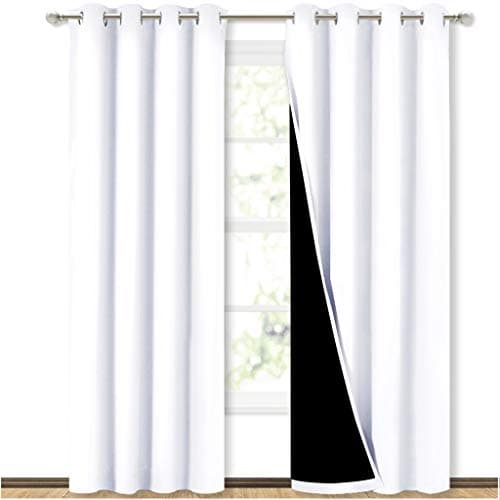 Any room where darkness or warmth is the requirement, and any window that is not a plain rectangle. | Curtain | Darkness, warmth, odd shapes | Fine daytime adjustment | $19.99 · View on Amazon #ad Price as of November 3, 2026, and it can change. How we’re funded |
| 2 | The blind | 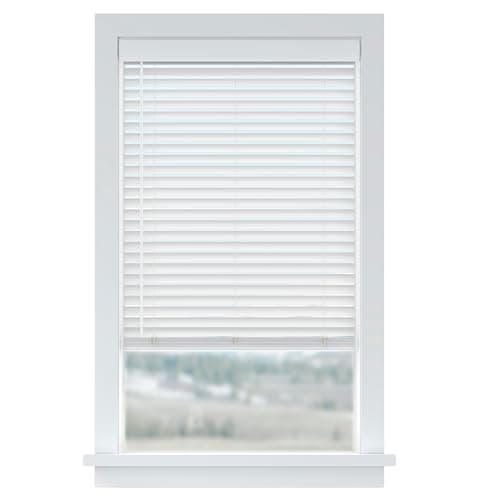 Kitchens, bathrooms, home offices — anywhere you want to shape the daylight through the day, or where humidity rules out fabric. | Blind | Daytime tilt, wet rooms | Darkness, insulation | $59.99 · View on Amazon #ad Price as of November 3, 2026, and it can change. How we’re funded |
| 3 | The shade | 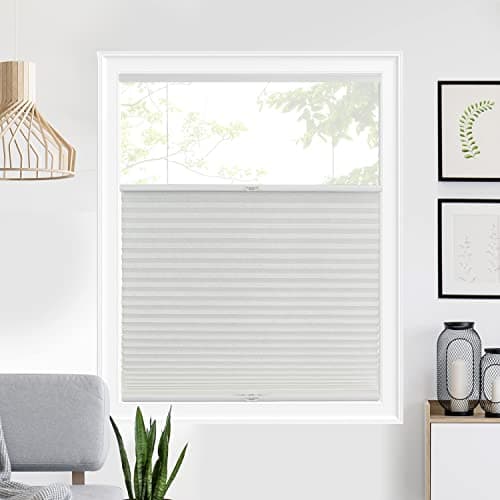 Overlooked windows, windows with no wall space for curtains, and cold windows where you still want daylight. | Shade | Part-height control, neatness | Full darkness, odd shapes | $138.95 · View on Amazon #ad Price as of November 3, 2026, and it can change. How we’re funded |
01 — The curtain
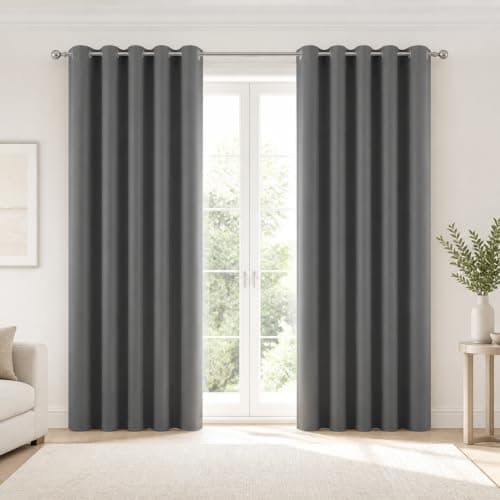
Thermal Insulated Blackout Curtains
NICETOWN
A triple-weave blackout panel, washable and available in long drops. Mounted on a rod wider and higher than the window it overlaps the wall, which is the mechanism behind every genuinely dark room.
Who it’s for: Any room where darkness or warmth is the requirement, and any window that is not a plain rectangle.
The catch: No part-height or tilt adjustment at all, and the open panels need wall space beside the window.
At a glance
- Family
- Curtain
- Owns
- Darkness, warmth, odd shapes
- Cannot do
- Fine daytime adjustment
- Mount
- Outside, wide and high
- Care
- Machine wash cold
#ad Price as of November 3, 2026, and it can change. How we’re funded
02 — The blind
Basics Cordless Faux Wood Blinds, 2" routeless slats
LEVOLOR
Two-inch faux wood on a cordless lift with routeless slats, so there is no row of cord holes leaking light. Tilt to any angle to keep the daylight and lose the glare, and wipe it clean rather than washing it.
Who it’s for: Kitchens, bathrooms, home offices — anywhere you want to shape the daylight through the day, or where humidity rules out fabric.
The catch: Cannot be made dark and does no thermal work, because slats are an open structure with no trapped air.
At a glance
- Family
- Blind
- Owns
- Daytime tilt, wet rooms
- Cannot do
- Darkness, insulation
- Mount
- Inside or outside
- Care
- Wipe monthly
#ad Price as of November 3, 2026, and it can change. How we’re funded
03 — The shade
Top Down Bottom Up Cellular Shades
CHICOLOGY
A cellular shade with two independent rails: cover the lower half against the street and leave the top open to the sky, or close it fully. The honeycomb also traps still air against the glass, so it is the one shade type that insulates.
Who it’s for: Overlooked windows, windows with no wall space for curtains, and cold windows where you still want daylight.
The catch: Leaks at the side gaps and above the headrail, and the cells collect dust and cannot be washed.
At a glance
- Family
- Shade
- Owns
- Part-height control, neatness
- Cannot do
- Full darkness, odd shapes
- Mount
- Inside the recess
- Care
- Vacuum, spot clean
#ad Price as of November 3, 2026, and it can change. How we’re funded
FAQ
Questions people actually ask
What is the difference between curtains, blinds and shades?
Curtains are fabric panels on a rod mounted outside the window. Blinds are hard slats that tilt to shape the light. Shades are a single piece of fabric that pulls down inside the opening. Curtains own darkness and warmth, blinds own daytime adjustment, shades own neatness and part-height control.
Which is best, curtains, blinds or shades?
Whichever matches the job the window is failing at. Dark room: curtains. Wet or greasy window: blinds in vinyl or faux wood. No wall space and you want to part-open to an exact height: shades. Most well-dressed windows end up using two of the three, layered.
Are blinds or shades better than curtains for insulation?
A cellular shade is close to a floor-length lined curtain and sometimes better, because the honeycomb traps still air directly against the glass. Slatted blinds and roller shades do no thermal work at all. Curtains have the advantage of sealing the whole opening including the wall around it.
Can you have curtains, blinds and shades on the same window?
Two layers is normal and three is unusual but not wrong — a blind for the day, a shade for part-height control and a curtain for night, which some bay windows and media rooms genuinely use. Check the rod projection clears both headrails before committing.
Which is cheapest, curtains, blinds or shades?
Blinds are generally the lowest cost per window, especially in vinyl. Curtains carry hardware costs — rod, brackets, anchors, center support — that are easy to forget when comparing panel prices. Shades sit in between, and are the most expensive to get wrong because they are sized to order.
Keep going
Read next
Compare
Curtains vs drapes vs blinds
The real difference between a curtain, a drape and a blind, and which one your room needs.
Compare
Curtains vs blinds
Complete coverage versus precise adjustment — and why most rooms want both.
Compare
Curtains vs shades
Covering the wall around the window versus covering the opening — and what follows from it.
Compare
Blinds vs shades
Slats that tilt or one piece that raises — everything else follows.
Compare
Curtains vs drapes
Weight and lining are the real difference — and they decide light, warmth and cost.
Compare
Blinds vs shutters
Same tilt control, very different commitment — when shutters actually earn the cost.
Compare
Best window blinds
The only covering you can aim — which material suits which room.
About the author
Janet H.
Janet H. is the owner of Janet Media Group and the person behind Drape & Dawn. She researches every pick against the site's published methodology.
Published by Janet Media Group · Last updated October 10, 2026