Guide
How to add a blackout liner
A liner is the cheapest route to a dark room when the curtains already look right. It is also the one most often bought in the wrong width.
By Janet H. · Last updated October 17, 2026 · How we choose

To add a blackout liner to curtains you already own, buy a ring-top liner panel sized to your existing curtains, snap its rings onto the same rod behind them, and make sure the liner is at least as wide and as long as the curtain it hides behind. It takes ten minutes, nothing comes down, and it is the cheapest way to turn decorative drapes into a dark room.
The reason this goes wrong is almost always sizing. A liner inherits the coverage of whatever it hangs behind: if your curtains are narrower than the window, so is the liner, and the light at the sides stays exactly where it was. Liners fix fabric that passes light. They do not fix a curtain that does not reach.
Drape & Dawn earns a commission from qualifying purchases made through links on this page, at no extra cost to you. It does not change what we recommend. Full disclosure.
Three situations
Decide which kind of liner you need
- Behind curtains on a rod - a ring-top or hook-top liner panel. Snaps onto the existing rod, no sewing, removable for washing. This is the common case.
- Behind a pinch-pleat or pencil-pleat drape - a liner that attaches to the same hooks as the drape heading, so both hang from one set of hooks in the track.
- Behind a shade or blind - a liner cannot be hung behind a roller or roman shade on its own hardware in any tidy way. Here the honest answer is a second covering: a blackout panel or a trim-to-fit blackout shade in front of or behind the existing one.
If what you actually want is a lined curtain rather than two layers, buying one product with the liner sewn in is neater, hangs better and gathers more cleanly. The comparison between the two routes is in blackout curtains vs blackout liners.
Compatibility
Match the attachment to your header
| Your curtain header | Liner attachment that fits | Notes |
|---|---|---|
| Grommet | Ring-top liner on the same rod | Liner rings sit behind the grommets; rod must have room |
| Rod pocket | Ring-top liner on the same rod | Thread the curtain first, then clip the liner rings on |
| Back tab | Ring-top or hook-top liner | Back tabs already hold the panel close; the liner adds the density |
| Pinch pleat on hooks | Hook-top liner on the same hooks | One hook carries both layers; check the hook length |
| Track with gliders | Hook-top liner | Glider capacity is the limit - two layers is twice the weight |
| Tab top | Ring-top liner | Light gets over the top between tabs regardless; expect a pelmet |
The part that matters
Size it properly
Width
The liner should be at least as wide as the curtain panel it sits behind, and never wider than the rod it hangs on. If your curtains are the right width for the window - combined panel width 2 to 2.5 times the window width - the liner can match them. If your curtains are too narrow, fix that first: a liner will not cover glass the curtain does not cover. How many curtain panels do I need gives the number.
Length
Standard practice is a liner about an inch shorter than the curtain, so it is hidden from the room side and does not drag on the floor. Measure from the ring, not from the window frame, because the liner hangs from the same rod and loses the same amount at the top.
Rod capacity
Two layers is roughly double the weight. A thin rod that was already bowing slightly under a pair of panels will visibly sag once a liner joins them, and over about 60 inches of span you want a center support bracket. If the rod is a cheap one that came with the curtains, replace it before adding weight - see best curtain rods for heavy curtains.
Ten minutes
Fitting it, step by step
- 1
Check the rod first
Press up in the middle of the rod. If it flexes easily, add a center support or change the rod before you add a second layer - this is the point at which a borderline rod gives up.
- 2
Measure the hanging curtain
Width of each panel flat, and length from the top of the ring to the hem. Buy the liner to that, taking the next size down in length so it stays hidden.
- 3
Open the rings and clip them on
Ring-top liners use rings that snap open. Hang the liner rings on the rod behind the existing curtain, spacing them to match the curtain's own fixing points so the two layers move together.
- 4
Close the side gap
Pull both layers to the wall at each end so the liner reaches the return. This is where the remaining light comes in, and it costs nothing to get right.
- 5
Check it at the hour that bothers you
Stand in the room at dawn or with the streetlight on. Any halo you still see is a mounting problem, not a fabric one - the fixes are in how to fix curtain light gaps.
Honest limits
What a liner will not do
It will not cover glass your curtains do not cover. It will not stop light coming over the top of a grommet header - that needs a pelmet, a ceiling-mounted rod or a return. It does not make a curtain soundproof; mass helps a little with mid and high frequencies and nothing with the low rumble of an engine, as explained in do blackout curtains block sound. And it adds bulk: two layers stack wider when open, so you need more wall beside the window.
Methodology
How we chose
We select on published construction and materials, on fitness for the specific problem each pick addresses, and on failure patterns that recur across owner feedback rather than headline scores. We do not lab-test these products and publish no light-blocking percentage of our own; where a figure appears it is the manufacturer's and is labeled as such. Full criteria on the methodology page.
What we’d buy
The products behind this advice
Picked against the criteria above, not the other way round. Prices are read from Amazon and refreshed daily; each link goes to the current listing.
| # | Best for | Product | Type | Attachment | Price |
|---|---|---|---|---|---|
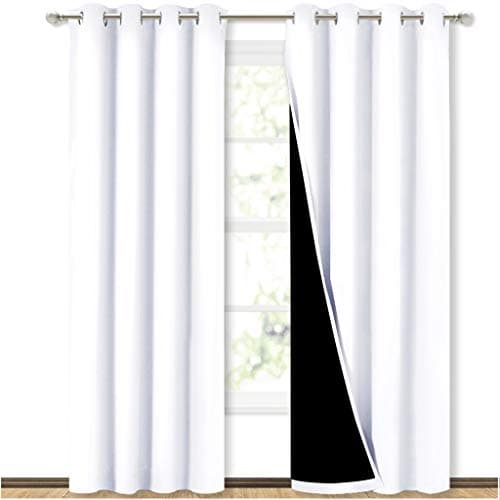
| 1 | Best for curtains you already own | 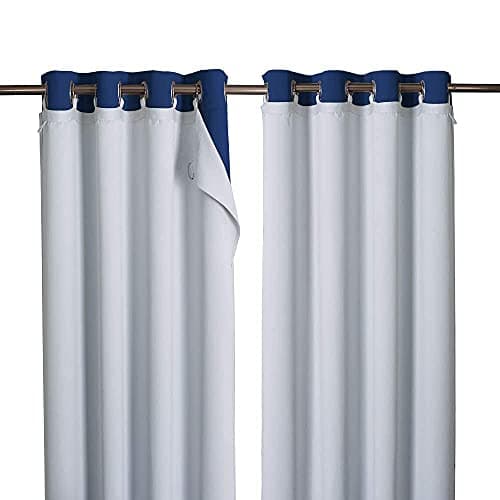 Renters and anyone whose existing panels look right and simply pass too much light. | Blackout liner | Detachable snap rings | $18.99 · View on Amazon #ad Price as of November 3, 2026, and it can change. How we’re funded |
| 2 | Best if you would rather buy it lined | 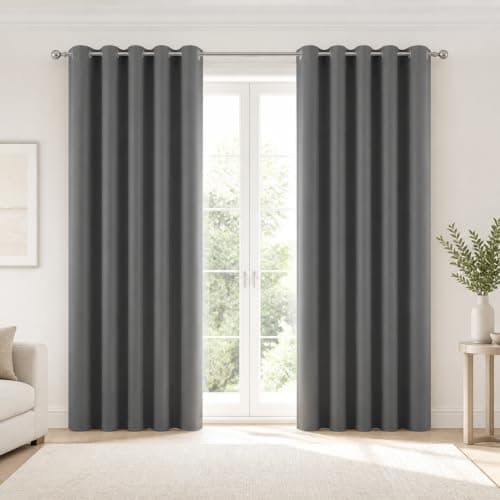 A window where you are replacing the curtains anyway, and one product beats two layers on one rod. | Lined blackout curtain | — | $23.99 · View on Amazon #ad Price as of November 3, 2026, and it can change. How we’re funded |
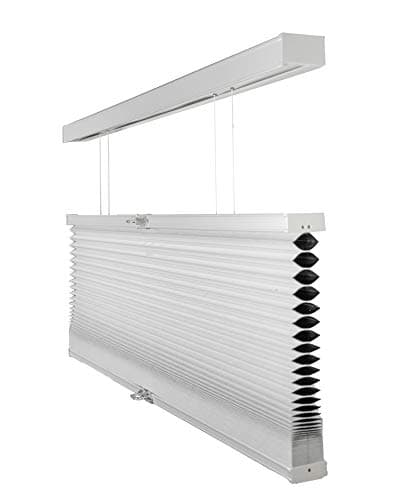
| 3 | Best if the window has a shade, not a curtain | 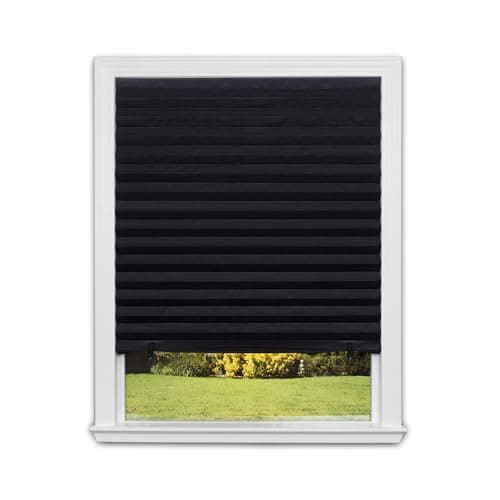 Windows with no rod at all, where the darkness has to come from something clipped into the frame. | Pleated paper shade | — | $29.97 · View on Amazon #ad Price as of November 3, 2026, and it can change. How we’re funded |
01 — Best for curtains you already own
Blackout Curtain Liners with detachable rings
NICETOWN
Blackout liners on rings that snap open, so they go onto an existing rod behind curtains you already own without taking anything down.
Who it’s for: Renters and anyone whose existing panels look right and simply pass too much light.
The catch: A liner inherits your curtains' coverage. If they are narrower or shorter than the window, the liner will be too, and the gaps stay exactly where they were.
At a glance
- Type
- Blackout liner
- Construction
- Woven blackout
- Care
- Machine wash cold
- Attachment
- Detachable snap rings
#ad Price as of November 3, 2026, and it can change. How we’re funded
02 — Best if you would rather buy it lined
100% Blackout Curtains with black liner
Deconovo
A decorative face fabric with a black liner sewn behind it, so the liner does the light blocking and the room-side color can be anything you like.
Who it’s for: A window where you are replacing the curtains anyway, and one product beats two layers on one rod.
The catch: Two bonded layers make it bulky. It stacks wide when open, so it needs wall space beside the window and a rod with a center support on a wide span.
At a glance
- Type
- Lined blackout curtain
- Construction
- Face fabric + sewn liner
- Care
- Machine wash cold
- Drops
- 63 / 72 / 84 / 96 in
#ad Price as of November 3, 2026, and it can change. How we’re funded
03 — Best if the window has a shade, not a curtain
No Tools Original Blackout Pleated Paper Shade
Redi Shade
Trim to width with scissors and clip into the frame by hand — no drill, no brackets, no cords. The manufacturer states it blocks 99% of light.
Who it’s for: Windows with no rod at all, where the darkness has to come from something clipped into the frame.
The catch: It is paper. It creases along the pleats and does not enjoy daily raising and lowering. Budget to replace rather than repair.
At a glance
- Type
- Pleated paper shade
- Fitting
- Trim and clip, no tools
- Operation
- Cordless
- Light
- Manufacturer states 99%
#ad Price as of November 3, 2026, and it can change. How we’re funded
FAQ
Questions people actually ask
Can you add a blackout liner to existing curtains?
Yes. Ring-top blackout liner panels snap onto the rod you already have, behind the curtains you already own, in about ten minutes. Size the liner to the curtain - at least as wide, about an inch shorter - and check the rod can take roughly double the weight.
What size blackout liner do I need?
Match the flat width of the curtain panel it hangs behind, and go about an inch shorter in length so the liner stays hidden from the room and clear of the floor. Measure the length from the top of the ring, not from the window frame.
Do blackout liners actually work?
They work on light passing through the fabric, which is what they are for. They do nothing about light arriving around the panel, so a liner behind curtains that are too narrow for the window changes very little. Fix the coverage first, then add density.
Can I put a blackout liner behind a roman shade or a blind?
Not tidily. There is no standard way to hang a liner behind a shade's own hardware. The practical equivalents are a trim-to-fit blackout shade fitted in the same recess, or a blackout curtain mounted outside the opening over the top of the existing shade.
Will a liner make my curtains hang badly?
It changes how they hang. Two layers on one rod stack wider when open and gather less crisply than a single lined panel, and a grommet header with a liner behind it can look slightly bulky at the top. If appearance matters more than cost, a curtain with the liner sewn in hangs better.
Keep going
Read next
Blackout
Best blackout curtain liners
Add darkness behind curtains you already like, without replacing anything.
Blackout
Blackout curtains vs blackout liners
Replace the curtain or hide a liner behind it — cost, weight and flexibility compared.
Blackout
How to fix curtain light gaps
Close the side, top, middle and bottom gaps — the cheapest fix for a bright room.
Blackout
How to block light from windows
Every method for blocking window light, ranked by darkness achieved and effort required.
Renter-Friendly
Window treatments for renters
Everything that works without a drill, organized by the problem you're solving.
Rods & Mounting
Grommet vs rod pocket vs pleated
How each header moves, hangs and leaks light over the top.
About the author
Janet H.
Janet H. is the owner of Janet Media Group and the person behind Drape & Dawn. She researches every pick against the site's published methodology.
Published by Janet Media Group · Last updated October 17, 2026