Guide
Do blackout curtains block sound?
They take the edge off. They do not soundproof a window, and nothing you hang on a rod ever will.
By Janet H. · Last updated October 11, 2026 · How we choose

Blackout curtains reduce noise a little, and the reduction has almost nothing to do with the blackout coating. What helps is mass and surface area: a heavy, full, floor-length panel absorbs some of the sound bouncing around inside your room and dampens a little of what comes through the glass. What it cannot do is stop traffic, a neighbor's bass, or a dog, because sound travels through the gaps in a window assembly and a curtain does not seal gaps.
That distinction matters because the category is marketed badly. Panels labeled soundproof are heavy curtains, and heavy curtains are worth hanging — just not for the reason the listing implies. If you want to know what to expect before spending money, this page is the honest version.
Drape & Dawn earns a commission from qualifying purchases made through links on this page, at no extra cost to you. It does not change what we recommend. Full disclosure.
The mechanism
Two different things called noise
Reverberation is sound bouncing off hard surfaces inside the room — bare walls, glass, wood floors. It is what makes a sparsely furnished room feel loud and echoey, and it is the thing soft furnishings genuinely fix. Hang four heavy curtains in a room with bare walls and the room will audibly calm down.
Transmission is sound getting from outside to inside through the window assembly. It travels through the glass, and much more easily through the air gaps around a sash, a trickle vent or an old frame. Blocking transmission requires mass and an airtight seal. A curtain adds a small amount of mass and no seal at all, so it does very little.
Nearly every disappointed review of a soundproof curtain is someone who bought it for transmission and got reverberation. The curtain worked; it just worked on the wrong problem.
What to look for
What actually makes a curtain quieter
Three properties, in order of how much they matter.
- 1Mass. Heavier fabric absorbs and dampens more. A thick triple-weave or a panel with a dense felt liner does meaningfully more than a thin coated blackout panel of the same size.
- 2Fullness. A panel gathered to 2 or 2.5 times the window width has far more surface area and far more folded air than a flat sheet pulled tight. Fullness is the single cheapest acoustic upgrade available, and it costs nothing but ordering more panels.
- 3Coverage. Floor-to-ceiling and well past the frame on both sides. A curtain that stops at the sill leaves the wall below the window doing nothing.
Notice that none of those is the blackout coating. A coated panel and an uncoated triple weave of the same weight behave about the same acoustically — the coating is for light. If you are buying for noise, buy for weight, and best noise reducing curtains is the roundup built around that.
The honest limits
What a curtain cannot do
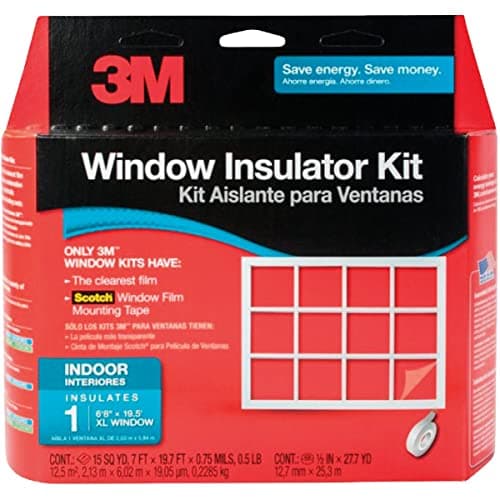
It cannot seal the window. Sound follows air, and a window that leaks air leaks noise — around the sash, through a trickle vent, under a poorly fitted frame. Sealing those gaps with weatherstrip or a secondary glazing panel does more for noise than any curtain, and the same work also fixes drafts, which how to stop window drafts covers.
It cannot stop low frequencies. Bass from a car stereo or a neighbor's speaker travels through the building structure as much as through the air, and it goes straight past anything you hang on a rod. No fabric product addresses this.
And it cannot produce the figures the listings imply. Nobody publishes a verified decibel reduction for a curtain at your window, because the result depends on your glass, your frame and your room. Treat any specific number in a listing as marketing rather than measurement.
What to do
The setup that does make a difference
If noise is the real complaint and you are working with curtains, this is the arrangement worth building:
- 1
Seal the air gaps first
Check the window for drafts with a candle or a damp hand on a windy day. Weatherstrip or fill whatever you find. This is the step that produces the largest change and the only one that addresses transmission directly.
- 2
Mount the rod high and very wide
Close to the ceiling and 8 to 12 inches past the frame on each side. More coverage means more absorbing surface and more of the wall around the window covered.
- 3
Buy for weight, and buy enough panels
A heavy panel or a panel with a detachable felt liner, in enough total width to reach 2 to 2.5 times the window. Two thin panels on a wide window is the arrangement that does nothing.
- 4
Take them to the floor
A panel that just brushes the floor stops sound passing under the hem and covers more wall. A short panel is a decorative choice, not an acoustic one.
- 5
Soften the rest of the room
A rug, upholstered furniture and something on the opposite wall will do as much as the curtains for reverberation. Acoustically, the curtain is one surface among several.
The alternative
When to stop buying curtains
If the noise is traffic on a main road or a flight path, the useful money goes into the window rather than onto the rod: secondary glazing, a thicker pane, or an acoustic insert. A curtain is then a refinement on top of that, not a substitute for it. If what is actually keeping you awake is light as much as sound — common for shift workers and anyone on a lit street — how to block light from windows addresses the half of the problem a curtain can genuinely solve.
Recommendation
What we would buy
A three-in-one panel with a detachable felt liner, because the liner is the mass and it comes out for washing, plus enough panels to reach proper fullness and a rod that will carry them. Weight on a rod is the thing people underestimate here: four heavy panels at 96 inches will bow a thin rod within weeks, so read best curtain rods for heavy curtains before ordering.
What we’d buy
The products behind this advice
Picked against the criteria above, not the other way round. Prices are read from Amazon and refreshed daily; each link goes to the current listing.
| # | Best for | Product | Type | Construction | Price |
|---|---|---|---|---|---|
| 1 | The mass layer | 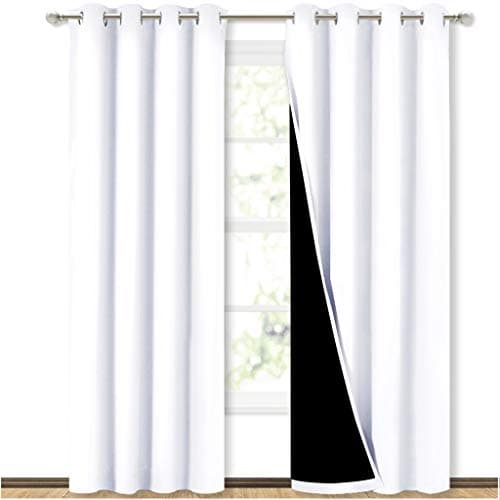 Anyone buying for noise: weight and fullness do the work, not the blackout coating. | Blackout curtain | Triple-weave, uncoated | $19.99 · View on Amazon #ad Price as of November 3, 2026, and it can change. How we’re funded |
| 2 | If you like the curtains you own | 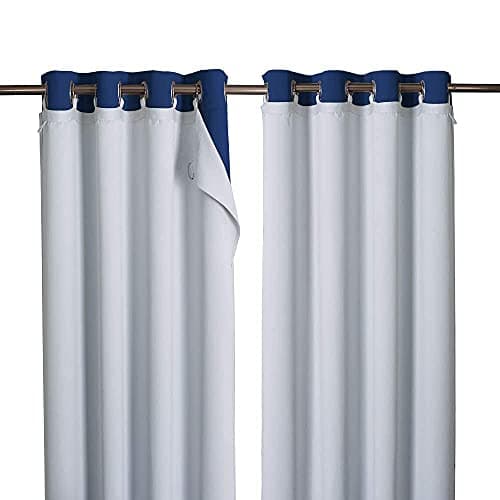 Adding weight behind existing panels instead of replacing them, and it comes off to wash. | Blackout liner | Woven blackout | $18.99 · View on Amazon #ad Price as of November 3, 2026, and it can change. How we’re funded |
| 3 | The rod heavy panels need | 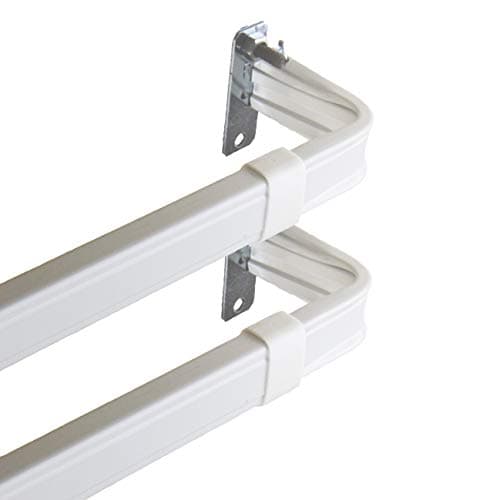 Four lined panels at 96 inches will bow a thin rod within weeks. | Curtain rod | — | $42.17 · View on Amazon #ad Price as of November 3, 2026, and it can change. How we’re funded |
01 — The mass layer
Thermal Insulated Blackout Curtains
NICETOWN
Triple-weave polyester with no coating to crack or peel, machine washable, and sold in a wider ladder of drops than most ranges — including the 108-inch length a near-ceiling rod needs.
Who it’s for: Anyone buying for noise: weight and fullness do the work, not the blackout coating.
The catch: The grommet header holds the panel an inch off the wall with open gaps between grommets, so light still comes over the top. Add a pelmet, or choose a back-tab version, if that is your problem.
At a glance
- Type
- Blackout curtain
- Construction
- Triple-weave, uncoated
- Care
- Machine wash cold
- Drops
- 63 / 84 / 96 / 108 in
#ad Price as of November 3, 2026, and it can change. How we’re funded
02 — If you like the curtains you own
Blackout Curtain Liners with detachable rings
NICETOWN
Blackout liners on rings that snap open, so they go onto an existing rod behind curtains you already own without taking anything down.
Who it’s for: Adding weight behind existing panels instead of replacing them, and it comes off to wash.
The catch: A liner inherits your curtains' coverage. If they are narrower or shorter than the window, the liner will be too, and the gaps stay exactly where they were.
At a glance
- Type
- Blackout liner
- Construction
- Woven blackout
- Care
- Machine wash cold
- Attachment
- Detachable snap rings
#ad Price as of November 3, 2026, and it can change. How we’re funded
03 — The rod heavy panels need
Heavy-duty lock-seam drapery rod set
Rod Desyne
Lock-seam steel tube with brackets proportioned to match, which is what stops a rod bowing in the middle or drooping at the ends under lined panels.
Who it’s for: Four lined panels at 96 inches will bow a thin rod within weeks.
The catch: Function over appearance — the finishes are plain. If the rod is meant to be a decorative feature, you are trading looks for stiffness.
At a glance
- Type
- Curtain rod
- Diameter
- 3/4–1 in
- Load
- Heavy
- Supports
- Center bracket available
#ad Price as of November 3, 2026, and it can change. How we’re funded
FAQ
Questions people actually ask
Do blackout curtains block sound?
A little, and not because they are blackout. Heavy, full, floor-length panels absorb some of the sound reflecting around inside a room and dampen a small amount coming through the glass. They do not seal the window, so they do very little about traffic, voices or bass arriving from outside.
Are soundproof curtains real?
Curtains sold as soundproof are heavy curtains, usually with a dense liner. They are worth buying for weight and fullness, but nothing hung on a rod soundproofs a window. Soundproofing requires mass plus an airtight seal, and a curtain provides neither in any meaningful quantity.
What is better for noise, curtains or a blind?
Curtains, clearly. A blind is an open structure with air gaps all through it and slats that can rattle in a draft. Heavy fabric at proper fullness has mass and surface area, which is what absorbs sound. Neither addresses transmission through the glass.
How much do heavy curtains reduce noise?
Nobody can give you a trustworthy number, because the result depends on your glass, your frame and how reflective your room is. Expect a room that sounds calmer and slightly quieter, not a room where outside noise has gone. Treat decibel claims on listings as marketing.
What actually reduces traffic noise through a window?
Sealing the air gaps around the frame, then adding mass to the glazing itself — secondary glazing or a thicker pane. Those two steps do more than any curtain. Once they are done, heavy curtains are a worthwhile refinement on top.
Keep going
Read next
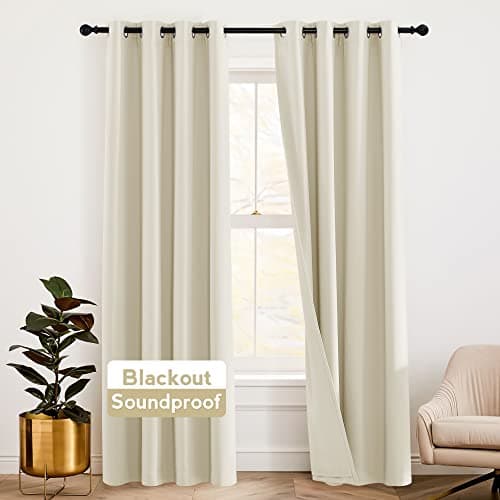
Blackout
Best noise reducing curtains for a loud window
Heavy panels with a measured noise result — and the honest ceiling on what any curtain can do.
Blackout
Best blackout curtains for a room that's too bright
Panels that block light, plus the mounting rule that decides whether any of them works.
Drafts
How to stop window drafts
Test with a flame, seal the leak, then cover the glass. In that order.
Rods & Mounting
Best curtain rods for heavy curtains
What carries lined blackout panels without bowing — rod, bracket and anchor.
About the author
Janet H.
Janet H. is the owner of Janet Media Group and the person behind Drape & Dawn. She researches every pick against the site's published methodology.
Published by Janet Media Group · Last updated October 11, 2026