Comparison
Drapes vs blinds
Not a style preference. One is a heavy lined textile that seals a window; the other is an adjustable hard covering that fits inside it.
By Janet H. · Last updated October 11, 2026 · How we choose
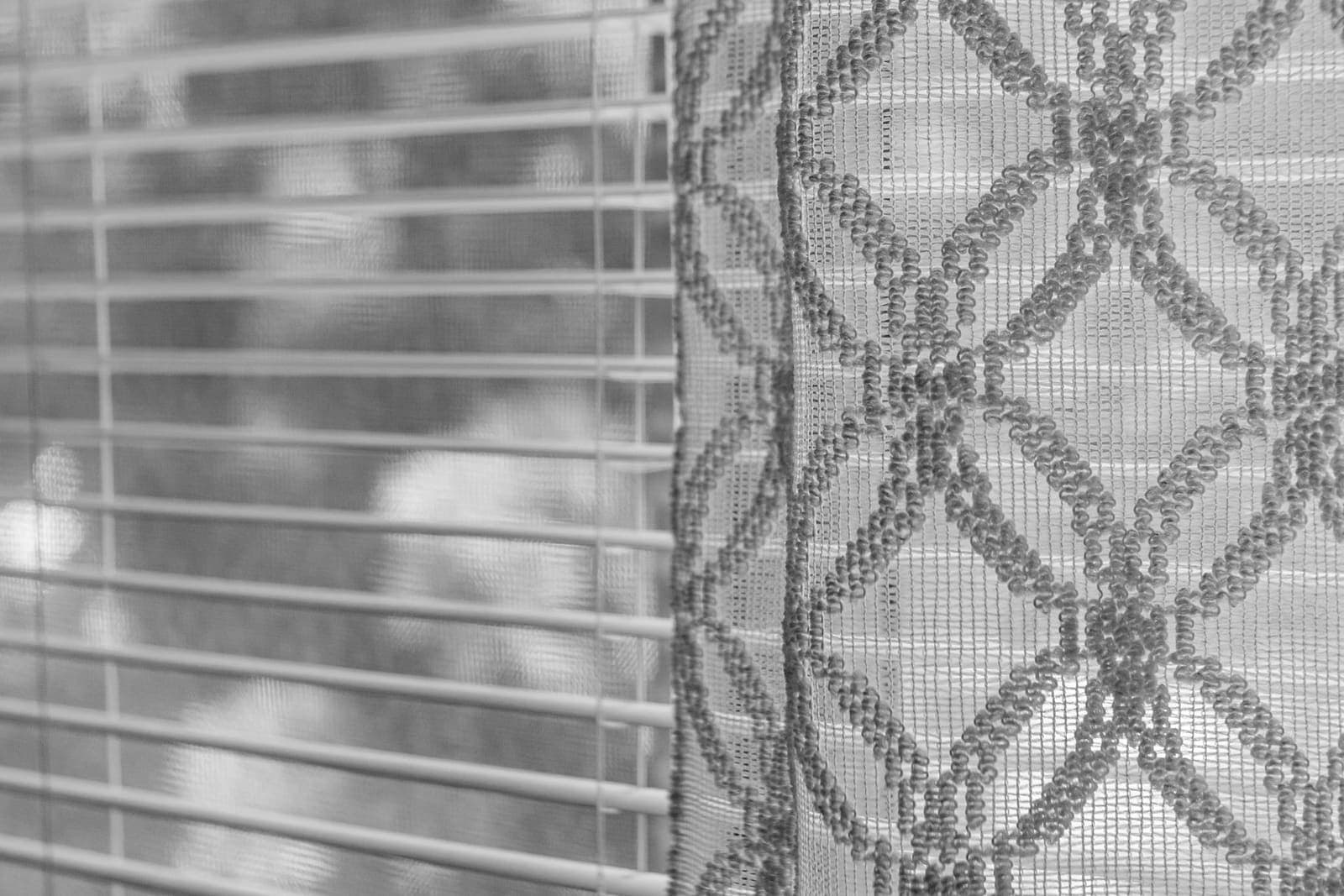
Pick drapes when you want the room dark, warmer, or quieter, and you have wall space beside the window. Pick blinds when you want to control how much light comes in through the day, when the window is in a wet or greasy room, or when there is nowhere for fabric to stack. Drapes solve a window at one setting; blinds solve it at twenty.
Worth being precise about the word, because it changes the comparison. A drape is a lined, usually pleated, floor-length panel in a heavier fabric — the formal end of the curtain family, covered in curtains vs drapes. Comparing drapes to blinds is therefore comparing the heaviest soft covering to the lightest hard one, and the gaps between them are wider than most people expect. With all three families on the table at once, read curtains vs drapes vs blinds.
Drape & Dawn earns a commission from qualifying purchases made through links on this page, at no extra cost to you. It does not change what we recommend. Full disclosure.
At a glance
The short version
| Drapes | Blinds | |
|---|---|---|
| Light control | Open or closed | Infinitely adjustable by tilt |
| Darkness | Total, mounted high and wide | Never total — route holes and gaps |
| Insulation | Best soft option, with a liner | Almost none — an open structure |
| Sound | Absorbs some reflected noise | None, and slats can rattle |
| Wet or greasy rooms | Poor — holds moisture and smells | Vinyl and faux wood wipe clean |
| Wall space needed | 8-12 in each side | None |
| Cost per window | Panels plus rod and brackets | One unit, often under half the price |
The real difference
Light: blinds adjust, drapes commit
A blind's slats tilt. That single property is why blinds persist in rooms where fabric would look better: at 10am you can keep the view and lose the glare, at 3pm you can close the slats against the sun and keep the room bright, and at 9pm you can close them against the street. A drape has two states. It is either covering the window or it is not.
The direction you tilt matters more than people realize, and most get it backwards — which way to turn blinds for privacy has the rule. The flip side: slats tilted closed still pass a surprising amount of light through the gaps between them and through the route holes drilled for the lift cords. A blind cannot make a room dark. A drape can.
Bedrooms
Darkness and sleep
If the problem is a 5am summer sunrise, this comparison has one answer. Lined blackout drapes on a rod mounted 8 to 12 inches wider than the window and close to the ceiling will take a bedroom genuinely dark. The best blind in the world leaves light through the route holes and a stripe down each side of the headrail. Routeless slats close one of those leaks and not the other.
The honest middle ground is both: a blind for daytime adjustability and drapes over the top for night. That is also the arrangement that handles a street light, because it puts mass between the glass and the bed. Best curtains for a bedroom covers the fabric side.
Comfort
Drafts, heat and noise
A blind is an open structure — slats with air gaps all through it and nothing trapped anywhere. It will shade a room from direct sun, which helps in July, but it does almost nothing about cold air falling off the glass in January. Lined drapes with returns at the sides trap a layer of still air against the window, which is a real if modest insulating effect. How to stop window drafts is where the bigger wins actually are.
Noise follows the same logic. Mass and soft surface absorb reflected sound inside a room; nothing makes a window soundproof. Heavy drapes measurably soften a hard-surfaced room. Slats do not, and vertical slats on a patio door rattle in a draft, which is the opposite of what you wanted.
Where blinds win outright
Rooms that get wet or greasy
Bathrooms and kitchens end this debate quickly. Fabric near steam holds damp; fabric near a cooktop holds grease and smell, and most lined drapes cannot be machine washed because the liner and the face fabric shrink at different rates. Vinyl and faux wood blinds wipe down with a kitchen spray and tolerate both. See best blinds for bathroom windows and best blinds for kitchen windows.
Money
Cost, counted properly
Blinds are usually the cheapest covering per window, especially in vinyl, and the brackets come in the box. Drapes carry hardware costs — rod, brackets, wall anchors, a center support over about sixty inches — that are easy to forget when comparing panel prices. A pair of lined 96-inch panels is also real weight, and a thin rod on end brackets alone will bow within weeks; best curtain rods for heavy curtains is the fix.
The recommendation
What we would actually do
Bedroom: drapes, mounted high and wide, with a blind underneath only if you want daytime control. Living room: blinds or a shade for the day, drapes for the evening and for the softness at the edges. Kitchen, bathroom, utility room, garage: blinds, and nothing textile. Rental where nothing can be drilled: neither of the standard mountings applies — start from window treatments for renters.
What we’d buy
The products behind this advice
Picked against the criteria above, not the other way round. Prices are read from Amazon and refreshed daily; each link goes to the current listing.
| # | Best for | Product | Type | Operation | Price |
|---|---|---|---|---|---|
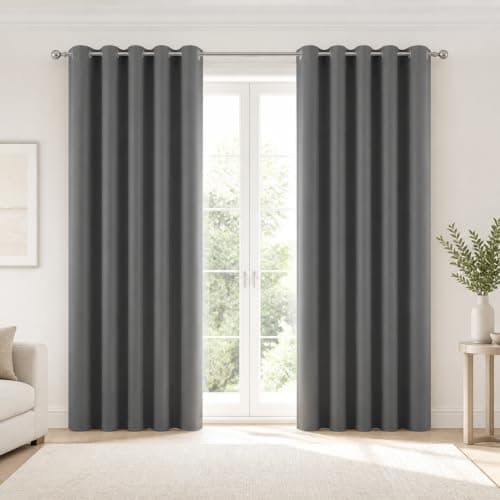
| 1 | If you chose drapes | 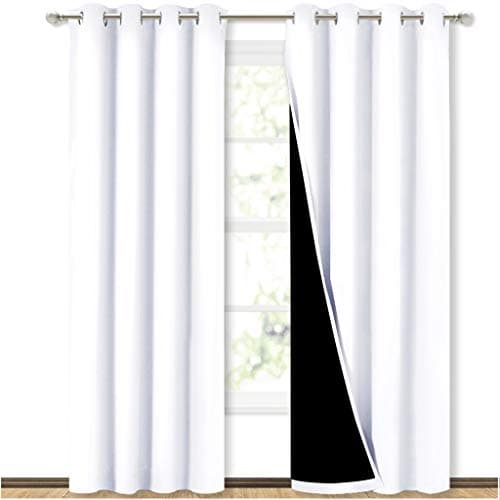 Bedrooms, cold windows and noisy rooms — where mass and full coverage are the point. | Blackout curtain | — | $19.99 · View on Amazon #ad Price as of November 3, 2026, and it can change. How we’re funded |
| 2 | If you chose blinds | 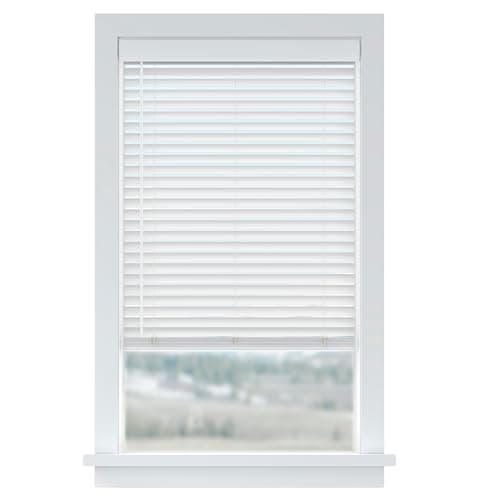 Rooms where the light needs adjusting through the day, and wet or greasy rooms where fabric fails. | Slatted blind | Cordless | $59.99 · View on Amazon #ad Price as of November 3, 2026, and it can change. How we’re funded |
| 3 | What drapes also cost | 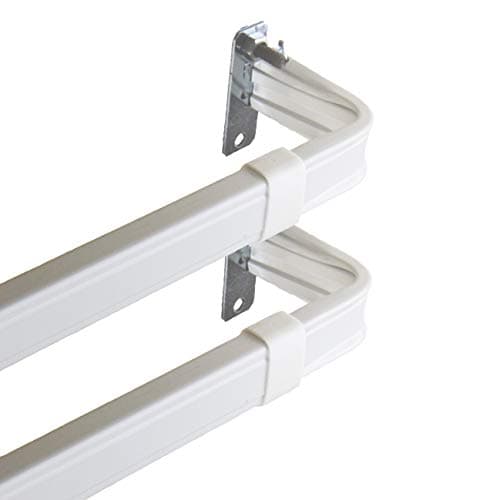 Lined floor-length panels are real weight; the rod is a third of the budget and is easy to forget. | Curtain rod | — | $42.17 · View on Amazon #ad Price as of November 3, 2026, and it can change. How we’re funded |
01 — If you chose drapes
Thermal Insulated Blackout Curtains
NICETOWN
Triple-weave polyester with no coating to crack or peel, machine washable, and sold in a wider ladder of drops than most ranges — including the 108-inch length a near-ceiling rod needs.
Who it’s for: Bedrooms, cold windows and noisy rooms — where mass and full coverage are the point.
The catch: The grommet header holds the panel an inch off the wall with open gaps between grommets, so light still comes over the top. Add a pelmet, or choose a back-tab version, if that is your problem.
At a glance
- Type
- Blackout curtain
- Construction
- Triple-weave, uncoated
- Care
- Machine wash cold
- Drops
- 63 / 84 / 96 / 108 in
#ad Price as of November 3, 2026, and it can change. How we’re funded
02 — If you chose blinds
Basics Cordless Faux Wood Blinds, 2" routeless slats
LEVOLOR
Two-inch faux wood with the lift cords routed out of the slat face, so the blind closes without a column of light pinholes down the middle — the spec that matters if privacy or darkness is the point.
Who it’s for: Rooms where the light needs adjusting through the day, and wet or greasy rooms where fabric fails.
The catch: Faux wood is heavy. Over about 60 inches a single blind gets awkward to raise and loads the brackets; two side by side work better.
At a glance
- Type
- Slatted blind
- Material
- Faux wood
- Slat
- 2 in, routeless
- Operation
- Cordless
#ad Price as of November 3, 2026, and it can change. How we’re funded
03 — What drapes also cost
Heavy-duty lock-seam drapery rod set
Rod Desyne
Lock-seam steel tube with brackets proportioned to match, which is what stops a rod bowing in the middle or drooping at the ends under lined panels.
Who it’s for: Lined floor-length panels are real weight; the rod is a third of the budget and is easy to forget.
The catch: Function over appearance — the finishes are plain. If the rod is meant to be a decorative feature, you are trading looks for stiffness.
At a glance
- Type
- Curtain rod
- Diameter
- 3/4–1 in
- Load
- Heavy
- Supports
- Center bracket available
#ad Price as of November 3, 2026, and it can change. How we’re funded
FAQ
Questions people actually ask
Are drapes or blinds better?
Drapes for darkness, warmth and noise; blinds for adjustable daylight, wet rooms and cost. If the room is a bedroom and the complaint is early light, drapes. If the room is a kitchen or bathroom, blinds. Many rooms are best with both, the blind handling the day and the drapes the night.
Are drapes or blinds cheaper?
Blinds, usually, and the gap is bigger than it looks because drapes need a rod, brackets and wall anchors on top of the panels. Vinyl blinds are the cheapest covering of all; made-to-measure blinds are not, and at that point drapes often cost less.
Do drapes keep a room warmer than blinds?
Yes. A blind is an open structure with air gaps all through it, so there is nothing to trap warm air against the glass. Lined drapes that reach the floor and return to the wall at the sides create a still-air layer, which is a real if modest improvement. A cellular shade beats both.
Can you hang drapes over blinds?
Yes, and it is the standard layered setup: the blind inside the recess, the drapery rod mounted outside it, high and wide so the panels stack onto wall rather than glass. Check the rod projection clears the blind's headrail before ordering.
Which is better for privacy at night?
Drapes, because they are opaque and have no gaps when closed properly. Closed blind slats still pass light and silhouette, and tilted the wrong way they give a clear sightline in from above. Privacy also reverses after dark, which privacy at night without losing daylight explains.
Keep going
Read next
Compare
Curtains vs drapes vs blinds
The real difference between a curtain, a drape and a blind, and which one your room needs.
Compare
Curtains vs drapes
Weight and lining are the real difference — and they decide light, warmth and cost.
Compare
Curtains vs blinds
Complete coverage versus precise adjustment — and why most rooms want both.
Compare
Best window blinds
The only covering you can aim — which material suits which room.
Rooms
Best curtains for a bedroom
Bedroom panels chosen by what is waking you — light, cold, noise or a no-drill lease.
About the author
Janet H.
Janet H. is the owner of Janet Media Group and the person behind Drape & Dawn. She researches every pick against the site's published methodology.
Published by Janet Media Group · Last updated October 11, 2026