Guide
Which way to turn blinds for privacy
Slats up blocks the view from below. Slats down blocks the view from above. Most people do the opposite of what their window needs.
By Janet H. · Last updated September 23, 2026 · How we choose
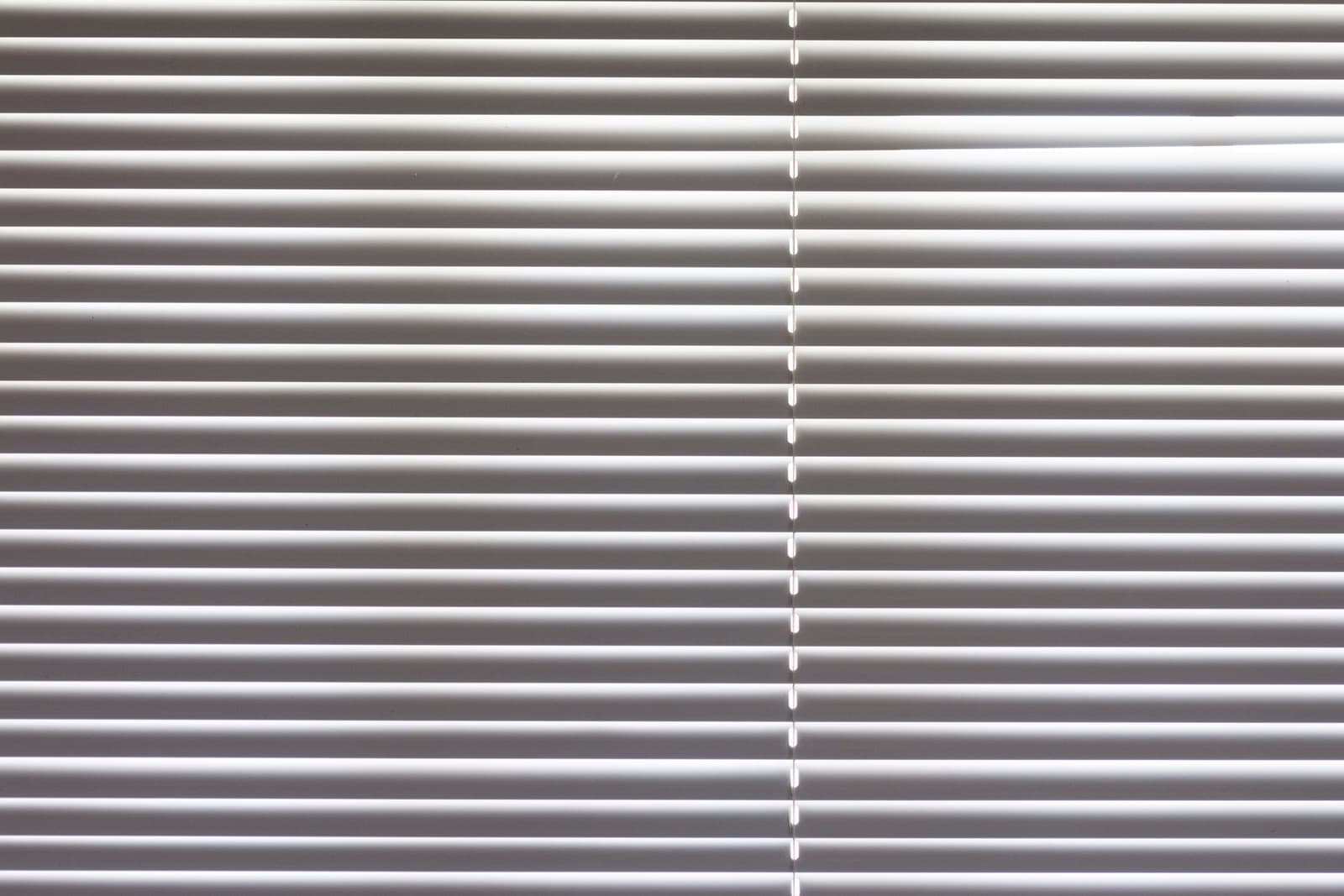
Turn the slats so the rounded edge points up and the curve faces the window — "slats up" — and you block the sightline from below, which is the street. Turn them the other way, "slats down", and you block the view from above, which is a neighbor's upstairs window. Most people default to slats down and then wonder why passers-by can still see in.
It takes two seconds to change and it genuinely works. Here is why.
The mechanism
Why the direction changes anything
A horizontal blind's slats never close into a solid wall — they overlap like roof tiles, and the overlaps leave a narrow diagonal channel between each pair. That channel points somewhere, and where it points is what determines who can see through it.
With the slats tilted up (the outer edge higher than the inner edge), the channel angles upward toward the sky. Someone standing below the window — on a sidewalk, in a garden, at street level — is looking into the closed side of each slat. Someone above you could theoretically look down the channel, but on a ground floor there is rarely anybody above you.
With the slats tilted down, the channel angles toward the ground, and the person on the sidewalk is looking straight along it. This is the default position most blinds fall into and it is the wrong one for almost every ground-floor window.
Quick reference
Which way for which window
| Your situation | Turn the slats | Why |
|---|---|---|
| Ground floor facing a street or path | Up | Blocks the sightline from below |
| Overlooked by a taller building or upstairs window | Down | Blocks the sightline from above |
| Upper floor, no overlooking | Either | Choose for light direction instead |
| You want light without a view in | Up | Bounces daylight onto the ceiling |
| You want to see out while staying unseen | Up, partly open | You look down through the gap; they can't look up it |
| Total privacy, any floor | Fully closed, either way | Direction stops mattering once they're shut |
Light
The side effect worth knowing
Slats up does something else useful: it throws daylight onto the ceiling rather than the floor, and the ceiling bounces it back as soft, even ambient light. A room with slats tilted up is noticeably better lit than the same room with slats tilted down, even though the blind is equally closed.
Slats down directs light at the floor, which produces a brighter strip near the window and a darker room beyond it — and on a sunny day it puts direct sun onto whatever is in front of the window, which is how floors and upholstery fade.
The failure mode
What goes wrong
The route holes. On a conventional blind, the lift cords pass through holes punched in the middle of each slat, and those holes stay open regardless of which way you tilt. At night they become a column of small, clear sightlines into a lit room. Nothing about tilt direction fixes this — it needs routeless slats, where the cord runs in a notch at the back edge instead.
The side gaps. An inside-mounted blind has a gap at each side where the brackets sit. From directly in front the gap is invisible; from an angle it is a clear view into the room. An outside mount that overlaps the frame closes it.
Bent slats. One bent slat in an otherwise closed blind leaves a permanent gap at eye level, and vinyl slats bend easily. This is the strongest practical argument for faux wood over cheap vinyl on a window that matters.
If the answer turns out to be that your blinds leak whichever way you turn them, the construction is the problem — best blinds for privacy covers what to look for.
FAQ
Questions people actually ask
Should blinds be turned up or down for privacy?
Up, for a ground-floor window facing a street — it blocks the sightline from below. Down, if you are overlooked from above by a taller building. Most privacy complaints come from ground-floor windows left with the slats turned down.
Can people see through blinds turned up?
Not from below, which is the direction that usually matters. They could in principle see from above, but on a ground floor there is rarely anyone above you. Route holes and side gaps are the real leaks, not the tilt direction.
Which way lets in the most light?
Slats up. It bounces daylight onto the ceiling, which reflects it back as soft ambient light through the whole room. Slats down puts a bright strip near the window and leaves the rest darker.
Does tilt direction matter for vertical blinds?
Same principle, rotated. With verticals the channel points left or right rather than up or down, so turn them away from the direction people approach from — usually away from the path or the neighboring window.
Why can I still see light through my closed blinds?
Almost always the route holes — the punched holes the lift cords pass through in the middle of each slat. They stay open at any tilt. Routeless or privacy-slat blinds move the cord to a notch at the back edge and close solid.
Keep going
Read next
Privacy
Best blinds for privacy
Aim your privacy with slats — plus the routeless detail that decides if they close properly.
Compare
Best window blinds
The only covering you can aim — which material suits which room.
Privacy
Privacy at night without losing daylight
Daytime tricks reverse after dark — the layered setups that handle both.
Rods & Mounting
How to clean blinds
Method by material — including the two that must never get wet.
Compare
Blinds vs shades
Slats that tilt or one piece that raises — everything else follows.
About the author
Janet H.
Janet H. is the owner of Janet Media Group and the person behind Drape & Dawn. She researches every pick against the site's published methodology.
Published by Janet Media Group · Last updated September 23, 2026