Comparison
Blinds vs roller shades
Slats give you an angle. A roller gives you a height. Almost every difference between the two comes out of that.
By Janet H. · Last updated October 11, 2026 · How we choose
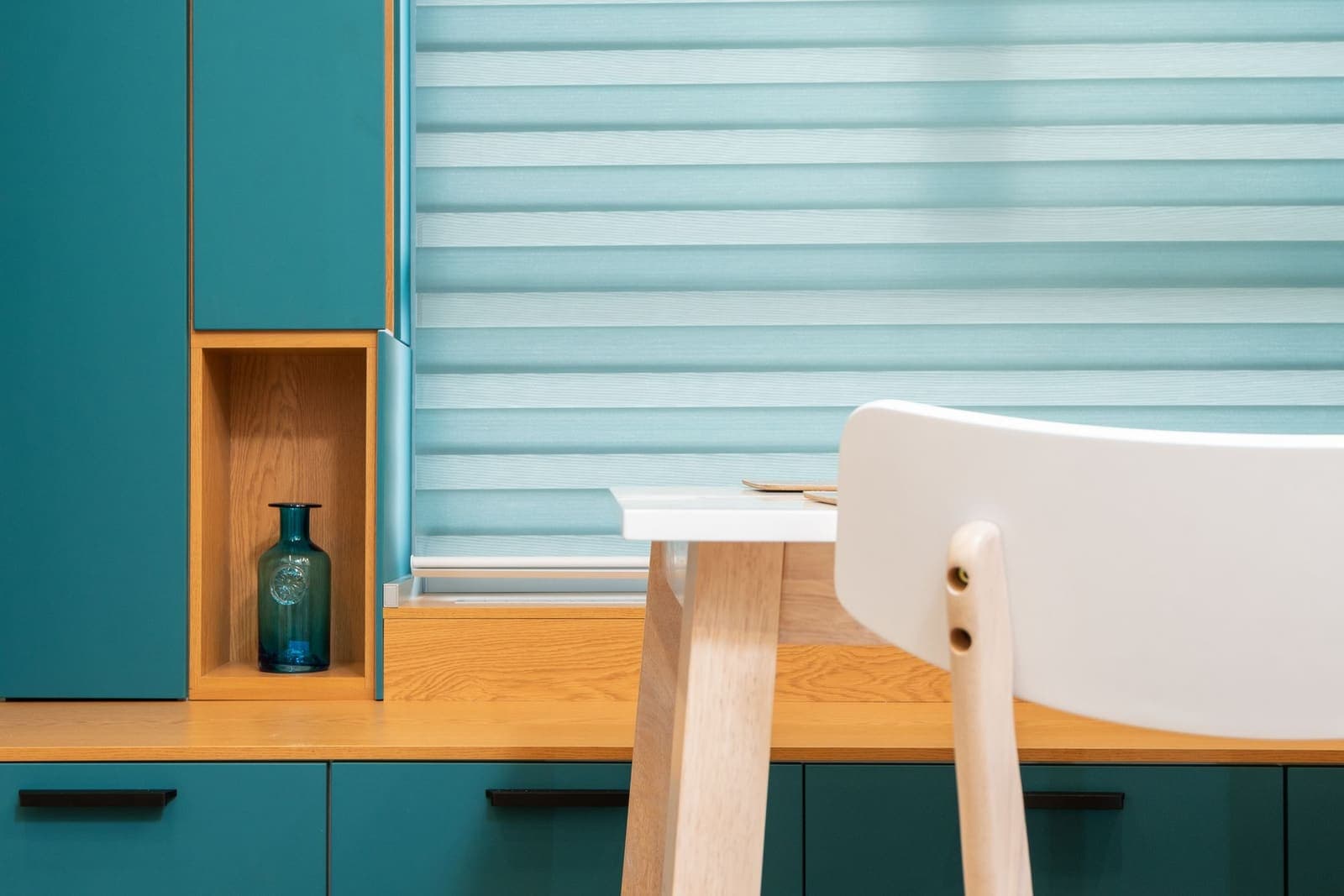
Choose blinds when you want to keep the window uncovered and change the angle of the light. Choose a roller shade when the problem happens at a particular height — a low afternoon sun, a sightline from across the street — and you want to cover exactly that and nothing else. One adjusts the direction of light; the other adjusts how much window is left.
They look like near-substitutes on a listing page and they behave completely differently in a room. A blind stays fully down most of the time and you work the tilt. A roller stays fully up most of the time and you work the height. Which habit suits your window is the real question.
Drape & Dawn earns a commission from qualifying purchases made through links on this page, at no extra cost to you. It does not change what we recommend. Full disclosure.
At a glance
The short version
| Blinds (slats) | Roller shades | |
|---|---|---|
| Main control | Tilt angle | Height |
| Keeps the view | Yes, tilted open | Only through a solar screen |
| Glare at a set height | Approximate | Exact |
| Darkness | Never — holes and slat gaps | Good with blockout fabric, outside mounted |
| Stack when open | Slat pile, several inches | Tube only, very shallow |
| Wet or greasy rooms | Vinyl and faux wood wipe clean | Coated fabrics wipe, others do not |
| Wide windows | Heavy, sags past ~5 ft | Handles width well |
Light
Glare: the roller wins on precision
Glare arrives at a specific height at a specific hour. A roller lets you cover the top third of the window and leave the rest clear, which fixes the problem and keeps the room bright. A blind can only approximate that by tilting the whole window at once — better than nothing, and it dims the entire room to deal with one band of sun. On a desk window, the roller is the better tool, which is why it dominates in how to stop screen glare from windows.
The exception is low-angle sun. When the sun is below the top of the window and shining straight in, a roller has to come most of the way down to catch it, at which point you have lost the window. Slats tilted against the beam keep more of the room usable. East and west windows at the start and end of the day are the blind's case.
Light
Keeping the view
Tilted-open slats keep a striped but real view out. A roller shade is all or nothing unless you buy solar screen fabric, which is an open weave with a published openness factor — 3% or 5% cuts glare while keeping a usable view through it, 10% barely dims. That number is the most useful spec in the category and best roller shades explains how to read it.
Solar screens reverse at night: once your lights are on, the weave shows the room clearly from outside. A blind does not have that problem when the slats are properly closed, which is a real point in its favor on a street-facing window.
Bedrooms
Darkness
Neither is a blackout product inside a recess, but a roller with blockout fabric mounted outside the frame gets genuinely close, because it is one unbroken sheet. A blind never does: the route holes drilled for the lift cords and the gaps where slats meet both pass light, and routeless slats only fix the first of those. If darkness is the goal, the roller — or curtains over either.
Fit
Wide windows and weight
A faux wood blind over about five feet is heavy, slow to raise and prone to visible sag. A roller shade carries width far better because the load is a tube rather than a stack of slats, and at the top end it is available made to measure in widths past a hundred inches. For a patio slider or a picture window the roller scales and the blind does not. See best window treatments for large windows.
Living with it
Kitchens, bathrooms and cleaning
Vinyl and faux wood slats wipe down with a kitchen spray and can be washed properly when it comes to that. Roller fabric varies: a coated blockout or solar screen wipes clean, an uncoated decorative fabric does not and will hold cooking smells. In a kitchen, slats are the safer bet; in a bathroom, either works provided the material is non-porous. Best blinds for bathroom windows covers the wet-room specifics.
The third option
The format that does both
A zebra or day-night shade is a roller with alternating sheer and opaque bands on one tube. Align the bands and light passes through; offset them and the opaque bands close the gap. It gives you a roller's height control plus something close to a blind's tilt control, at the cost of a deeper stack and a visible stripe pattern. Best zebra shades is the roundup; blinds vs shades is the wider comparison.
What we’d buy
The products behind this advice
Picked against the criteria above, not the other way round. Prices are read from Amazon and refreshed daily; each link goes to the current listing.
| # | Best for | Product | Type | Operation | Price |
|---|---|---|---|---|---|
| 1 | If you chose a blind | 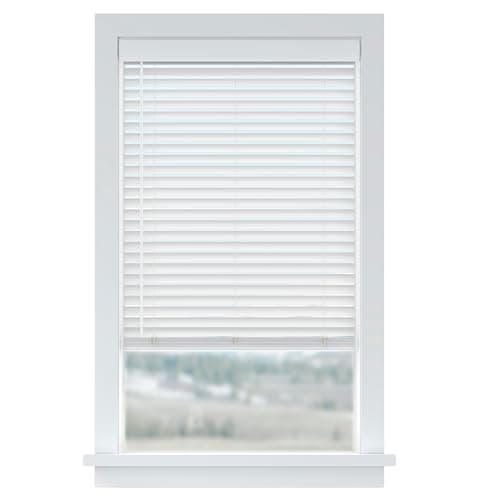 Rooms where the view is worth keeping while the light is cut, and low east or west sun that a roller cannot catch without closing the window. | Slatted blind | Cordless | $59.99 · View on Amazon #ad Price as of November 3, 2026, and it can change. How we’re funded |
| 2 | If you chose a roller | Deluxe Free-Stop Cordless Roller Shades Glare that arrives at a particular height — pull it to exactly there and it stays. | Roller shade | Cordless free-stop | Check price on Amazon #ad No current price for this one — check it on Amazon. How we’re funded |
| 3 | If you want the view through it | Snap-N-Glide Cordless Roller Shades, solar screen A desk or living room window with a view, where a solar screen cuts glare and leaves the outside visible. | Roller shade | Cordless | Check price on Amazon #ad No current price for this one — check it on Amazon. How we’re funded |
01 — If you chose a blind
Basics Cordless Faux Wood Blinds, 2" routeless slats
LEVOLOR
Two-inch faux wood with the lift cords routed out of the slat face, so the blind closes without a column of light pinholes down the middle — the spec that matters if privacy or darkness is the point.
Who it’s for: Rooms where the view is worth keeping while the light is cut, and low east or west sun that a roller cannot catch without closing the window.
The catch: Faux wood is heavy. Over about 60 inches a single blind gets awkward to raise and loads the brackets; two side by side work better.
At a glance
- Type
- Slatted blind
- Material
- Faux wood
- Slat
- 2 in, routeless
- Operation
- Cordless
#ad Price as of November 3, 2026, and it can change. How we’re funded
02 — If you chose a roller
Deluxe Free-Stop Cordless Roller Shades
CHICOLOGY
Pull it to any height and it holds there — which is exactly what a glare problem needs, because you are constantly setting the cover to wherever the sun is.
Who it’s for: Glare that arrives at a particular height — pull it to exactly there and it stays.
The catch: Light-filtering fabric diffuses well but is not see-through, so lowering it trades the view for the comfort.
At a glance
- Type
- Roller shade
- Fabric
- Light filtering
- Operation
- Cordless free-stop
- Fit
- Wide size range
#ad No current price for this one — check it on Amazon. How we’re funded
03 — If you want the view through it
Snap-N-Glide Cordless Roller Shades, solar screen
CHICOLOGY
Solar-screen fabric is woven with a stated openness factor, so it strips out glare and a share of solar heat while you can still see through the weave.
Who it’s for: A desk or living room window with a view, where a solar screen cuts glare and leaves the outside visible.
The catch: Solar screens reverse after dark: with your lights on, the weave shows the room clearly from outside. A street-facing window needs a second layer for the evening.
At a glance
- Type
- Roller shade
- Fabric
- Solar screen
- Operation
- Cordless
- Fit
- Cut to size
#ad No current price for this one — check it on Amazon. How we’re funded
FAQ
Questions people actually ask
Are roller shades better than blinds?
For glare at a specific height, for a wide window, and for getting close to darkness, yes. For keeping a view while cutting light, for low-angle east and west sun, and for a greasy kitchen window, blinds. They are different tools rather than better and worse.
Which is cheaper, blinds or roller shades?
Vinyl mini blinds are the cheapest covering of all. Beyond that the two are close in stock sizes, and both get expensive made to measure. Roller shades tend to cost less than faux wood blinds at the same width because there is far less material.
Do roller shades keep more heat out than blinds?
Solar screen roller fabric is designed to reject a share of solar radiation, so yes, meaningfully more than slats — which are an open structure with air moving through them. Neither competes with an exterior shade or a cellular shade. See best blinds to keep heat out.
Can you see through roller shades at night?
Through a solar screen, yes — once your lights are on and it is dark outside, the brightness reverses and the weave shows the room clearly. Light-filtering and blockout fabrics have no openness and do not have this problem.
Which stacks smaller when open?
The roller, by a wide margin — it rolls onto a tube a couple of inches across, while a raised blind leaves a pile of slats several inches deep at the top of the window. On a short window that difference is a meaningful amount of glass.
Keep going
Read next
Compare
Blinds vs shades
Slats that tilt or one piece that raises — everything else follows.
Glare
Best roller shades for glare
Lower it to exactly the height of the glare — and the openness number that decides the rest.
Compare
Best window blinds
The only covering you can aim — which material suits which room.
Glare
Roller shades vs cellular shades
Keep the view or keep the heat — the one trade-off that decides between them.
About the author
Janet H.
Janet H. is the owner of Janet Media Group and the person behind Drape & Dawn. She researches every pick against the site's published methodology.
Published by Janet Media Group · Last updated October 11, 2026