Roundup
Best light filtering shades
Four shades that soften hard sun without turning the room off - and the one thing every light filtering shade fails at.
By Janet H. · Last updated November 22, 2026 · How we choose
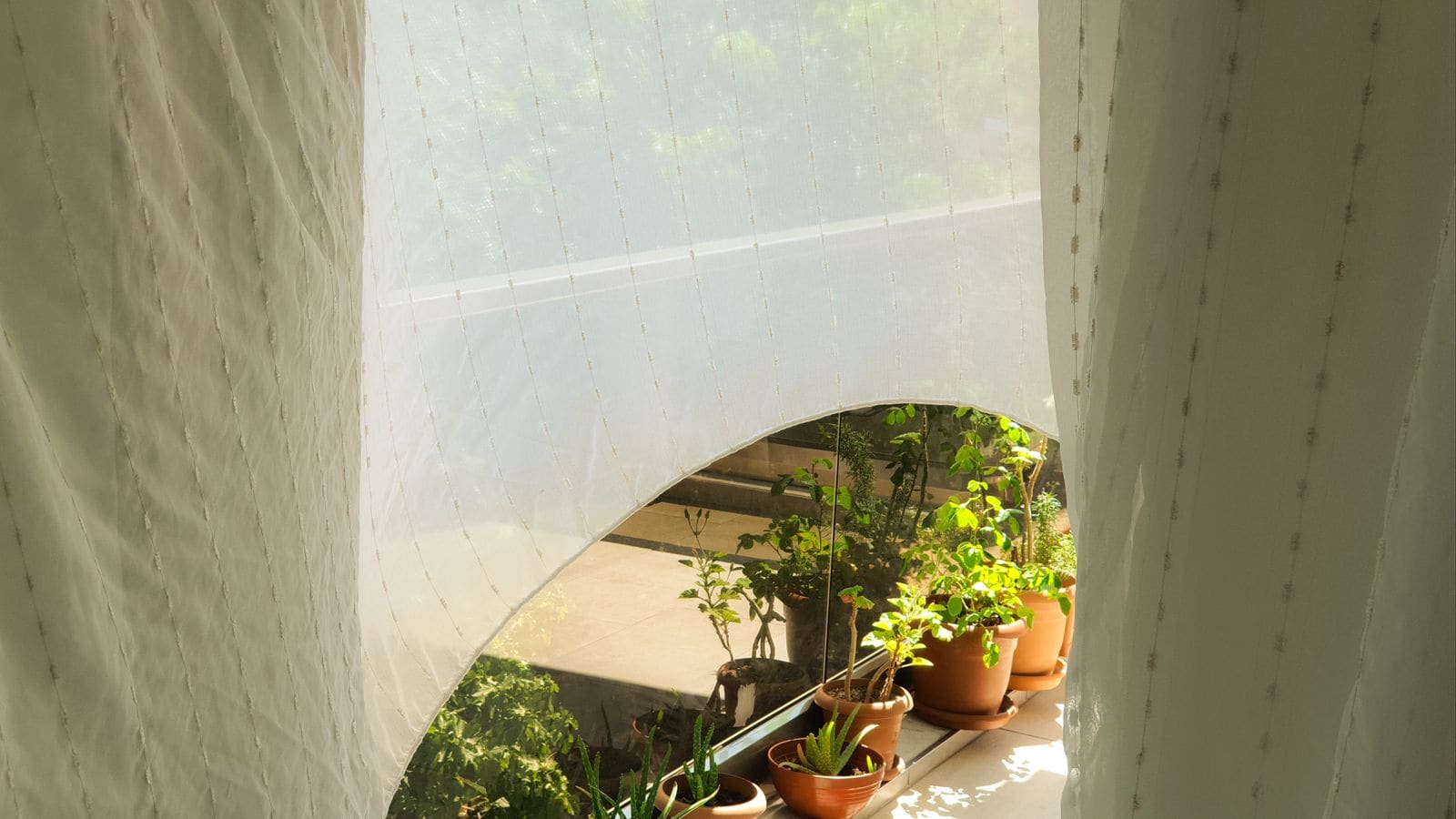
For most rooms the best light filtering shade is the Arlo Blinds cordless fabric roman: a lined-looking fabric that diffuses daylight evenly across the whole window, with folds that make it read as drapery rather than hardware. If glare on a screen is the specific complaint, the Changshade cordless zebra shade is the budget pick and the better tool - you offset its bands to kill the hot spot while keeping the view.
Light filtering is a specification, not a vague description. It means the fabric passes daylight while scattering it, so the room stays bright but the hard directional light that causes glare and hot spots is broken up. That is the opposite of what blackout fabric does, and choosing between them is simply a question of whether the room's problem is too much light or the wrong kind of light. Every shade here is the second kind, and every one of them has the same weakness: none of them is private after dark.
Drape & Dawn earns a commission from qualifying purchases made through links on this page, at no extra cost to you. It does not change what we recommend. Full disclosure.
The three words
Light filtering, room darkening, blackout
| Specification | What it does | Night privacy | Use it for |
|---|---|---|---|
| Light filtering | Scatters daylight, keeps the room bright | No | Glare, hot spots, bare-looking windows |
| Room darkening | Takes the room to comfortable dusk | Yes | Living rooms, naps, screens |
| Blackout | Blocks light through the fabric | Yes | Bedrooms, nurseries, media rooms |
| Sheer | Barely scatters, mostly decorative | No | Softening, layering under panels |
The common mistake is buying light filtering for a bedroom because the swatch looked nice. It will not darken anything, and lit from inside it shows the room in outline. The reverse mistake is buying blackout for a living room, where the result is a window you keep covered during the day and a room that feels like a basement.
Buying guide
What to look for
Openness, if the fabric states it
Solar and screen fabrics publish an openness factor - the percentage of the weave that is holes - and the lower the number, the more glare it cuts and the less you see through it. A 3% fabric is a working sun screen; a 10% fabric keeps the view and takes the edge off. Fabric and bamboo shades rarely publish a figure, which is why the practical test there is the weave: tighter means more diffusion and more daytime privacy.
Where the hot spot actually is
Glare is directional and it moves. On a south or west window the problem is a band of sun crossing a screen or a sofa for two hours, not a generally bright room. A shade that adjusts - a zebra you offset, or a shade you lower halfway - solves that better than a fixed diffusing fabric, because you only cover the part of the window causing the trouble. How to stop screen glare from windows has the positioning logic.
Color, because pale fabric diffuses and dark fabric absorbs
A white or ivory light filtering fabric spreads daylight into the room, which is what you want in a north-facing or dim space. A charcoal or bronze fabric absorbs more and glows less, which cuts glare harder and keeps the view clearer - the usual choice behind a desk. Same shade, quite different results.
Texture, if the window looks bare
Woven wood and slubbed linen-look fabrics scatter light unevenly, which reads as warmth rather than as a technical product. If part of the complaint is that the window looks unfinished, texture is doing two jobs at once.
| # | Best for | Product | Type | Diffusion | Operation | Price |
|---|---|---|---|---|---|---|
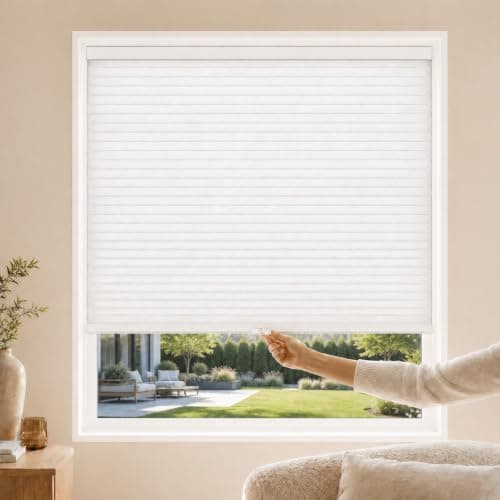
| 1 | Best overall | 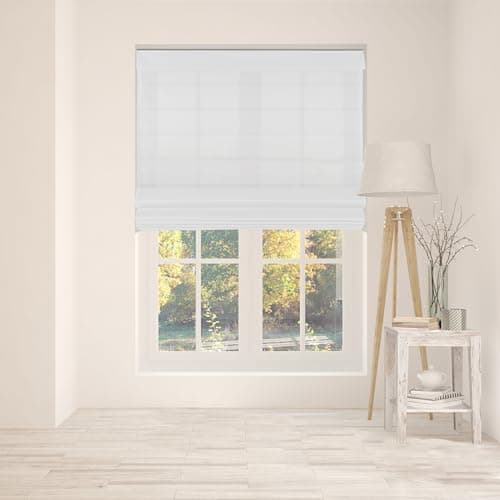 A living room, dining room or bedroom where the daylight is good and only the hard edge of it is a problem. | Fabric roman | Even, across the window | Cordless lift | $36.99 · View on Amazon #ad Price as of November 24, 2026, and it can change. How we’re funded |
| 2 | Budget pick, and best for screen glare | 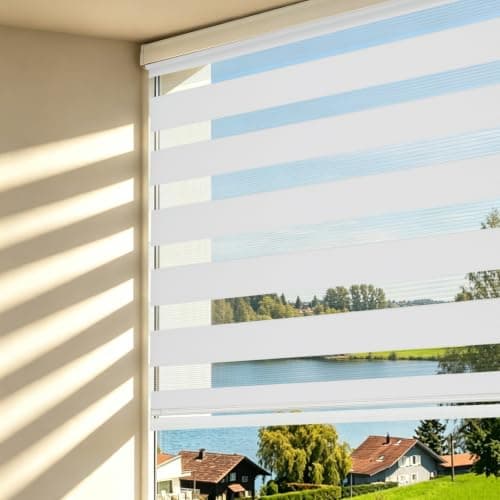 A desk or a television facing a window, where the hot spot moves through the afternoon and you want to chase it without losing the room. | Dual-layer zebra | Banded, adjustable | Cordless free-stop | $40.60 · View on Amazon #ad Price as of November 24, 2026, and it can change. How we’re funded |
| 3 | Best texture | 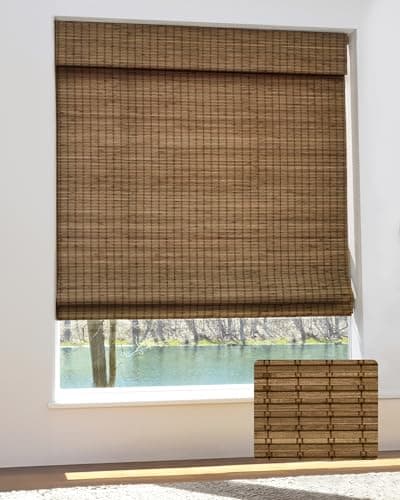 A sunroom, living room or dining room where the window looks bare as well as bright. | Woven wood | Warm, uneven | Cordless lift | $38.41 · View on Amazon #ad Price as of November 24, 2026, and it can change. How we’re funded |
| 4 | Best for a wide opening | 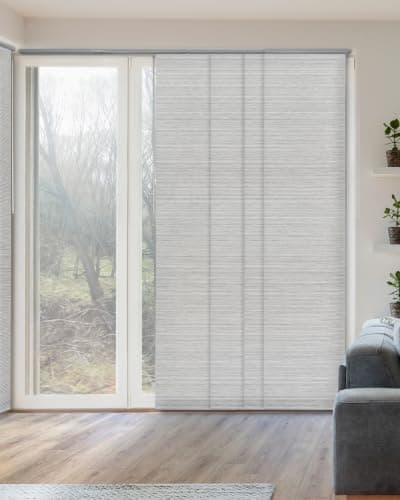 A patio door or a window wall where a shade per section would look busy and a curtain would be in the way. | Panel track | Across the whole opening | Slide on track | $185.99 · View on Amazon #ad Price as of November 24, 2026, and it can change. How we’re funded |
01 — Best overall
Cordless Fabric Roman Shades, light filtering
Arlo Blinds
A cordless light-filtering roman in a wide range of sizes and neutral colors, certified to the industry child-safety standard for cordless products. The fabric diffuses daylight evenly across the whole window, which is what most people actually want from a roman.
Who it’s for: A living room, dining room or bedroom where the daylight is good and only the hard edge of it is a problem.
The catch: Light filtering means no darkness and no night privacy - lit from behind it shows shapes. The folded stack also sits lower than a rolled shade when fully raised.
At a glance
- Type
- Fabric roman
- Diffusion
- Even, across the window
- Operation
- Cordless lift
- Adjustable
- Height only
- Night privacy
- No
#ad Price as of November 24, 2026, and it can change. How we’re funded
02 — Budget pick, and best for screen glare
Cordless Zebra Blinds, free-stop
Changshade
Alternating sheer and solid bands on one roller: line the solid bands up and the window is screened, offset them and daylight comes through with the view intact. Sold in a long ladder of stock widths at a 72-inch drop.
Who it’s for: A desk or a television facing a window, where the hot spot moves through the afternoon and you want to chase it without losing the room.
The catch: Light filtering only, so no darkness and no privacy after dark - lit from inside, the sheer bands show silhouettes clearly. Stock widths mean an approximate fit.
At a glance
- Type
- Dual-layer zebra
- Diffusion
- Banded, adjustable
- Operation
- Cordless free-stop
- Adjustable
- Height and band offset
- Night privacy
- No
#ad Price as of November 24, 2026, and it can change. How we’re funded
03 — Best texture
Bamboo Roman Shades with valance
UNISHADES
A stock-size cordless bamboo shade with the valance included. Natural woven material filters daylight into a warm, uneven glow rather than a flat wash, which is a different and often better-looking kind of diffusion.
Who it’s for: A sunroom, living room or dining room where the window looks bare as well as bright.
The catch: The weave is open, so it is the least private shade here by day as well as night, and stock sizing means accepting a light gap at the sides.
At a glance
- Type
- Woven wood
- Diffusion
- Warm, uneven
- Operation
- Cordless lift
- Adjustable
- Height only
- Night privacy
- No
#ad Price as of November 24, 2026, and it can change. How we’re funded
04 — Best for a wide opening
Natural Woven Light Filtering Panel Track Blinds
GoDear Design
Natural woven panels on a multi-channel track that slide sideways and stack behind each other. It covers a slider or a window wall as one treatment, filtering the light across the whole opening rather than in sections.
Who it’s for: A patio door or a window wall where a shade per section would look busy and a curtain would be in the way.
The catch: Panels slide but do not rotate, so it is open or shut rather than adjustable. The track is the most visible piece of hardware here, and the stack needs wall space beside the opening.
At a glance
- Type
- Panel track
- Diffusion
- Across the whole opening
- Operation
- Slide on track
- Adjustable
- Panel position only
- Night privacy
- Partial
#ad Price as of November 24, 2026, and it can change. How we’re funded
Honest limits
The weakness they all share
Every light filtering shade is translucent, and translucency is directional. During the day the bright side is outside, so the shade hides the room. After dark the lamps come on, the bright side is inside, and the same shade shows shapes and movement clearly from the street. There is no light filtering fabric that avoids this - it is physics, not quality. The fixes are layering a lined curtain over the shade, or accepting a room-darkening fabric instead. Privacy at night without losing daylight sets out both.
Methodology
How we chose
Selected on how the fabric handles directional daylight, then on whether the shade can be adjusted to follow a moving hot spot, then on texture. Based on published construction and stated fabric specifications, and on the failure patterns owners report - chiefly light filtering shades bought for bedrooms and the night-privacy surprise that follows. No lab testing, no openness figures of our own. Criteria on the methodology page.
FAQ
Questions people actually ask
What does light filtering mean on a shade?
That the fabric passes daylight while scattering it, so the room stays bright but the hard directional light causing glare and hot spots is broken up. It is the opposite specification to blackout, and it is not a weaker version of it - it is for a different problem.
Are light filtering shades private?
By day, yes, because the bright side is outside. After dark, no: once the lamps are on, the bright side is inside and the shade shows shapes and movement from the street. Every translucent fabric behaves this way. If evening privacy matters, choose room darkening or layer a lined curtain over the shade.
Light filtering or room darkening for a living room?
Light filtering if the room is bright and only the glare is a problem, room darkening if you watch television in there during the day or the window is overlooked in the evening. Many living rooms end up with a light filtering shade and a lined curtain, which covers both.
What is an openness factor?
The percentage of a solar or screen fabric's weave that is open holes. A 3% fabric cuts glare hard and obscures the view; a 10% fabric keeps the view and takes the edge off the sun. Fabric and woven wood shades rarely publish a figure, so there the weave density is the practical guide.
Will a light filtering shade stop my room overheating?
Only slightly. A pale fabric scatters some solar energy back out, but it is a thin single layer against the glass with open edges, so the effect is small. For heat specifically, a cellular shade or an exterior solar screen does far more - see best blinds to keep heat out.
Keep going
Read next
Glare
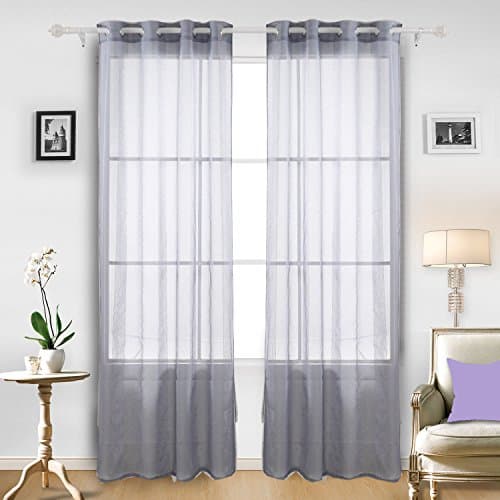
Sheer vs light filtering curtains
Transparent versus translucent — and what that changes for privacy and glare.

Glare
How to stop screen glare from windows
Diagnose reflected versus veiling glare, then fix it — starting with the free option.
Glare
Best roller shades for glare
Lower it to exactly the height of the glare — and the openness number that decides the rest.
Privacy
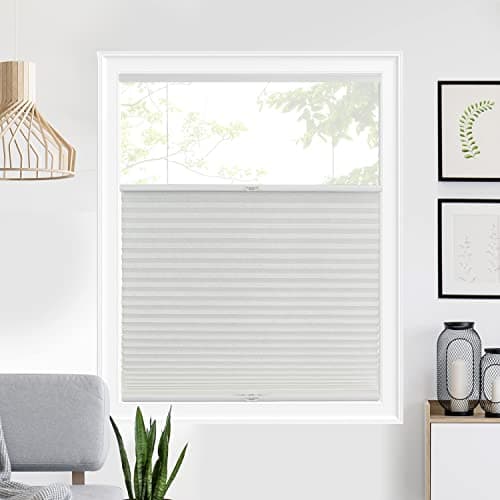
Privacy at night without losing daylight
Daytime tricks reverse after dark — the layered setups that handle both.
Compare
Best window shades
Cellular, blackout, zebra, woven wood and paper shades - the best of each and the problem each one solves.
About the author
Janet H.
Janet H. is the owner of Janet Media Group and the person behind Drape & Dawn. She researches every pick against the site's published methodology.
Published by Janet Media Group · Last updated November 22, 2026