Roundup
Best curtains for TV glare
You need the reflection gone, not the daylight. Here's what to cover, and why blacking out the whole room is the wrong answer.
By Janet H. · Last updated September 23, 2026 · How we choose
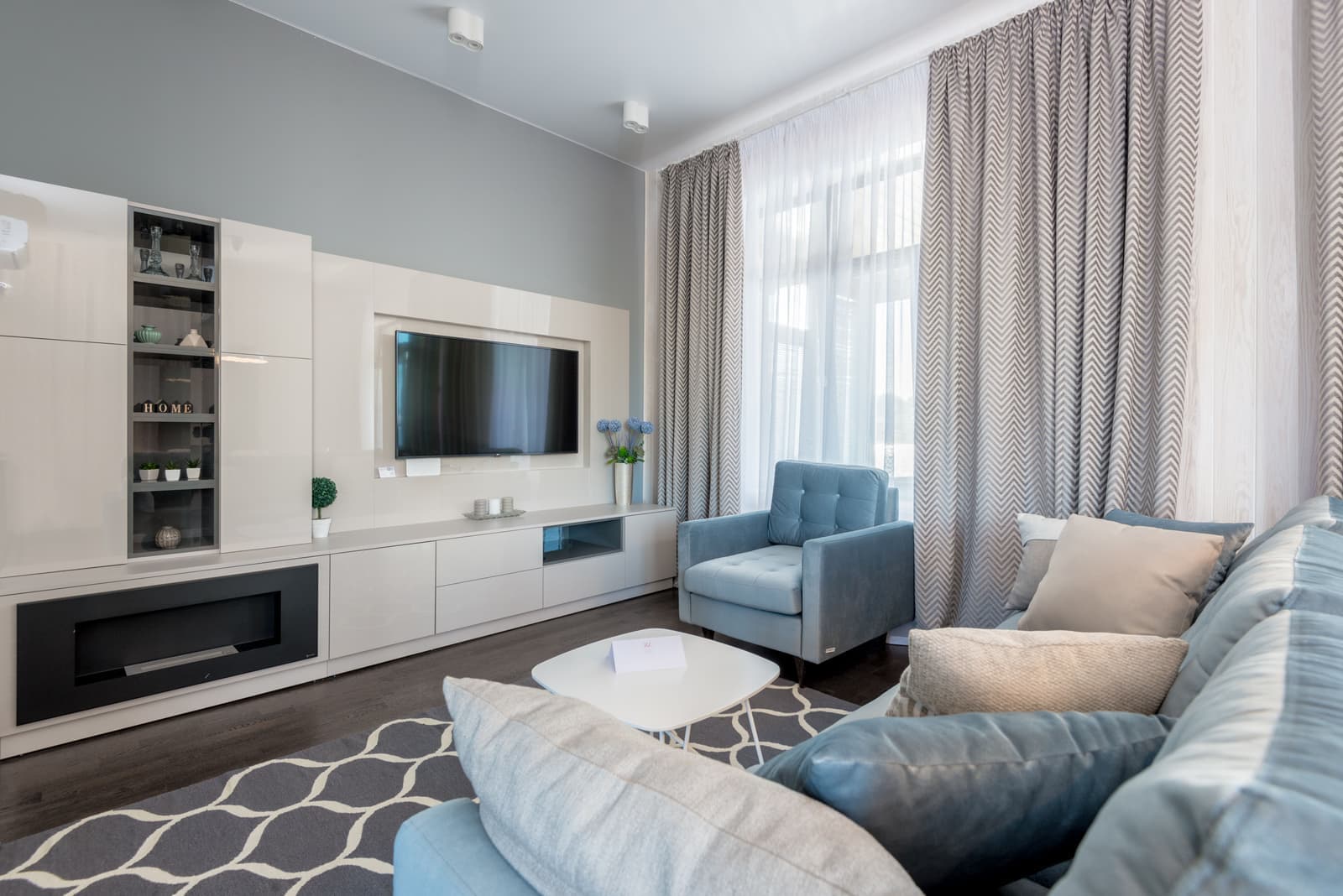
TV glare has two entirely separate causes and they need different fixes. Reflected glare is the window's image sitting on the screen — you see the window in the glass. Veiling glare is the screen looking washed out because the room behind you is so bright your eye cannot resolve the picture. Look at your screen with the TV off: if you can see the window reflected in it, you have the first problem. If the screen looks gray and lifeless with the TV on but you see no reflection, you have the second.
This matters because the usual advice — buy blackout curtains — only really addresses the second, and it does so by making the room dark at 2pm on a Saturday, which is rarely what anyone wanted. The better fix is almost always partial: cover the window that reflects, at the height it reflects, and leave the rest of the daylight alone.
Drape & Dawn earns a commission from qualifying purchases made through links on this page, at no extra cost to you. It does not change what we recommend. Full disclosure.
Diagnosis
Work out which window is the culprit
With the TV off, sit where you normally sit and look at the screen. The window you can see reflected is the only one that matters for reflected glare, and it is often not the one people assume — a screen angled slightly away from the obvious window will be reflecting a different one behind you.
Then note the height. A reflection appears where the window and your eye line up through the screen, and that is usually a band across the upper part of the window rather than the whole thing. Covering that band is enough. Covering the whole window is overkill you will resent by mid-afternoon.
| # | Best for | Product | Type | Coverage | Keeps daylight | Price |
|---|---|---|---|---|---|---|
| 1 | Best overall | Top Down Bottom Up Cellular Shades Any living room where the TV faces a window and you do not want to lose the daylight to fix it. | Cellular, dual lift | Top-down, any height | Yes — lower window stays clear | Check price on Amazon #ad We don’t show prices — check the current one on Amazon. How we’re funded |
| 2 | Best for keeping the view | Snap-N-Glide Cordless Roller Shades Rooms where the window has a view you would rather not trade for a slightly better picture. | Solar screen roller | Top-down, any height | Yes — diffused | Check price on Amazon #ad We don’t show prices — check the current one on Amazon. How we’re funded |
| 3 | Best for evening viewing | Room Darkening Thermal Insulated Curtains Living rooms where the TV is the evening activity and you want the window handled properly when it is. | Curtain, room darkening | Full window when drawn | No, when closed | Check price on Amazon #ad We don’t show prices — check the current one on Amazon. How we’re funded |
| 4 | Best light-touch fix | Faux linen sheer curtains A first attempt, or a room where the reflection is mild and you would rather not fit hardware. | Sheer curtain | Full window | Yes — diffused | Check price on Amazon #ad We don’t show prices — check the current one on Amazon. How we’re funded |
01 — Best overall
Top Down Bottom Up Cellular Shades
CHICOLOGY
Lowers from the top, which is exactly where a screen reflection sits. Cover the top third of the window and the reflection disappears while the room below stays bright — the one product whose geometry matches the problem.
Who it’s for: Any living room where the TV faces a window and you do not want to lose the daylight to fix it.
The catch: The dual mechanism costs more than a plain shade, and if your reflection comes from the bottom of the window rather than the top you are paying for a feature that does not help.
At a glance
- Type
- Cellular, dual lift
- Coverage
- Top-down, any height
- Keeps daylight
- Yes — lower window stays clear
- Operation
- Cordless
- Best mount
- Inside
#ad We don’t show prices — check the current one on Amazon. How we’re funded
02 — Best for keeping the view
Snap-N-Glide Cordless Roller Shades
CHICOLOGY
A solar-screen roller lowered to the height of the reflection. The open weave cuts the window's brightness enough to kill the reflection while you can still see out of it, which is the compromise most living rooms actually want.
Who it’s for: Rooms where the window has a view you would rather not trade for a slightly better picture.
The catch: A screen reduces the window's brightness rather than removing it, so a very strong direct reflection may still show faintly. For a serious media setup you want opaque.
At a glance
- Type
- Solar screen roller
- Coverage
- Top-down, any height
- Keeps daylight
- Yes — diffused
- Operation
- Cordless
- Best mount
- Inside
#ad We don’t show prices — check the current one on Amazon. How we’re funded
03 — Best for evening viewing
Room Darkening Thermal Insulated Curtains
Deconovo
A room-darkening panel rather than full blackout — it removes veiling glare and the window reflection together when drawn, without turning the room into a cinema. Thermal backing is a useful side effect on a sun-facing living room.
Who it’s for: Living rooms where the TV is the evening activity and you want the window handled properly when it is.
The catch: Binary: open or closed. It will not cover just the reflecting band, so during the day you are choosing between the reflection and the daylight.
At a glance
- Type
- Curtain, room darkening
- Coverage
- Full window when drawn
- Keeps daylight
- No, when closed
- Operation
- Draw
- Best mount
- Outside, wide
#ad We don’t show prices — check the current one on Amazon. How we’re funded
04 — Best light-touch fix
Faux linen sheer curtains
Deconovo
A sheer across the reflecting window breaks up the reflection by scattering the light that forms it. It will not eliminate a hard reflection, but it softens it considerably and costs a fraction of a fitted shade.
Who it’s for: A first attempt, or a room where the reflection is mild and you would rather not fit hardware.
The catch: Partial fix only. If the window is directly behind your seating and in full sun, a sheer will reduce the reflection rather than remove it.
At a glance
- Type
- Sheer curtain
- Coverage
- Full window
- Keeps daylight
- Yes — diffused
- Operation
- Draw
- Best mount
- Outside
#ad We don’t show prices — check the current one on Amazon. How we’re funded
Buying guide
Choosing the covering
Top-down coverage beats a curtain
Because the reflection sits in a band near the top of the window, a roller or cellular shade lowered from the top is the precise tool — you cover the reflecting band and keep the lower window clear. A curtain can only be open or closed, which is why a curtain is the blunt answer here even though it is the one people reach for first.
Room darkening, not blackout
If you do want a curtain — for evening viewing, or for a dedicated media room — room-darkening fabric is usually the better specification. It kills veiling glare without the room going pitch dark, which matters if anyone else is in there doing something other than watching. See blackout vs room darkening.
Don't forget the lamp behind you
A surprising share of screen reflections are not the window at all — they are a lamp, a light-colored wall, or a white lampshade behind the seating. Before covering anything, turn the TV off and look for bright objects in the reflection. Moving a lamp costs nothing and solves it permanently.
Methodology
How we chose
Selection is on how precisely a product controls the part of the window causing the reflection, and on whether it does that without darkening the whole room. We have not measured screen luminance and make no claims about a specific reduction. Methodology.
FAQ
Questions people actually ask
What curtains are best for TV glare?
For daytime, something that covers from the top down — a roller or top-down shade — so you cover the band that reflects and keep the rest of the daylight. For evening, room-darkening curtains. Full blackout is usually more than the problem requires.
Should I get blackout curtains for a TV room?
Only for a dedicated media room. In a normal living room, blackout means choosing between a good picture and any daylight at all, and most people end up resenting it by the second week.
Why does my TV look washed out even with the curtains closed?
That is veiling glare from ambient room light rather than a window reflection — check for lamps and light-colored walls behind your seating. It can also be the screen's own brightness setting fighting a bright room.
Does a matte screen fix glare?
Matte and anti-glare screen finishes scatter reflections rather than showing them sharply, which helps a lot with reflected glare. They do nothing for veiling glare from a bright room, and they slightly reduce apparent contrast.
Where should I put the TV to avoid glare?
Side-on to the main window rather than opposite it or in front of it. That single change removes both reflected glare and the over-bright background at once, and it costs nothing — try it before you buy anything.
Keep going
Read next

Glare
How to stop screen glare from windows
Diagnose reflected versus veiling glare, then fix it — starting with the free option.
Glare
Best roller shades for glare
Lower it to exactly the height of the glare — and the openness number that decides the rest.
Blackout
Blackout vs room darkening
Neither label is regulated — here's the real difference and which room wants which.

Privacy
Top down bottom up vs standard shades
Cover the half people see through, keep the half that gives you daylight.
Rooms
Window treatments for a living room
Glare, evening privacy and a big opening — handled with two light layers, not one heavy one.
About the author
Janet H.
Janet H. is the owner of Janet Media Group and the person behind Drape & Dawn. She researches every pick against the site's published methodology.
Published by Janet Media Group · Last updated September 23, 2026