Roundup
Best window treatments for arched windows
Four coverings sized for a half-round, and the one case where the right answer is to ignore the arch and square off the whole window.
By Janet H. · Last updated November 22, 2026 · How we choose

For a bedroom arch the best covering is the Myshade half-circle blackout cellular shade: it is cut to your radius, clamps in without drilling, blocks the light that is waking you up, and traps a layer of air against what is usually the coldest glass in the room. Where the arch is a feature rather than a problem, the Touri light-filtering pleated pair softens it instead of blanking it, and at a few dollars less it is the budget pick.
Arched windows are the one shape the ready-made market mostly ignores, and the reason is geometry. A half-round is specified by its radius and its rise, not by a width, so a shade that fits your neighbor's arch will not fit yours. Everything below is either sold by radius, or is a way of covering arch and window together so the curve stops being your problem.
Drape & Dawn earns a commission from qualifying purchases made through links on this page, at no extra cost to you. It does not change what we recommend. Full disclosure.
Before buying
Measure the arch properly first
Three numbers, and ready-made arch shades are ordered from them: the width across the bottom of the curve at its widest point, the rise from that line to the top of the curve at its center, and the depth from the glass to the front of the frame. A true half-round has a rise exactly half its width. Anything flatter is an eyebrow or elliptical arch, and most half-round shades will not sit on it - you want a made-to-shape product or the square-off approach below.
Measure the width at the spring line, where the curve starts, rather than at the sill. On a window where a square lower sash sits under the arch, those are different numbers more often than not.
Decide this first
The two strategies
Treat the arch separately
A fixed half-round shade sits inside the curve and stays there. Nothing operates, which sounds like a limitation and is mostly a relief - the arch is usually eight feet up and nobody wants to reach it twice a day. You then treat the square window below on its own terms, with whatever that room needs.
Square off the whole opening
Mount a rod above the arch, wider than the whole window, and hang curtains to the floor. The arch disappears behind fabric and the window becomes a rectangle. This is the cheaper route, it is the only route that gets a room genuinely dark, and the cost is that you lose the architectural feature you presumably liked. On a bedroom, darkness usually wins; in a stairwell or a living room, it rarely does.
If you go this way, the mounting rules are the ordinary ones: a rod 8 to 12 inches wider than the opening, mounted well above the crown of the arch, with panels whose combined width is at least twice the window width. How high to hang curtains covers the height decision, which on an arched window is the one that decides whether it looks deliberate.
Buying guide
What to look for in an arch shade
Sized by radius, not trimmed to fit
Arch shades cannot be cut down at home: the pleats or cells are fanned to a specific curve, so trimming destroys the geometry. Either the listing takes your radius and rise, or the shade is not for your window. This is the opposite of a roller shade, where trimming is routine.
Fabric opacity, decided by what the arch is doing to you
If the arch is throwing a bar of sun across a bed at six in the morning, you want a blackout fabric. If it is simply making the room feel exposed, light filtering is the better choice, because it keeps the glow that made the window worth having. Honeycomb cells add a third reason to choose: an arch is the highest glass in the room, which is where warm air collects and leaves.
No-drill fixing, because of where the arch is
Arch glass is usually high, often over a stairwell, and almost always awkward to work at from a ladder. A shade that clamps into the recess rather than needing screws into a curved frame is a materially easier install, and it is reversible if you get the fit wrong.
| # | Best for | Product | Shape | Mount | Opacity | Price |
|---|---|---|---|---|---|---|
| 1 | Best overall | 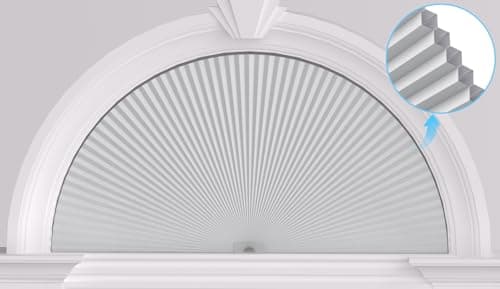 A bedroom or nursery arch that is letting in early light, in a room where the temperature at the top of the window is also a complaint. | Half circle, sized by radius | Inside, no drilling | Blackout | $29.05 · View on Amazon #ad Price as of November 24, 2026, and it can change. How we’re funded |
| 2 | Budget pick | 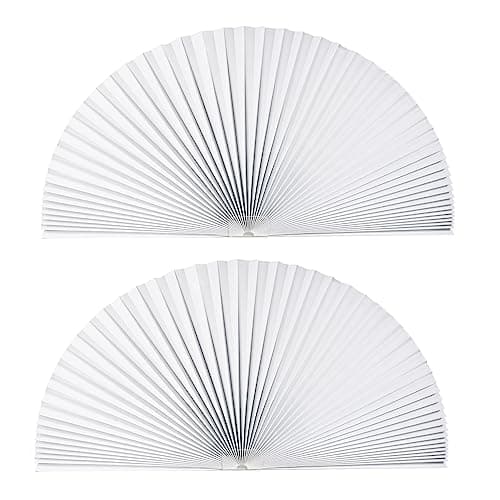 The cheapest honest answer here, and the right one where the arch is a feature you want to keep rather than a light leak you want gone. | Arch | Inside | Light filtering | $25.99 · View on Amazon #ad Price as of November 24, 2026, and it can change. How we’re funded |
| 3 | Best for a dark bedroom | 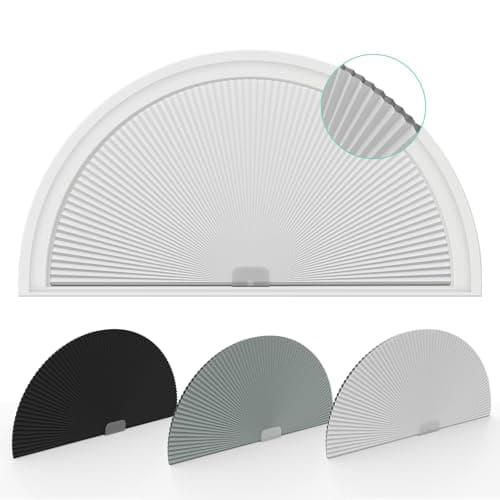 An arch over a bed where the only requirement is that the light stops, and the frame is too shallow for a bulkier cellular shade. | Half-round, sized by radius | Inside, no drilling | Blackout | $36.99 · View on Amazon #ad Price as of November 24, 2026, and it can change. How we’re funded |
| 4 | Best if you square it off | 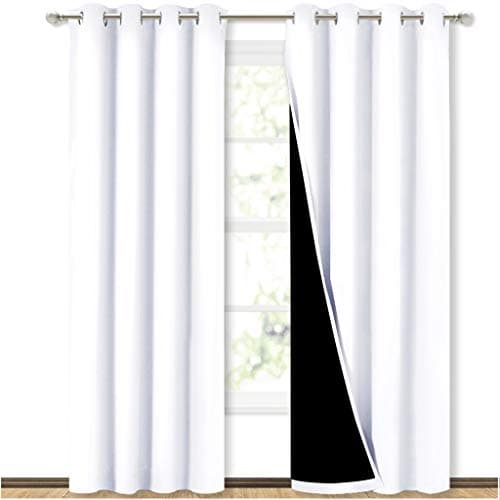 Anyone who would rather have a genuinely dark room than a visible arch, and has the wall height above the curve to mount a rod. | N/A - covers the whole opening | Rod above the arch, 8-12 in wider | Blackout | $16.98 · View on Amazon #ad Price as of November 24, 2026, and it can change. How we’re funded |
01 — Best overall
Arch Half Circle Blackout Cellular Shades, cordless
Myshade
A honeycomb version of the half-round, sized by the radius of your arch and fitted without drilling. As well as blocking light it holds a layer of still air against the glass, which matters because an arch is usually the highest and coldest pane in the room.
Who it’s for: A bedroom or nursery arch that is letting in early light, in a room where the temperature at the top of the window is also a complaint.
The catch: Cellular fabric is bulkier than a pleat, so it shows the frame line more at the crown, and like every arch shade it is fixed in place once fitted.
At a glance
- Shape
- Half circle, sized by radius
- Mount
- Inside, no drilling
- Opacity
- Blackout
- Operates
- No - stationary
- Insulates
- Yes, honeycomb cells
#ad Price as of November 24, 2026, and it can change. How we’re funded
02 — Budget pick
Arch Window Light Filtering Pleated Shade Blinds
Touri
A fanned pleated shade in a light-filtering fabric, so the arch is softened and made private rather than blanked out. Sold as a pair, which suits the common case of two matching arches in one room.
Who it’s for: The cheapest honest answer here, and the right one where the arch is a feature you want to keep rather than a light leak you want gone.
The catch: Light filtering, so it darkens nothing. It is also fixed, which means choosing a permanent soft focus on that part of the window.
At a glance
- Shape
- Arch
- Mount
- Inside
- Opacity
- Light filtering
- Operates
- No - stationary
- Insulates
- Barely
#ad Price as of November 24, 2026, and it can change. How we’re funded
03 — Best for a dark bedroom
Arch Window Blackout Pleated Shades, half moon
Changshade
A blackout pleated shade cut to a half-round and mounted without drilling, sold by the radius of your arch. The slimmest blackout option here, because a pleat stacks tighter than a cell.
Who it’s for: An arch over a bed where the only requirement is that the light stops, and the frame is too shallow for a bulkier cellular shade.
The catch: Fixed in place once fitted, and like any shade inside a recess it leaves a thin outline of light around the curve.
At a glance
- Shape
- Half-round, sized by radius
- Mount
- Inside, no drilling
- Opacity
- Blackout
- Operates
- No - stationary
- Insulates
- Barely
#ad Price as of November 24, 2026, and it can change. How we’re funded
04 — Best if you square it off
Thermal Insulated Blackout Curtains
NICETOWN
The triple-weave panel most blackout recommendations end at: three woven polyester layers rather than a coating, so there is no backing to crack, and drops up to 108 inches - which is what you need when the rod goes above the crown of an arch rather than above a window.
Who it’s for: Anyone who would rather have a genuinely dark room than a visible arch, and has the wall height above the curve to mount a rod.
The catch: It hides the architecture, which is the whole objection. The grommet header also leaves gaps at the top, so mount the rod high and wide or the fabric is wasted.
At a glance
- Shape
- N/A - covers the whole opening
- Mount
- Rod above the arch, 8-12 in wider
- Opacity
- Blackout
- Operates
- Yes - hand draw
- Insulates
- Yes, by mass
#ad Price as of November 24, 2026, and it can change. How we’re funded
Ruling out
What does not work on an arch
| Option | Verdict | Why |
|---|---|---|
| Half-round pleated or cellular shade | First choice | The only format cut to the curve |
| Curtain over the whole opening | Good, if darkness matters | Squares the window off; loses the arch |
| Standard roller or cellular shade | Poor | Straight headrail leaves a crescent of bare glass |
| Slatted blind | Poor | Horizontal slats cannot follow a curve |
| Film on the arch glass | Fine | No hardware, no fit problem, no light control |
| Leave it bare | Often right | An arch above a covered window is frequently fine as it is |
Methodology
How we chose
Selected on whether the product is genuinely made for a curve, then on fixing method, then on what the fabric does about light at the top of a room. Based on published construction and stated sizing methods, and on the failure patterns owners report - chiefly shades ordered from a width alone and arriving flatter or steeper than the opening. No lab testing and no light-blocking figure of our own. Criteria on the methodology page.
FAQ
Questions people actually ask
What window treatments work on arched windows?
Half-round pleated and cellular shades sized by radius, which are the only formats cut to the curve, and curtains mounted above the whole opening, which square the window off and hide the arch entirely. Standard straight-headrail shades leave a crescent of bare glass, and slatted blinds cannot follow a curve at all.
How do you measure an arched window for a shade?
Three numbers: the width across the bottom of the curve at its widest point, the rise from that line to the top of the curve at its center, and the depth from glass to frame face. A true half-round has a rise exactly half the width; anything flatter is an elliptical or eyebrow arch and needs a made-to-shape product.
Can arch shades be cut to fit?
No. The pleats or cells are fanned to a specific curve, so trimming destroys the geometry that makes the shade sit flat. Either the listing takes your radius and rise, or the product is not for your window.
Should I leave the arch uncovered?
Often, yes. If the square window below is covered and the arch is high, small and not aimed at a bed, bare glass is the best-looking and cheapest answer. Cover it when it is costing you sleep, privacy or heat.
Do arched window shades open and close?
Almost none of them do. A fanned half-round is stationary by design, which is usually a relief rather than a limitation, because arch glass is normally too high to reach comfortably. If you want the arch to operate, the realistic route is covering the whole opening with a curtain instead.
Keep going
Read next
Rooms
Window treatments for arched windows
Cover the rectangle, decide separately about the arch — measuring, options and honest limits.
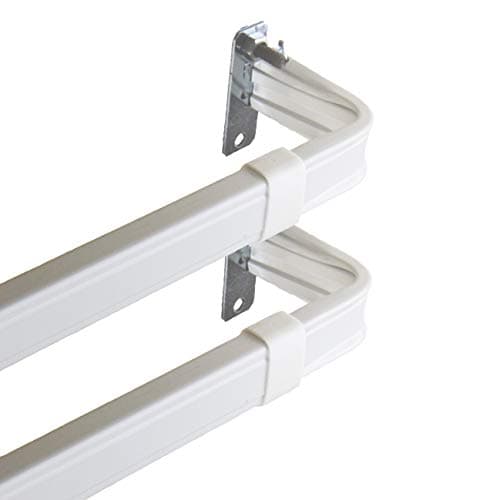
Rods & Mounting
How high to hang curtains
Higher than you think — ceiling height to rod height to curtain length.
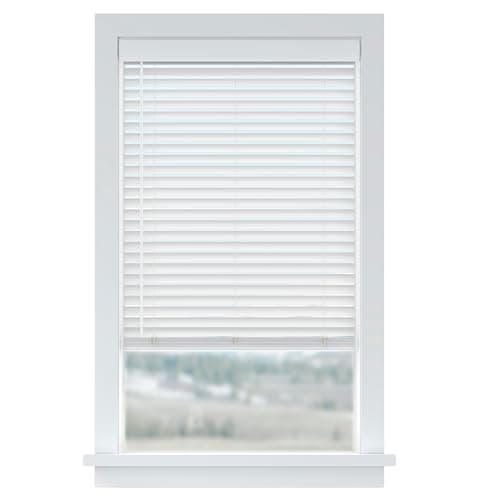
Rods & Mounting
How to measure for blinds
Six measurements in order, plus the rounding rules that differ for inside and outside mount.
Rooms
Best window treatments for casement windows
How to cover a casement without fouling the crank or the sash - and the outside-mount rule that fixes it.
Blackout
Best blackout curtains for a room that's too bright
Panels that block light, plus the mounting rule that decides whether any of them works.
About the author
Janet H.
Janet H. is the owner of Janet Media Group and the person behind Drape & Dawn. She researches every pick against the site's published methodology.
Published by Janet Media Group · Last updated November 22, 2026